Previous Poly B Leak Left Mold Damage Requiring Extra Remediation
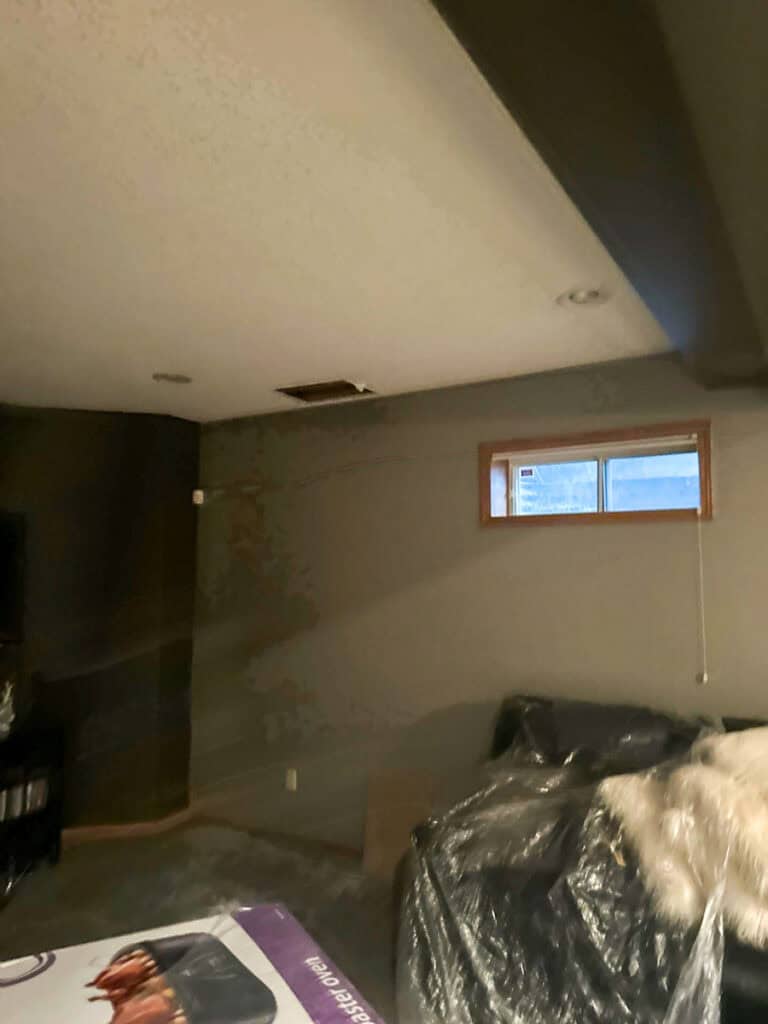
When Helen scheduled her Poly B plumbing replacement, she wasn’t acting preventively—she was responding to damage that had already occurred. A previous leak in her basement had left behind more than water stains. Hidden behind the drywall, mold had established itself in the moisture-damaged materials. Her project required not just standard Poly B replacement, but additional remediation to address the consequences of a failure that had already happened.
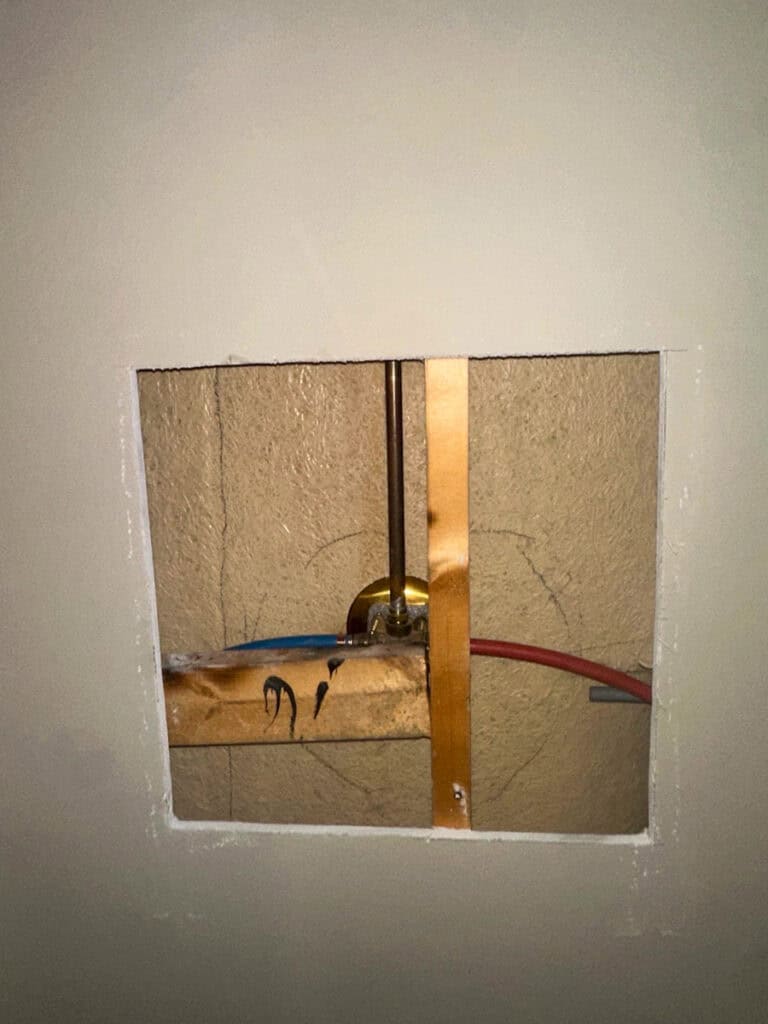
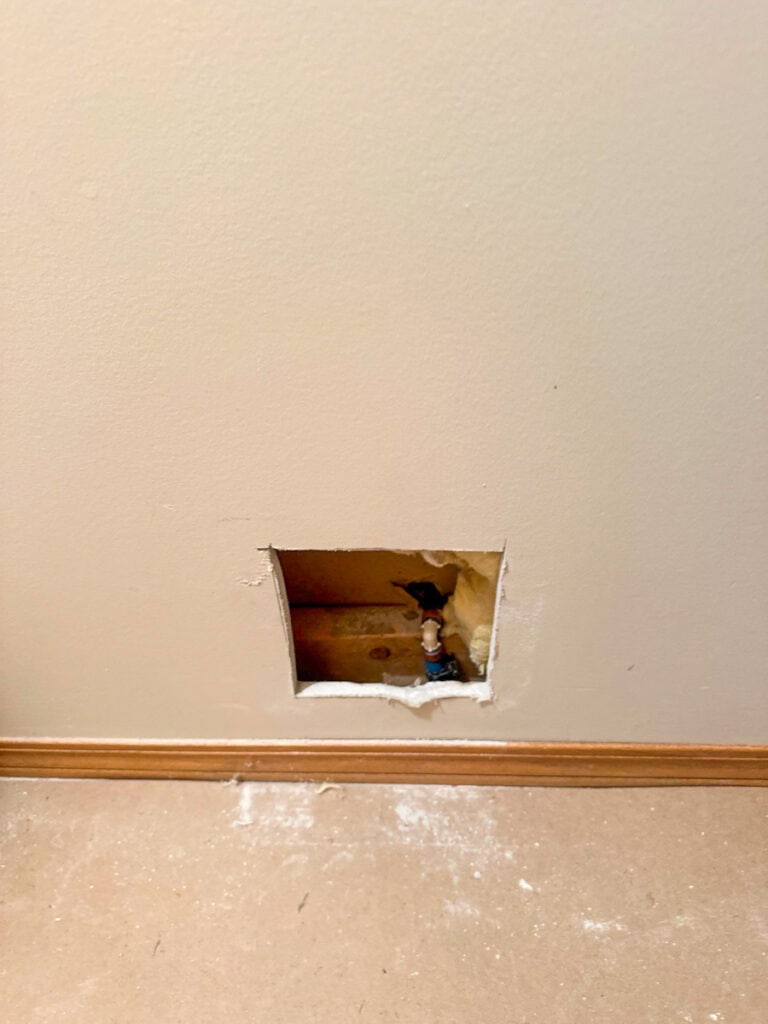
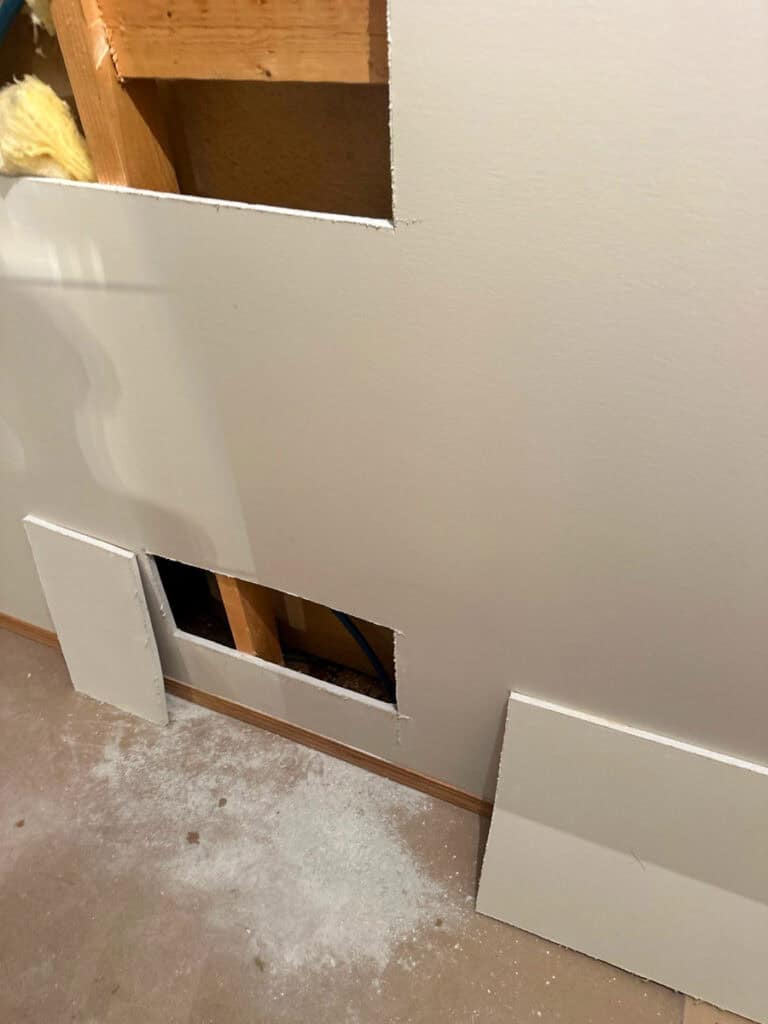
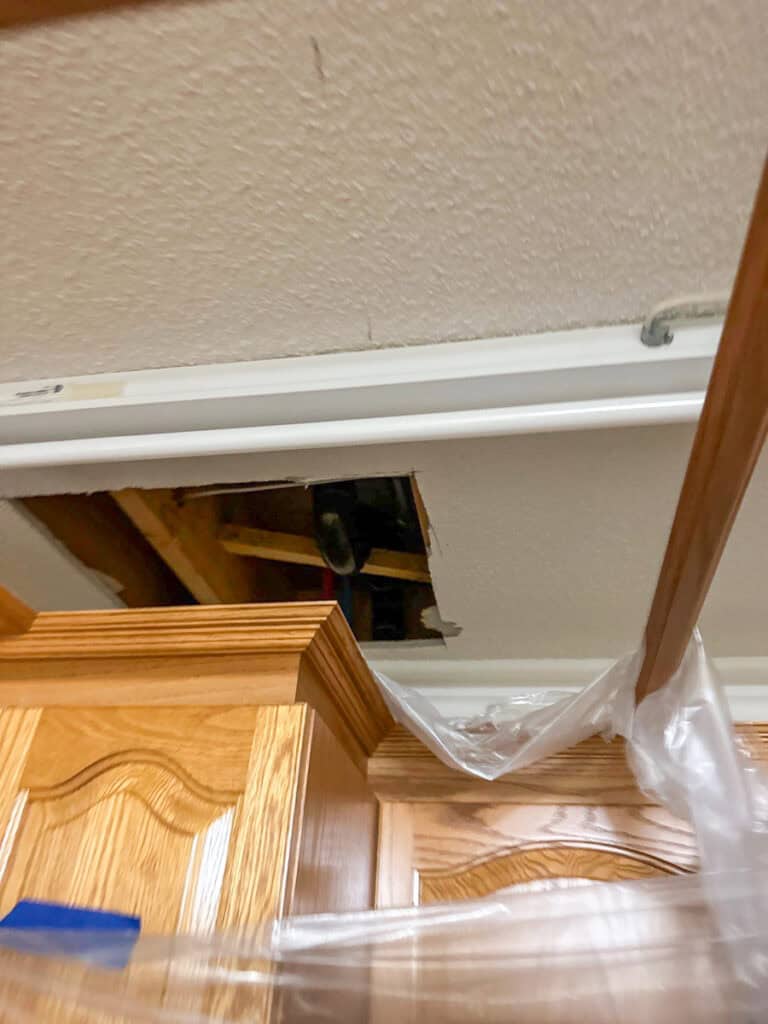
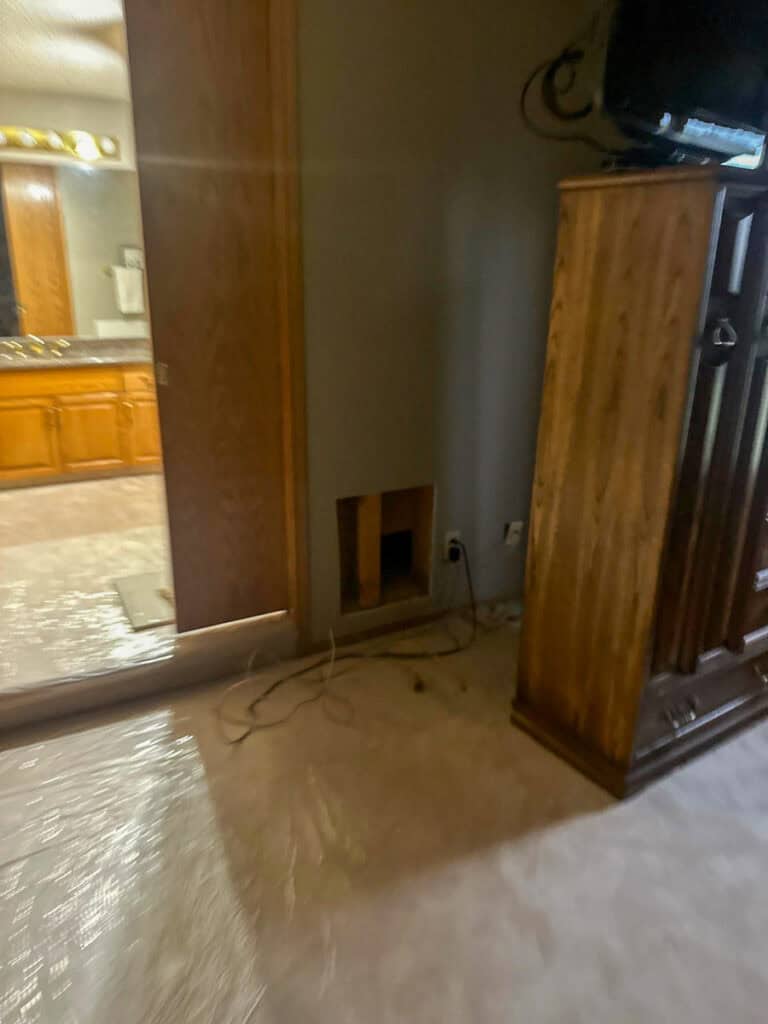
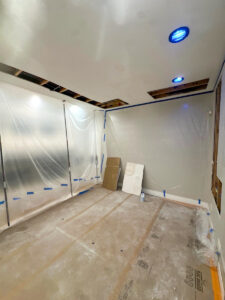
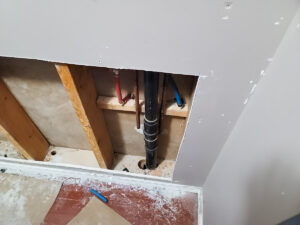
The additional drywall scope addressed the basement leak damage directly. Crews removed the old drywall with visible mold patches, eliminating the contaminated material entirely. New drywall installation, texturing to match existing surfaces, and proper finishing restored the affected area. This $500 remediation work supplemented the standard restoration included in full remediation packages, addressing damage that predated the current project.
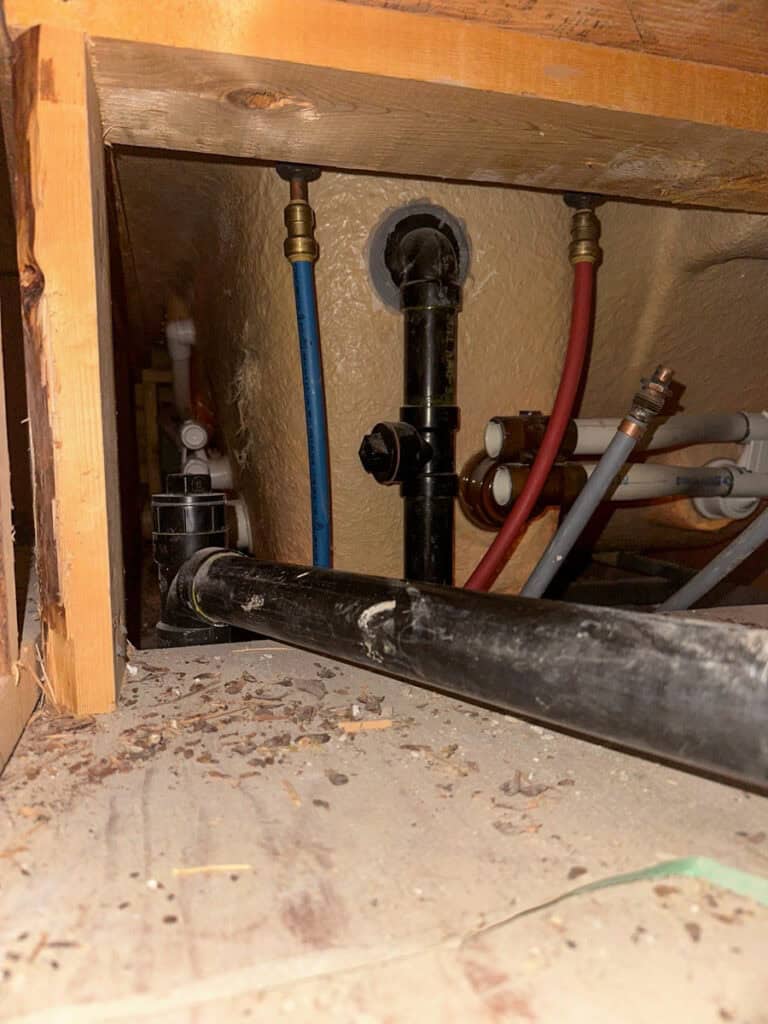
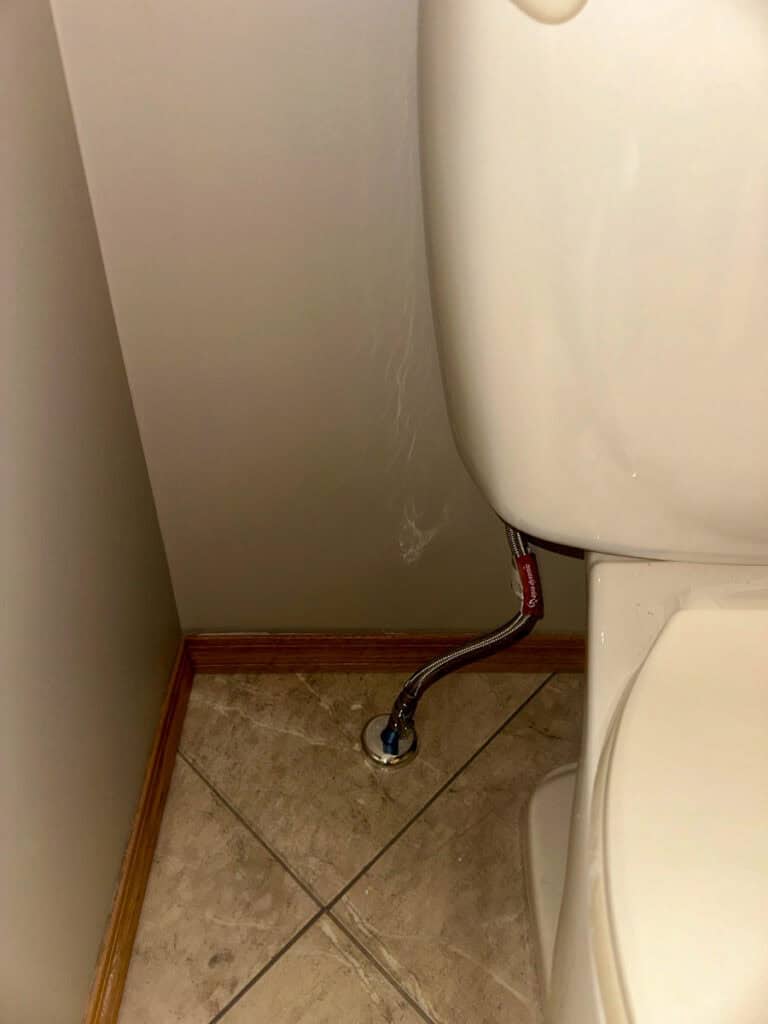
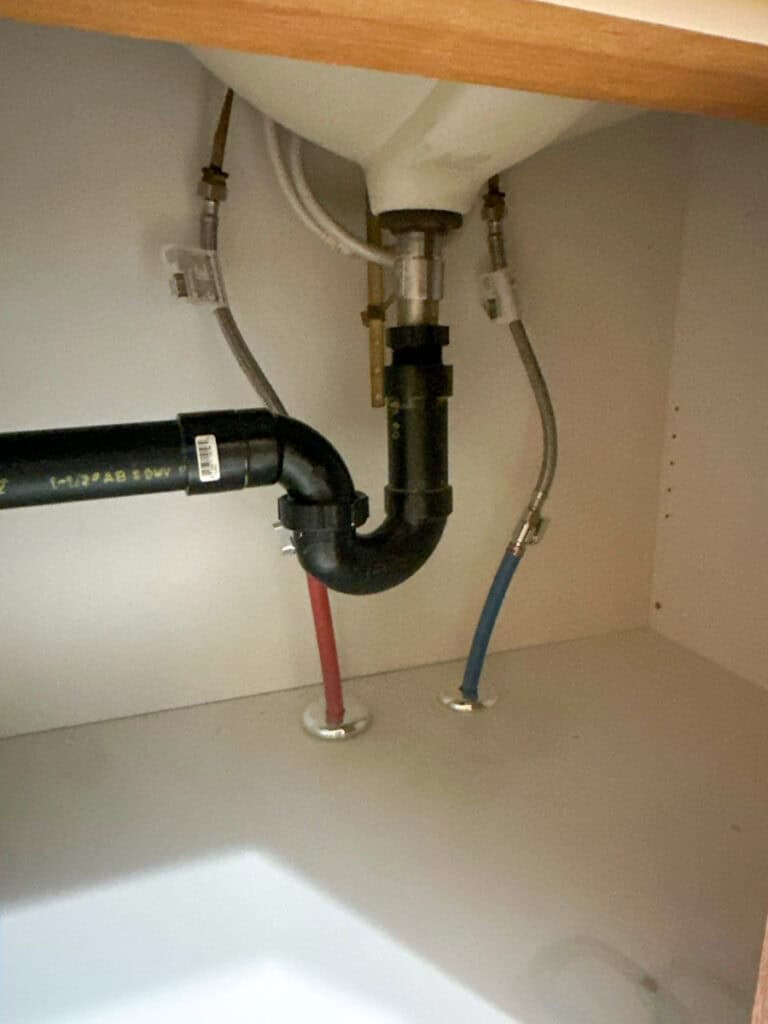
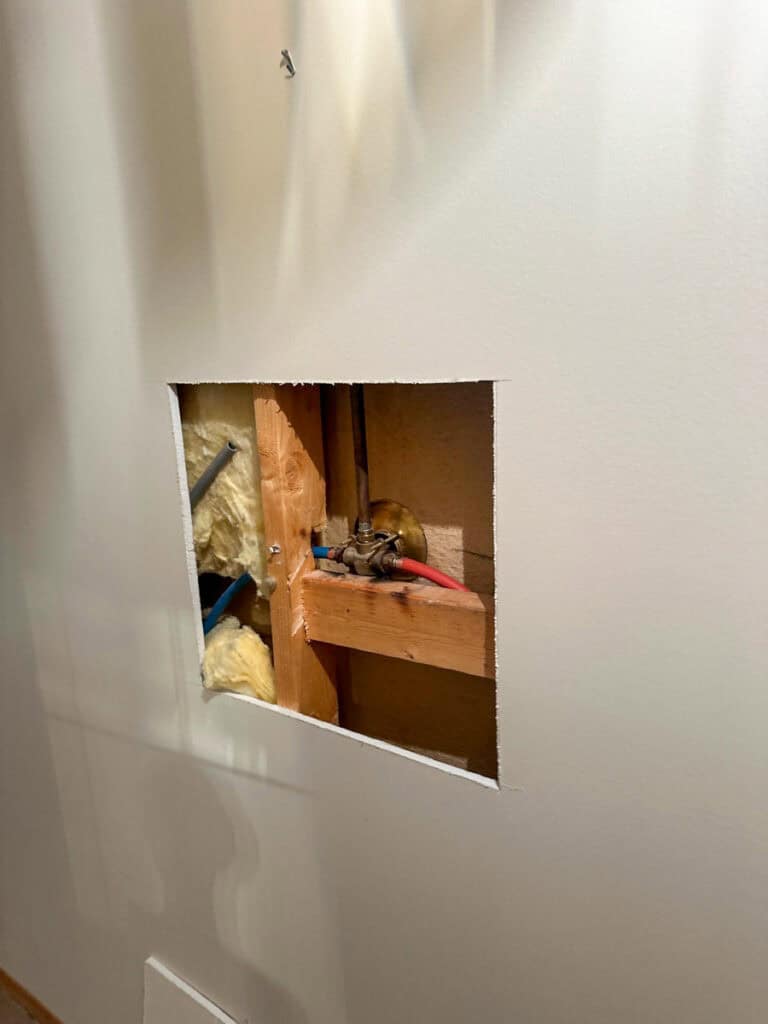
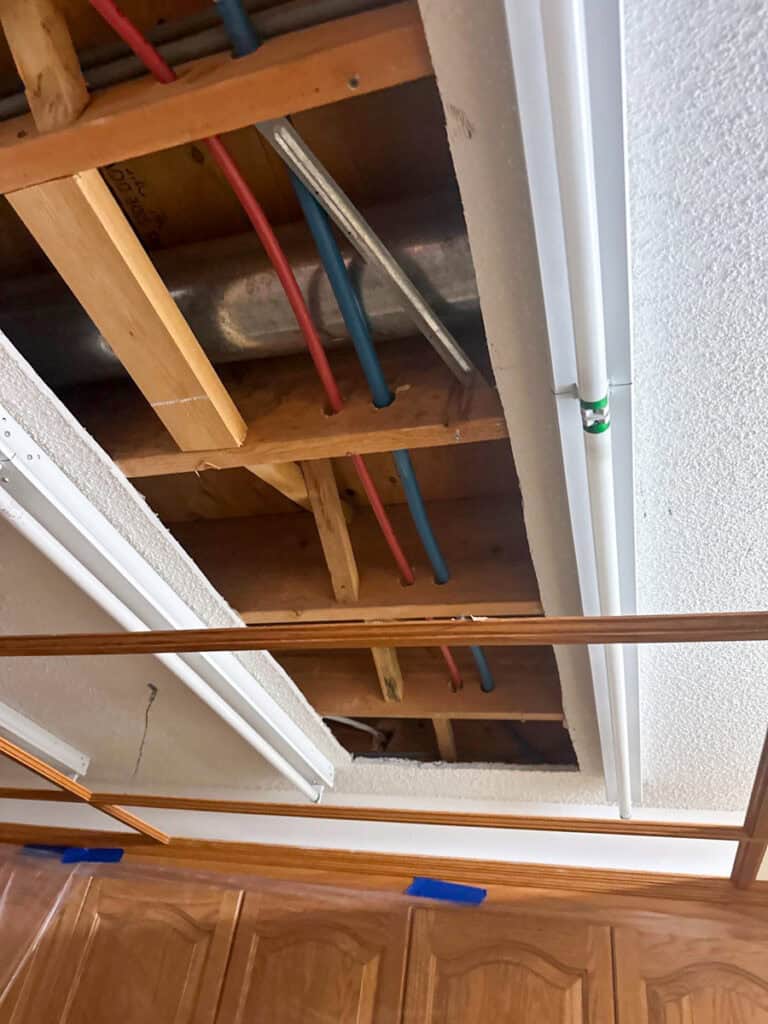
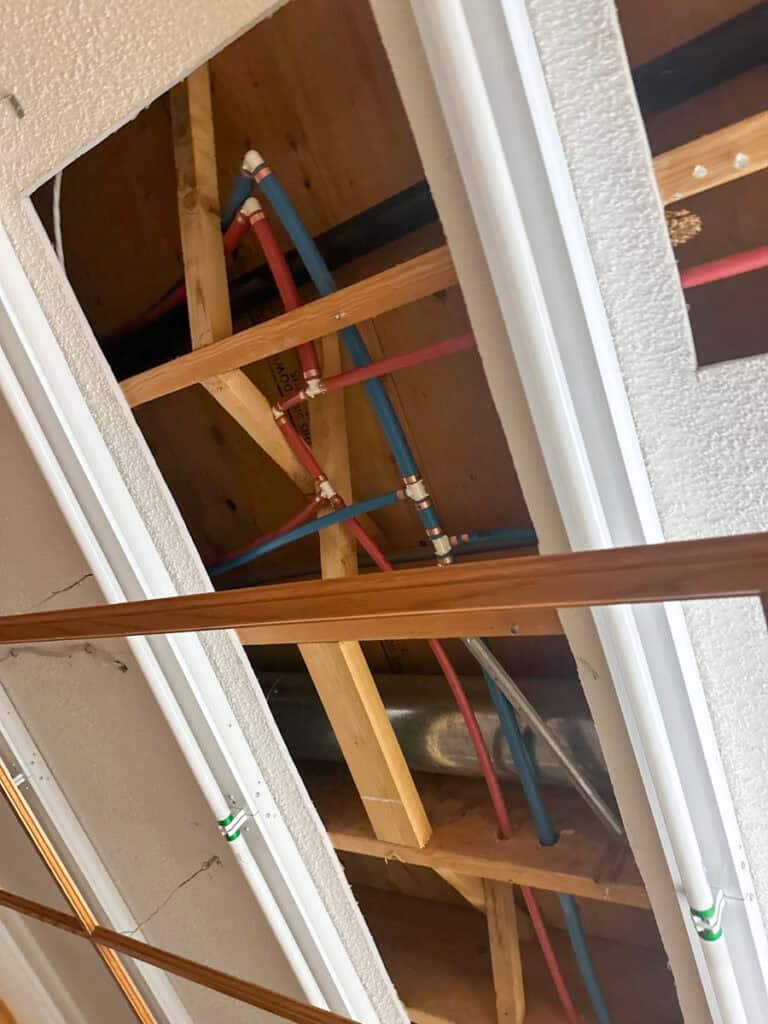
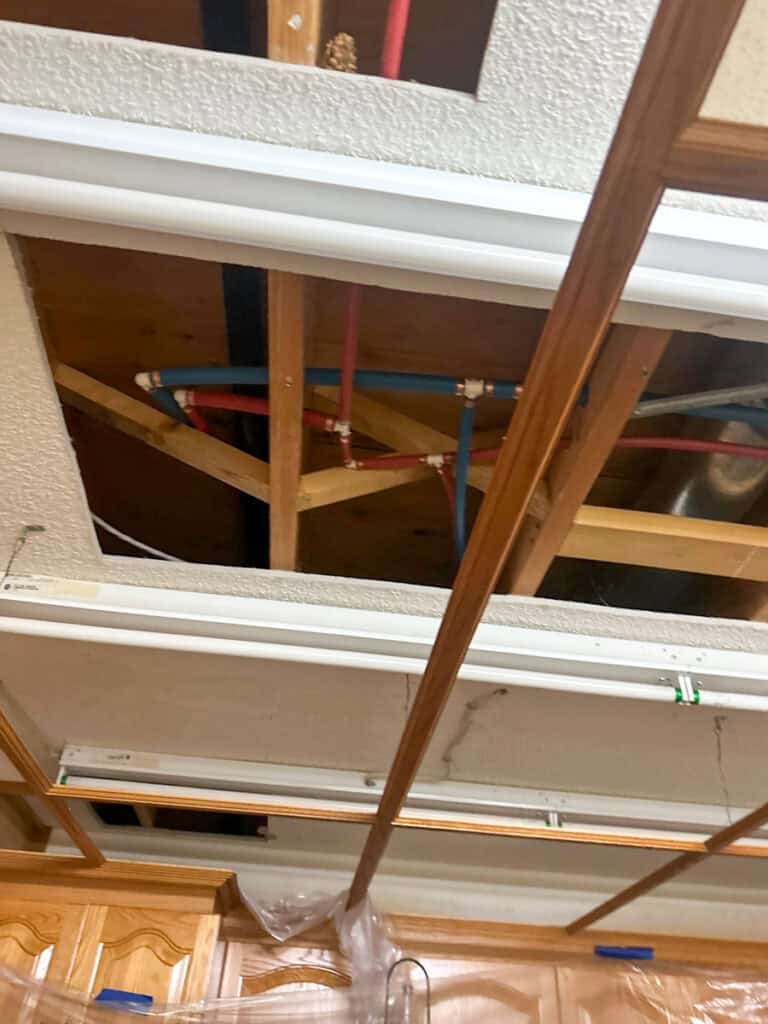
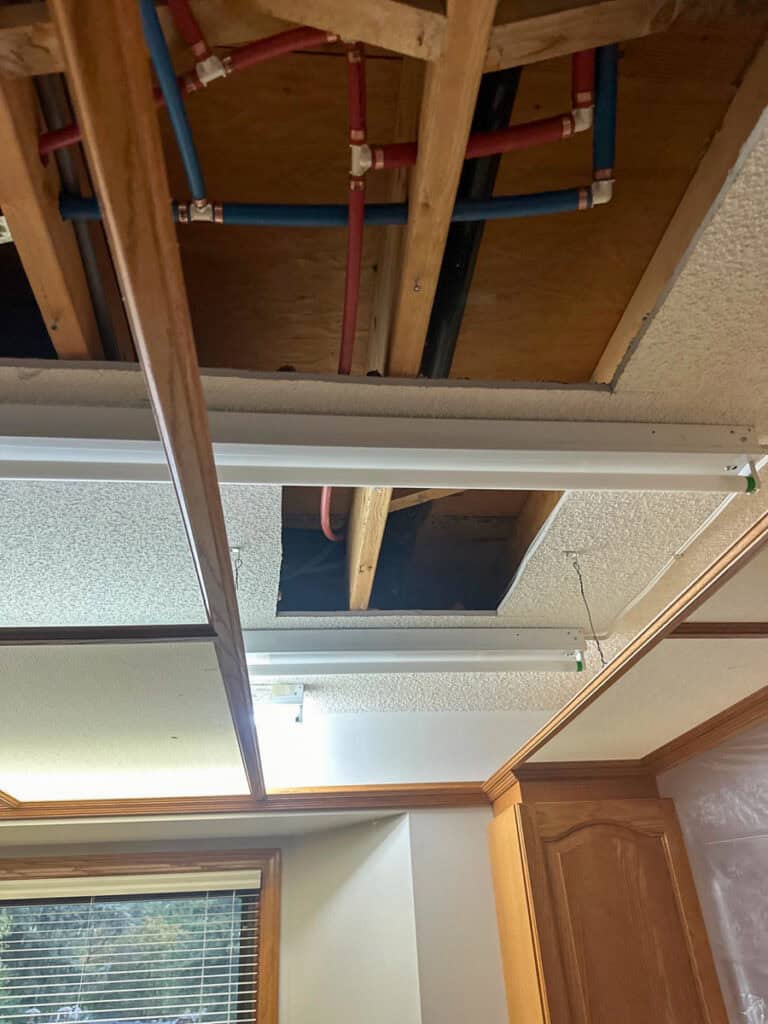
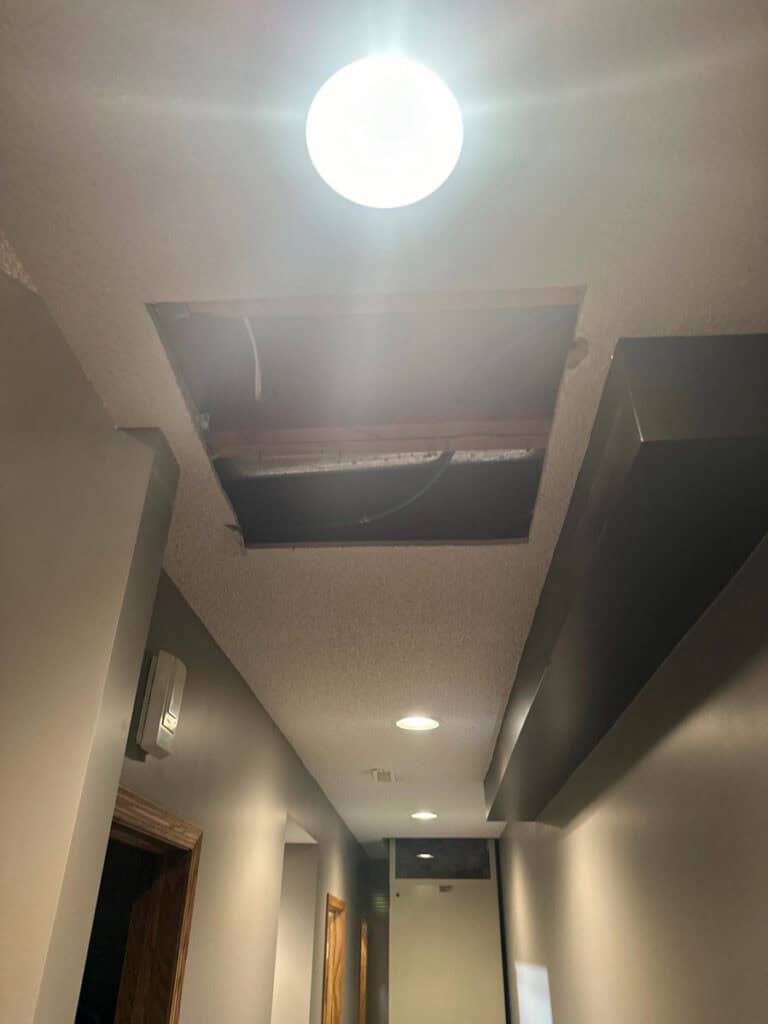
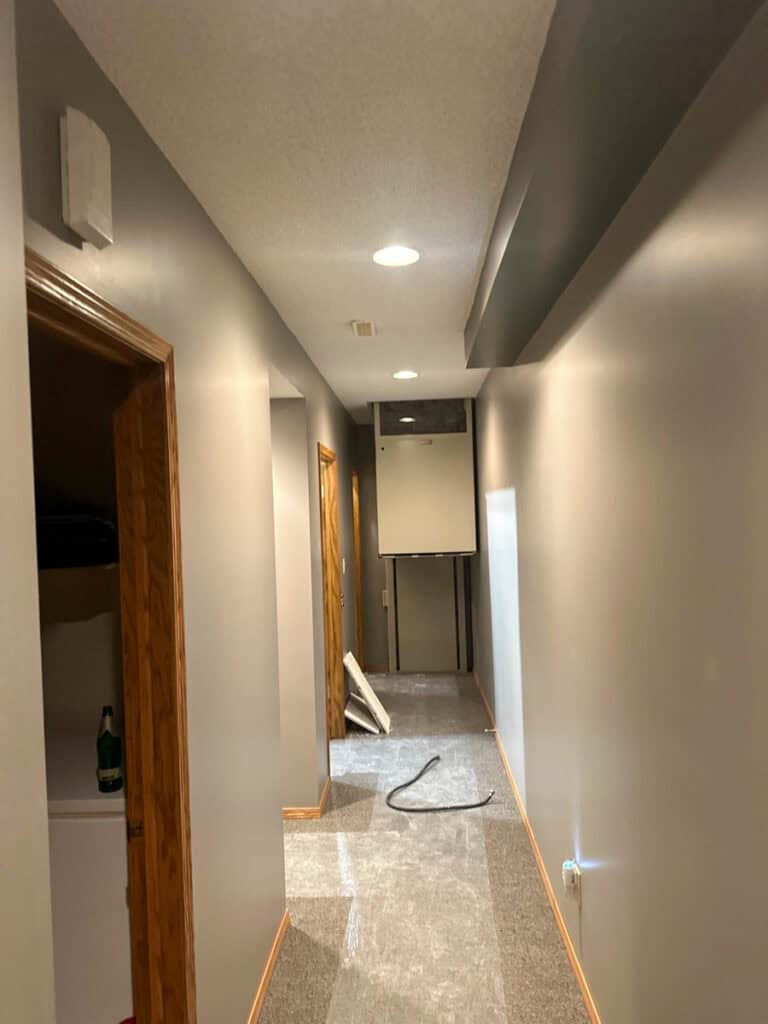
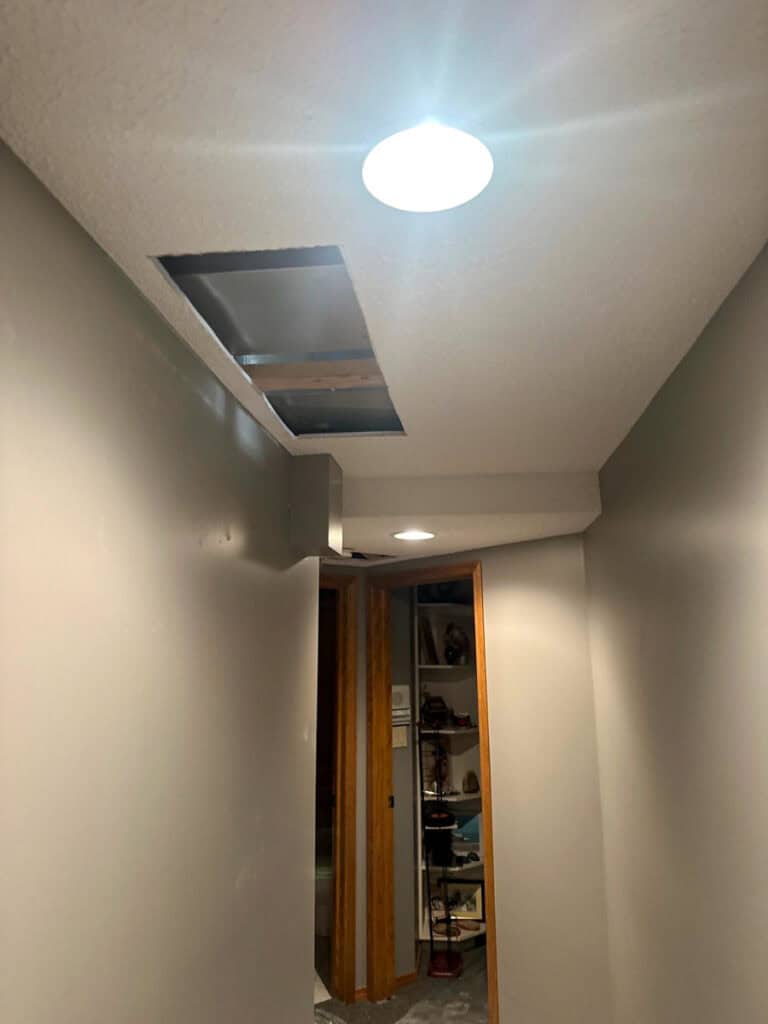
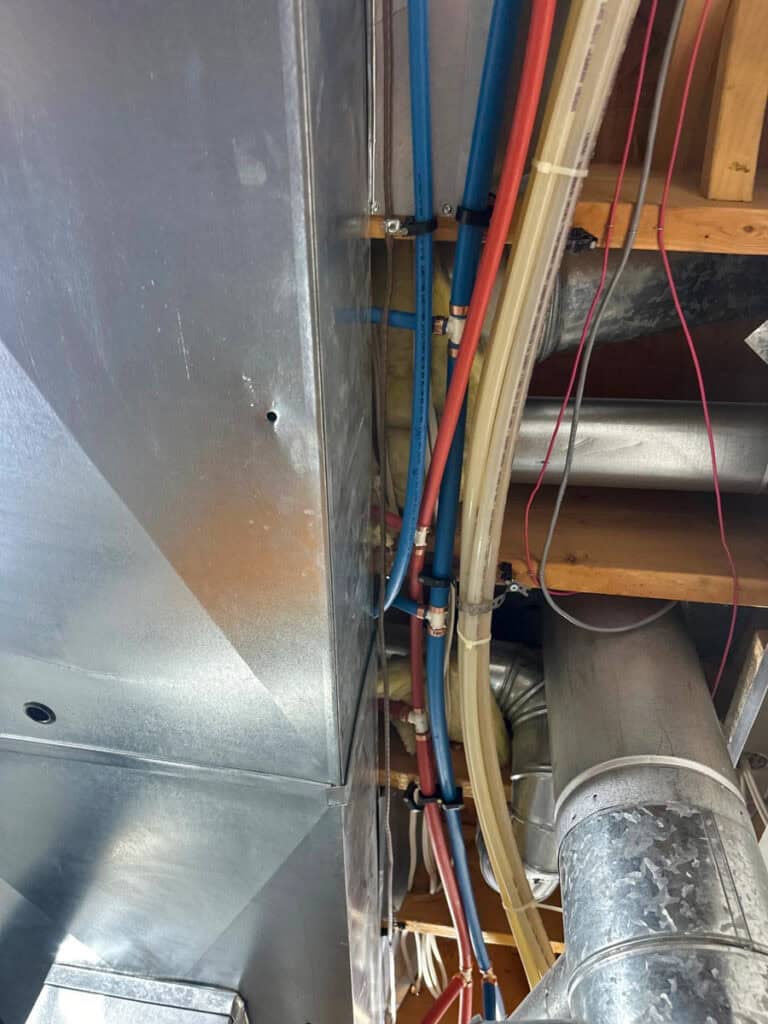
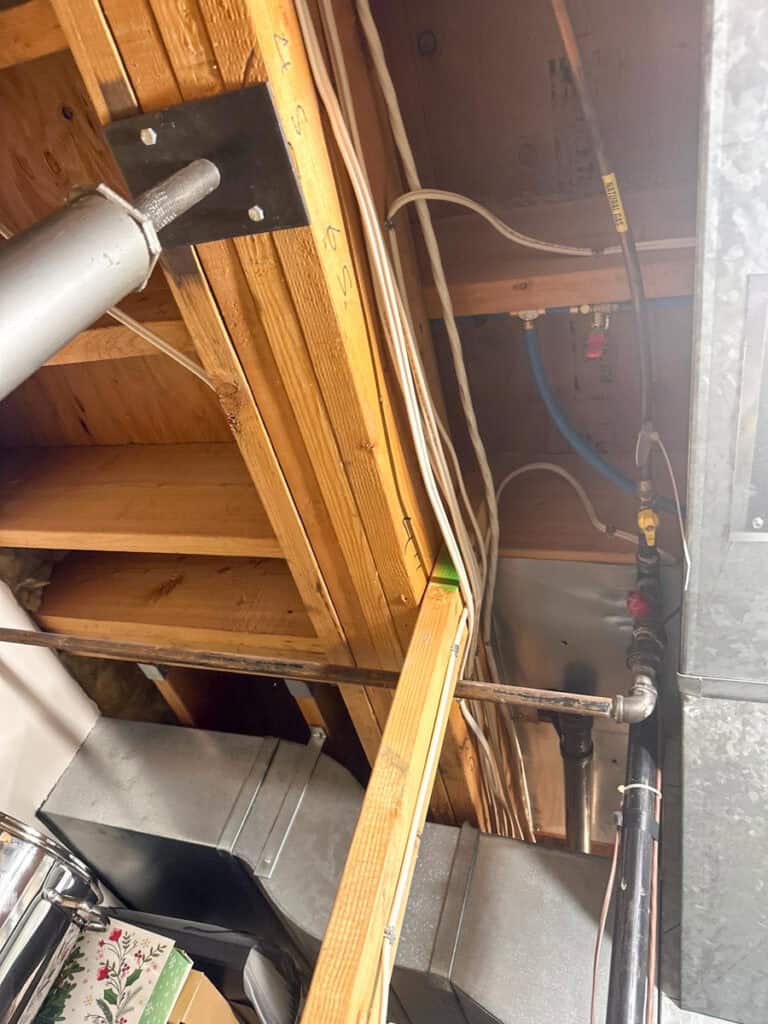
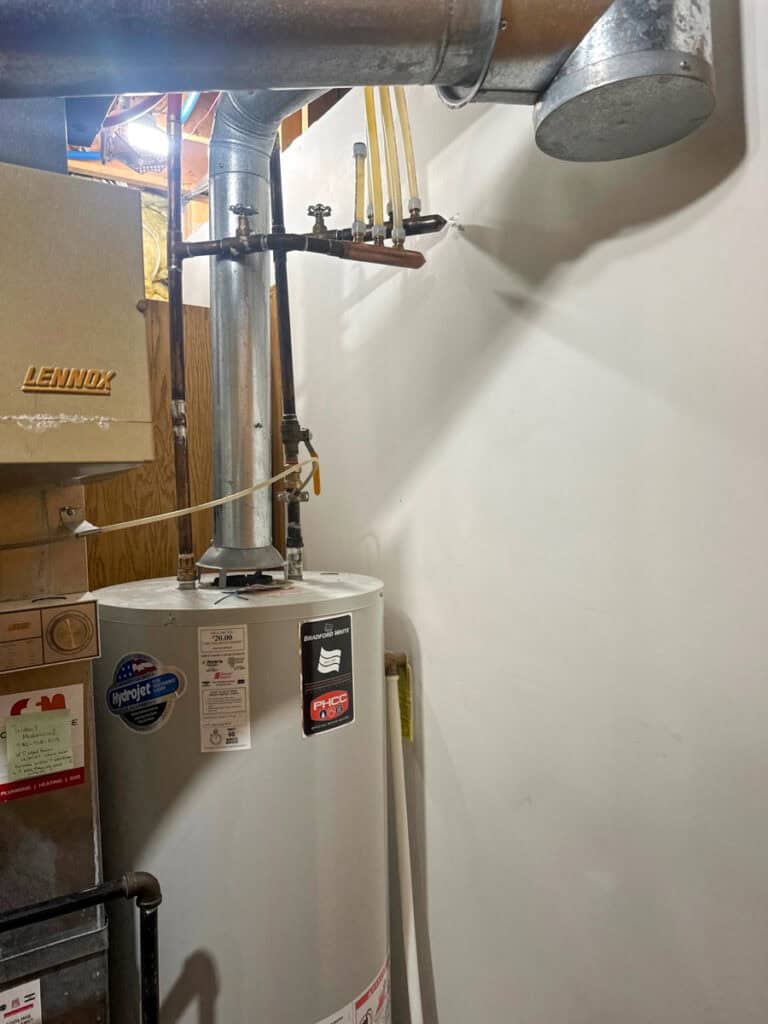
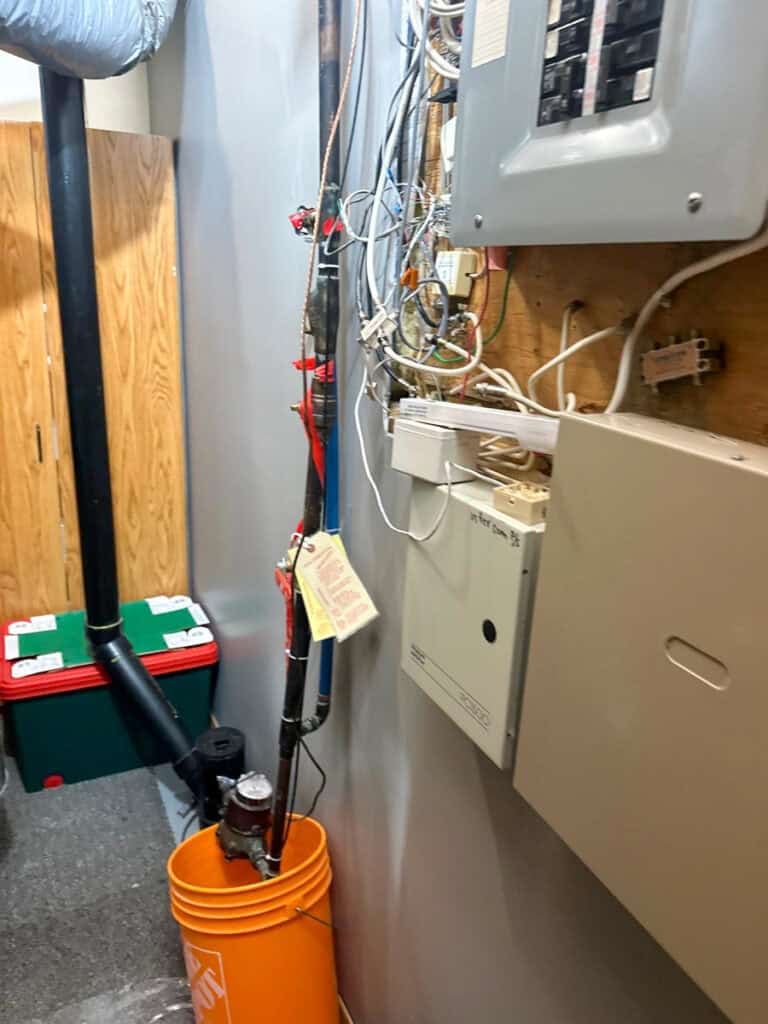
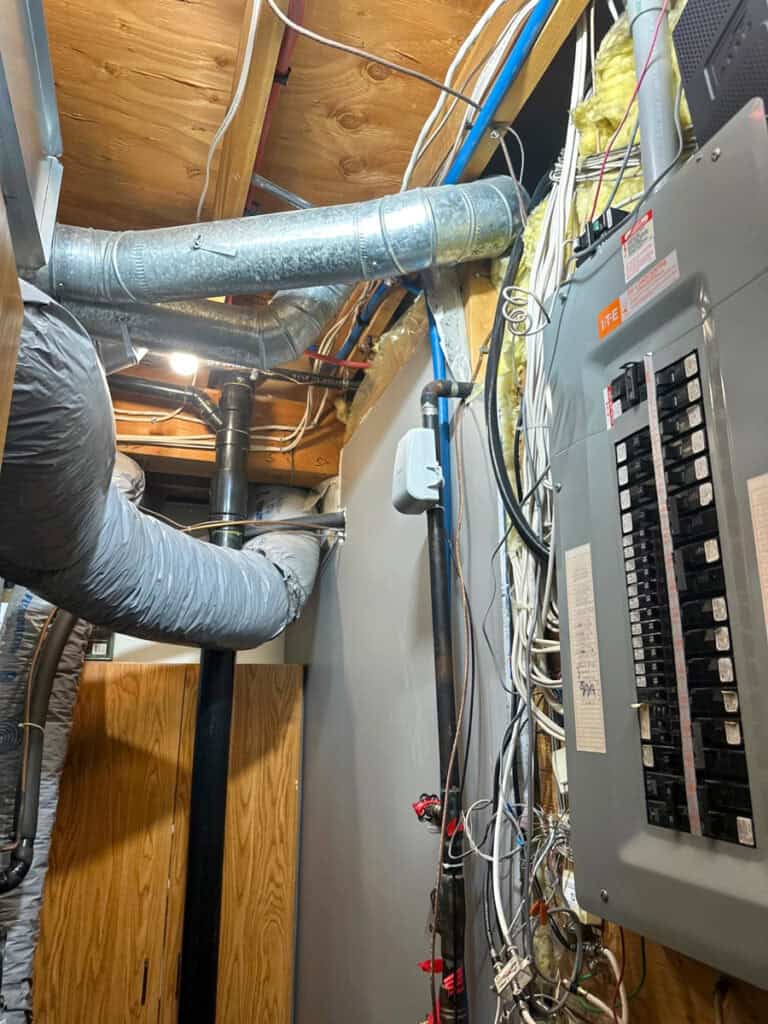
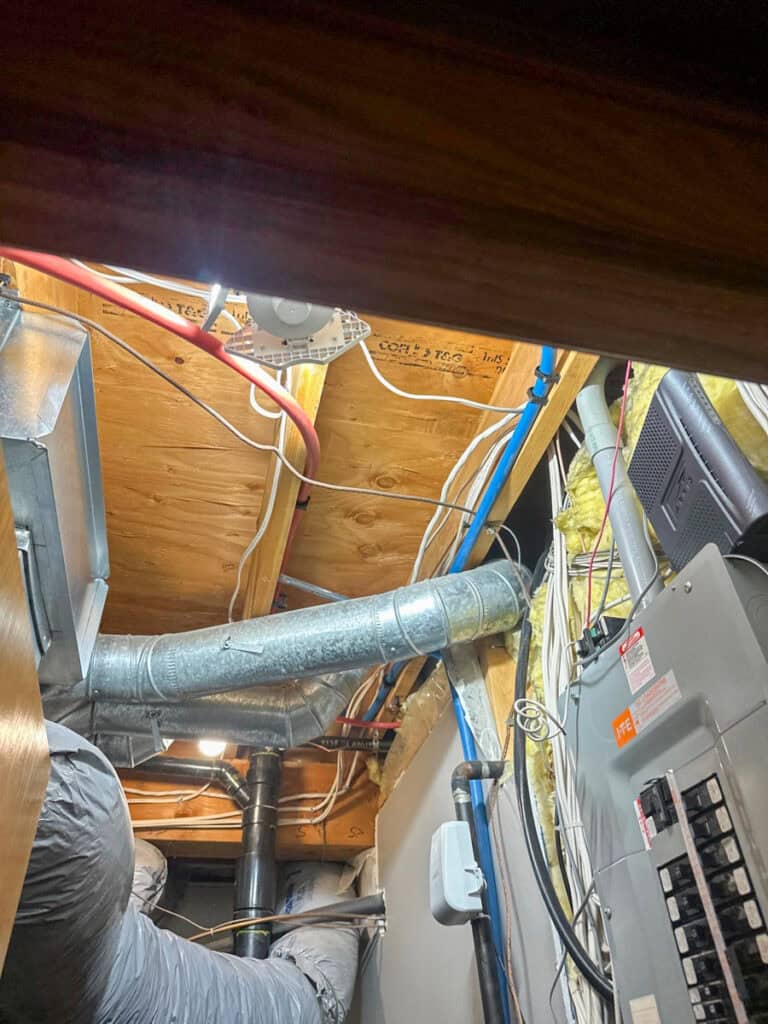
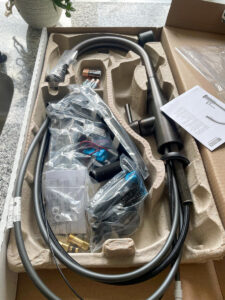
The core Poly B replacement proceeded with complete removal of all polybutylene lines and installation of Rehau Class A PEX with UV barrier protection. Every fixture received new Dahl shut-off valves and braided distribution hoses. Brass exterior faucets and code-compliant laundry box installation completed the plumbing infrastructure. Full drywall restoration—boarding, mudding, taping, and texture matching—addressed all access points created during the replacement.
This Poly B Replacement Edmonton project illustrates why proactive replacement often costs less than reactive repair. Helen’s total investment included both the planned replacement and the unplanned mold remediation—a combination that homeowners addressing Poly B before failure can avoid entirely. By addressing the issue early, homeowners can not only save on costly repairs but also steer clear of potential insurance issues with Poly B in Edmonton. Waiting for a problem to arise can lead to more severe damage and additional expenses, making proactive replacement a far more economical choice in the long run. Taking action now not only protects the home but also increases its value and peace of mind for the owners.
About Castledowns Edmonton NW
Castledowns is a collection of neighborhoods in northwest Edmonton, named after European castles—Beaumaris, Dunluce, Lorelei, and others reference their Welsh, Scottish, and German namesakes. The area developed primarily during the 1970s through 1990s, with over half of residences constructed during the 1980s. This timing places the majority of Castledowns homes squarely within the polybutylene era.
The Lake District portion of Castledowns features Edmonton’s first planned stormwater lake, opened in 1979. The 14-hectare Beaumaris Lake established a model that Edmonton has since replicated over 120 times across the city. Homes surrounding the lake enjoy walking trails, park space, and water views that distinguish the area from typical suburban development.
Housing in Castledowns includes single-family detached homes, townhouses, duplexes, and apartment-style condominiums. Single-family homes comprise roughly 44% of the housing stock, with the remainder split among attached and multi-family options. The mature, established character of these neighborhoods means most properties have operated with original plumbing for thirty to forty years.
The area offers convenient access to the Castle Downs Recreation Centre, shopping at Lakeside Landing and Beaumaris Shopping Centre, and transit connections that link to greater Edmonton. The quiet, family-oriented character and proximity to green spaces make Castledowns popular with long-term residents who value community stability.
The Hidden Costs of Poly B Leaks in Castledowns Homes
Helen’s project revealed what many Castledowns homeowners eventually discover: Poly B failures rarely announce themselves cleanly. Leaks often occur within wall cavities, behind finished surfaces where moisture accumulates undetected. By the time visible signs appear—water stains, soft drywall, musty odors—secondary damage has already begun.
Mold growth represents the most significant secondary concern. Drywall paper, wood framing, and insulation all provide organic material that mold colonizes readily in moist conditions. Once established, mold doesn’t simply dry out when the leak stops—it requires physical removal of contaminated materials. Helen’s basement required exactly this: complete removal of affected drywall, not just patching.
The cost comparison matters for homeowners still evaluating their options. Helen’s project totaled $14,700—the standard $13,500 full remediation plus $500 for mold-damaged drywall removal and replacement. Homeowners who replace Poly B before failure avoid that incremental remediation cost entirely. They also avoid the potential for more extensive damage if leaks go undetected longer or affect larger areas.
Insurance considerations add another dimension. While policies vary, many homeowners discover that gradual water damage from failing plumbing receives less favorable coverage than sudden failures. The slow leak that allowed mold to develop in Helen’s basement might not trigger the same response as a dramatic pipe burst.
Why 1980s Castledowns Homes Face Elevated Poly B Risk
The construction timeline in Castledowns aligns almost perfectly with polybutylene’s period of widespread use. With over half of area homes built during the 1980s, the neighborhood represents concentrated Poly B exposure. These systems have now operated for thirty-five to forty-five years—well beyond the material’s anticipated functional lifespan.
Edmonton’s climate compounds the stress on aging plumbing systems. Extreme temperature swings between summer and winter create thermal cycling that fatigues pipe materials and connections. The chlorine and chloramine used in Edmonton’s water treatment accelerate the degradation that eventually causes Poly B failures. Fittings—typically the first failure points—experience both chemical and mechanical stress.
For Castledowns homeowners in 1980s-era homes, the question isn’t whether Poly B will eventually fail, but when—and whether that failure occurs under controlled conditions during planned replacement or unexpectedly with resulting water damage. Helen’s experience demonstrates the latter scenario: a leak that occurred before replacement, leaving damage that required remediation during the project.
The neighborhood’s mature, established character means many original owners have aged alongside their homes. Some have already addressed their Poly B; others continue operating with original plumbing. Helen’s project adds to the growing number of Castledowns homes now protected by modern PEX infrastructure.
Castledowns Edmonton Project Photos
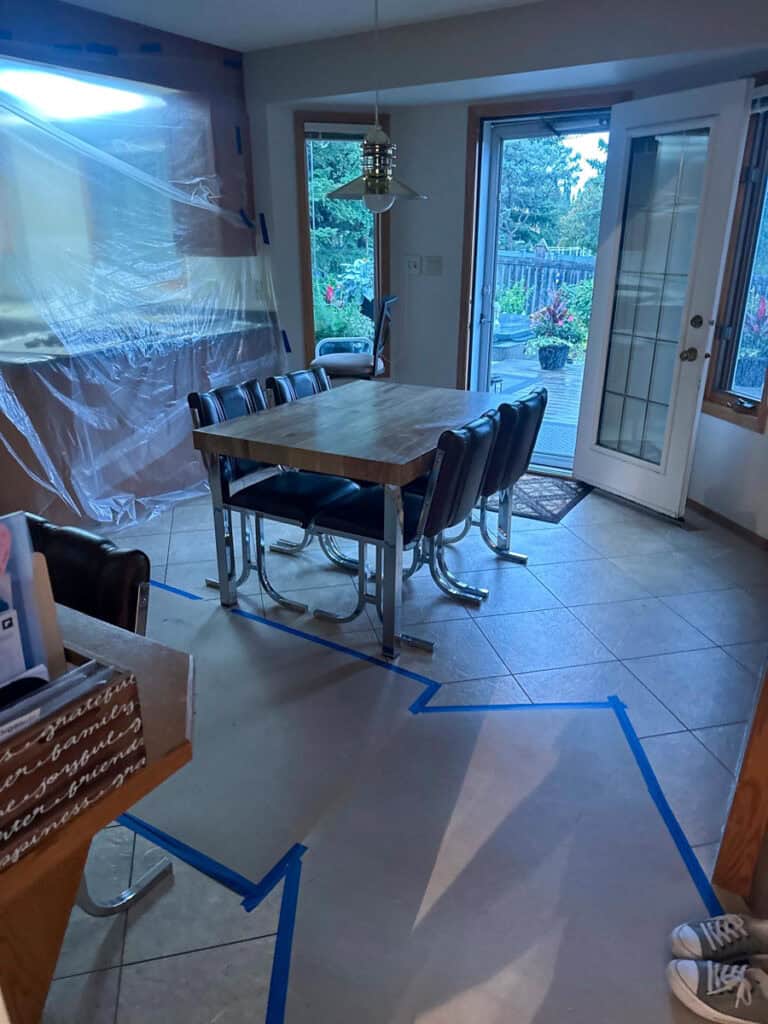
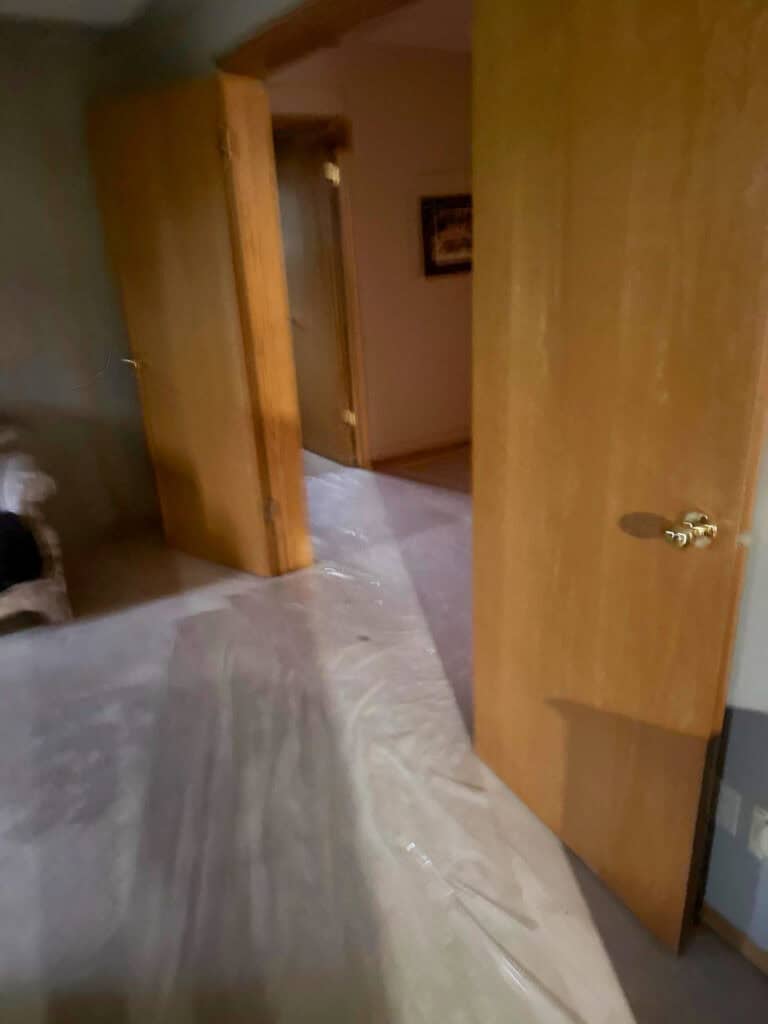
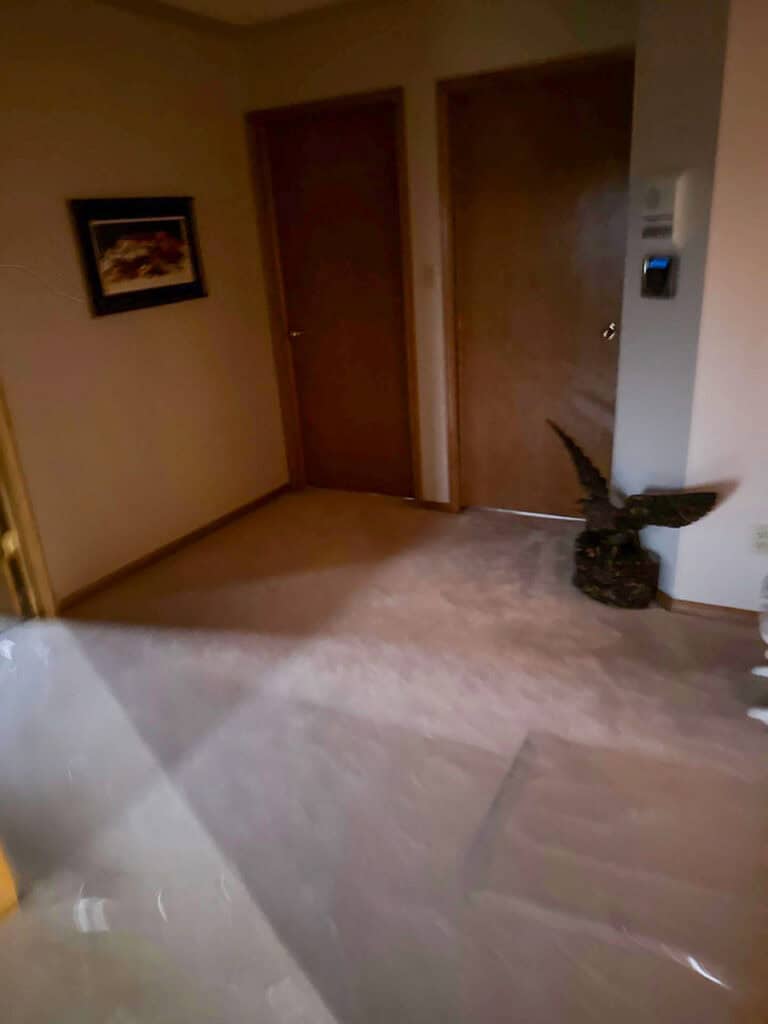
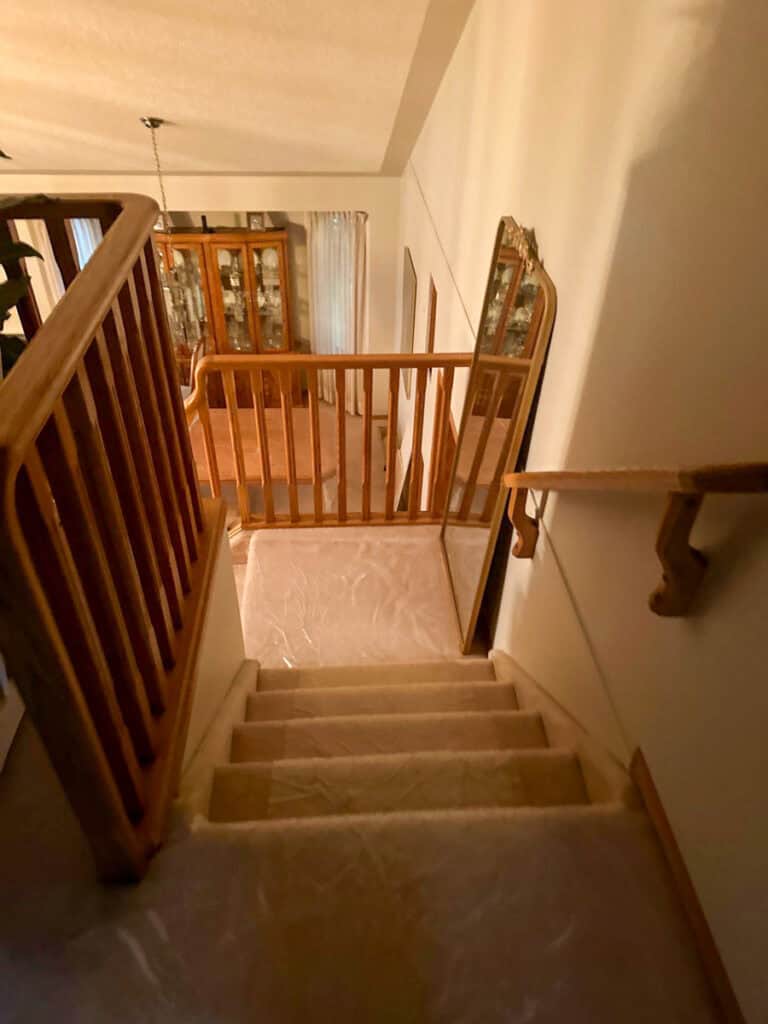
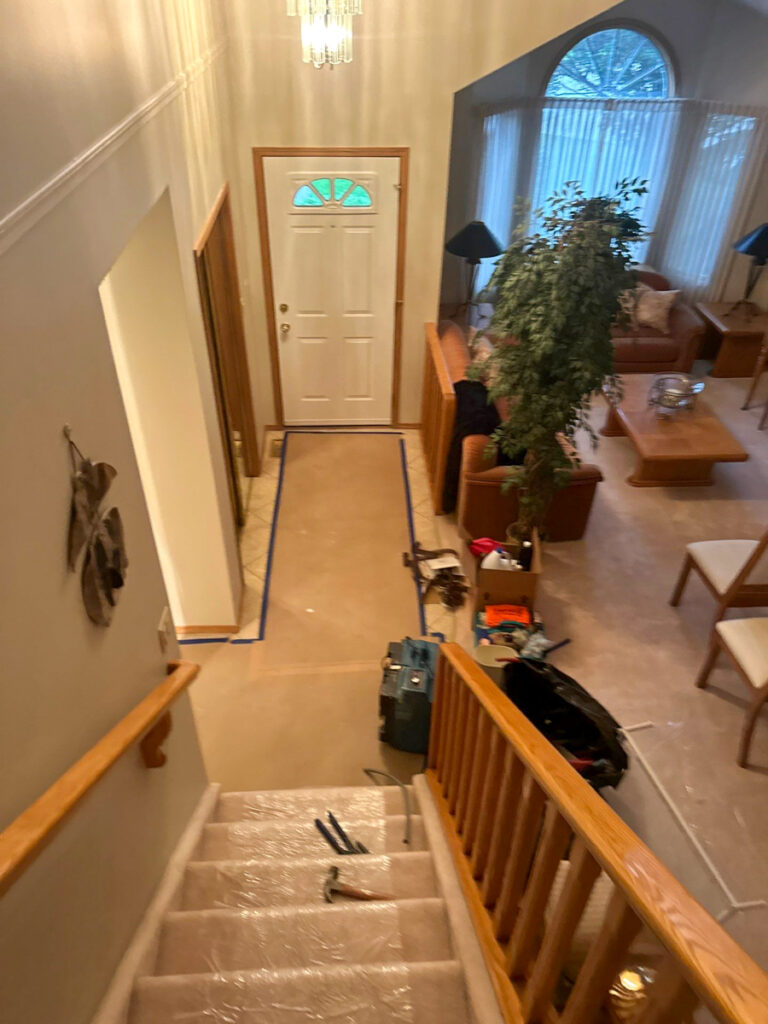
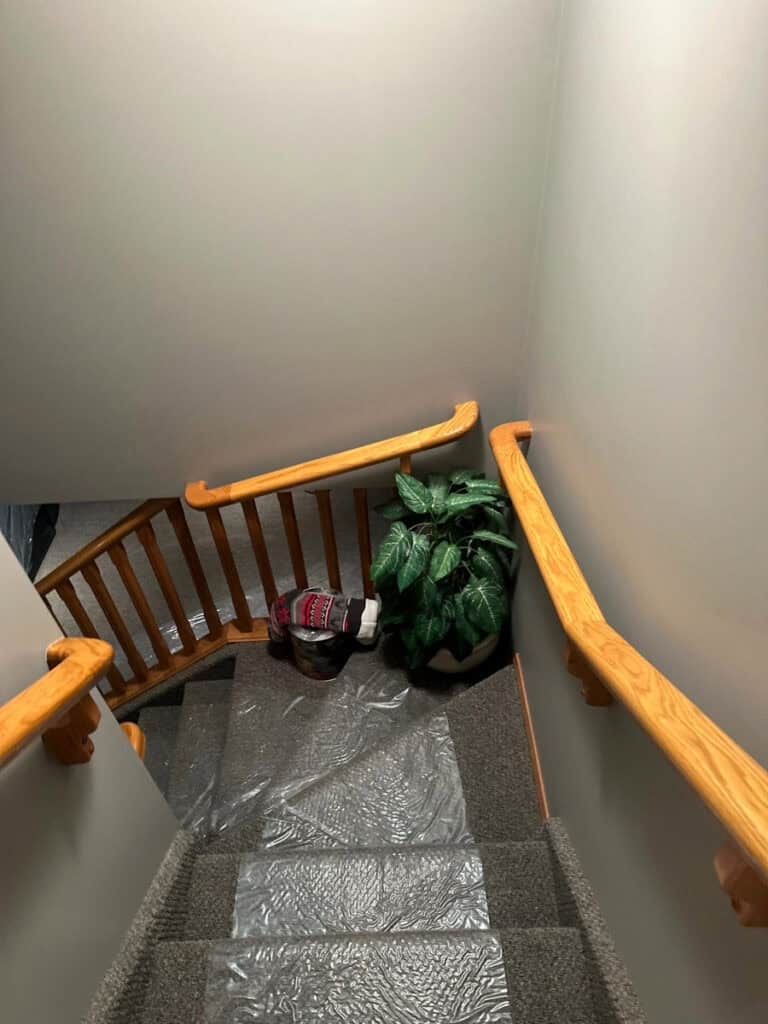
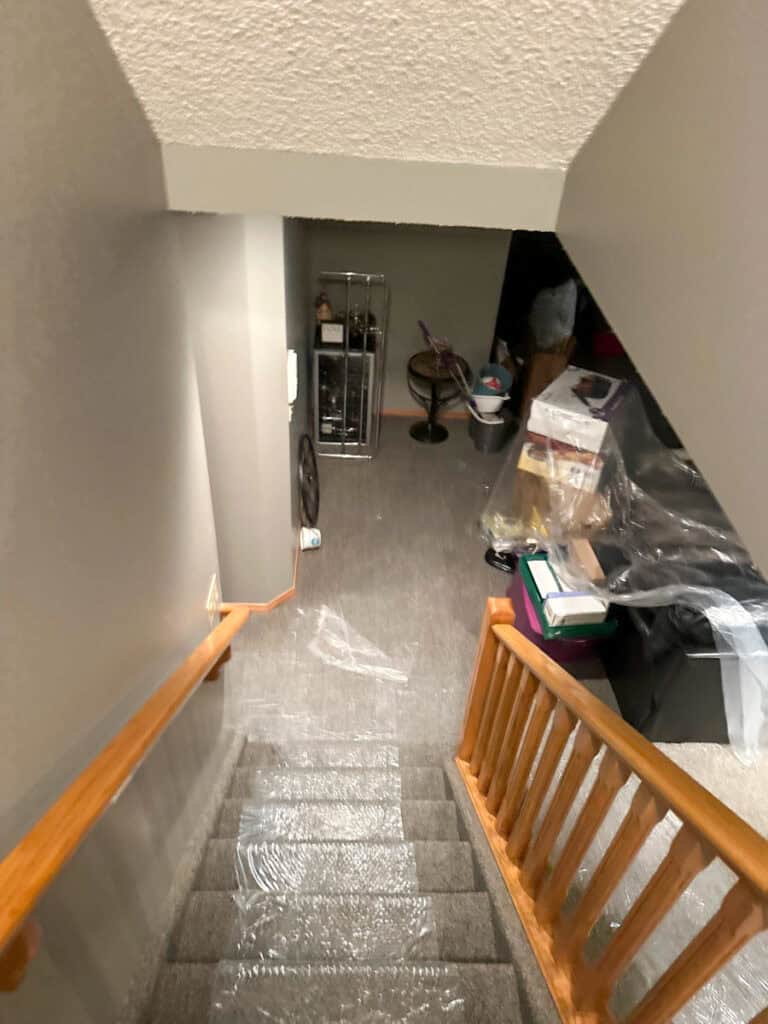
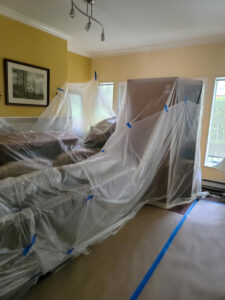
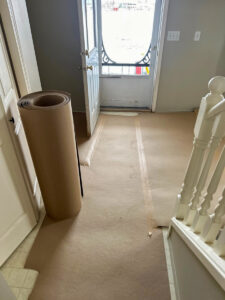
Urban Piping documents the work completed on every job site. Below are the project photos from Helen’s Castledowns full remediation and mold-damaged drywall restoration.