Introduction: Why Pipe Material Matters in Alberta Homes
If you’re a homeowner in Calgary, Edmonton, or Vancouver, you’ve likely felt the effects of extreme weather on your plumbing. Choosing the right types of plumbing pipes can mean the difference between a stable home system and frequent costly repairs. With Alberta’s notorious hard water and freeze/thaw cycles, understanding pipe material performance is crucial to maintaining your property and peace of mind.
The role plumbing pipes play in home health
Plumbing is more than just water delivery — it’s the circulatory system of your home. From hot water lines in bathrooms to cold water supply for kitchen sinks, the pipe materials you choose impact flow rate, pressure, corrosion resistance, and even water quality. Home health and resale value both depend heavily on having sound plumbing infrastructure, free from leaks, contamination risks, or outdated materials like galvanized or Poly B piping.
If you are a Calgary homeowner dealing with Poly B pipes, you are not alone — thousands of homes in the city were built with this outdated plumbing. Urban Piping specializes in Poly B Replacement Calgary and has helped over 3,000 homeowners make the switch. Ready to get started? Call (403) 988-3801 for your free estimate.
Climate stressors: Freeze/thaw and hard water issues
Alberta’s sub-zero winters and warm summers create thermal shock that can fatigue plumbing materials over time. Pipes expand and contract constantly, especially in uninsulated areas like basements and exterior walls. PEX tubing flexibility and freeze-resistance make it a local favorite. Hard water, which affects more than 85% of Calgary homes according to municipal sources, accelerates mineral buildup, corrosion, and blockages — creating added stress if pipe choice isn’t considered carefully.
“Alberta’s temperature swings can accelerate pipe wear—especially in older Poly-B systems.” — Urban Piping Expert
Why material choice now saves costs later
The initial cost of a full repipe or a plumbing upgrade may seem intimidating — but using lower-quality or incorrect materials often leads to repeat repairs, insurance claims, and inefficient systems down the line. With materials like PVC pipe for drainage and PEX for hot/cold water distribution, Urban Piping helps homeowners future-proof their plumbing by selecting code-compliant, durable options from the start.
Want to see how we have helped Calgary homeowners just like you? Browse our Calgary Poly B case studies and resources to see real projects, real results, and why thousands trust Urban Piping for their Poly B replacement.
Knowledge now equals savings later — start by learning your pipe options.
Overview of Plumbing Pipes Used Today
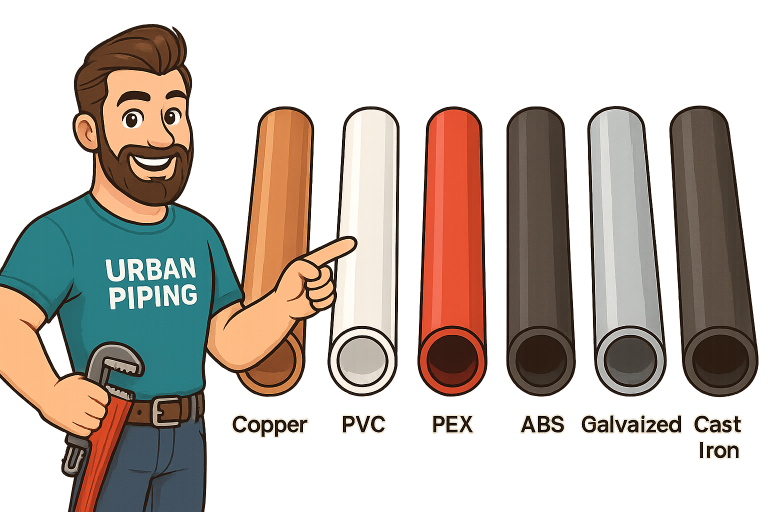
Sorting through plumbing pipe types can feel overwhelming — especially with so many acronyms (PEX, CPVC, ABS, etc.). This section gives Calgary, Edmonton, and Vancouver homeowners a simplified breakdown of modern pipe materials and what makes them code-approved, reliable, and cost-effective for your property. Whether you’re planning a minor upgrade or full system retrofit, understanding today’s material landscape is essential.
What defines a ‘good’ plumbing material?
Good plumbing materials meet multiple standards — not just durability. They must:
- Resist freezing and bursting during harsh Alberta winters
- Be easy to install in tight, existing wall cavities
- Comply with local building and fire codes
- Offer long-term pipe lifespan with minimal maintenance
Materials like PEX Class A and CPVC are often favored in residential repiping because they handle both high and low temperatures well while maintaining internal water pressure. Ease of connectivity — whether with crimps, clamps, or glues — also plays a role in which pipe gets chosen during installation.
Materials used in residential vs. commercial buildings
Residential plumbing typically utilizes flexible or lightweight pipe materials like PEX, copper, or PVC, which are easier to maneuver through confined spaces and walls. Commercial buildings, facing heavier loads and industrial waste, often turn to cast iron or HDPE piping for enhanced durability and noise insulation.
“PEX and copper dominate new installs across Alberta’s residential sector.”
Tip: Always confirm plumbing materials meet local codes specific to Calgary, Edmonton, or Vancouver — professionals like Urban Piping stay up-to-date so you don’t have to.
Explore your options now to avoid costly surprises later!
How to Choose the Right Plumbing Pipe for Your Calgary Property
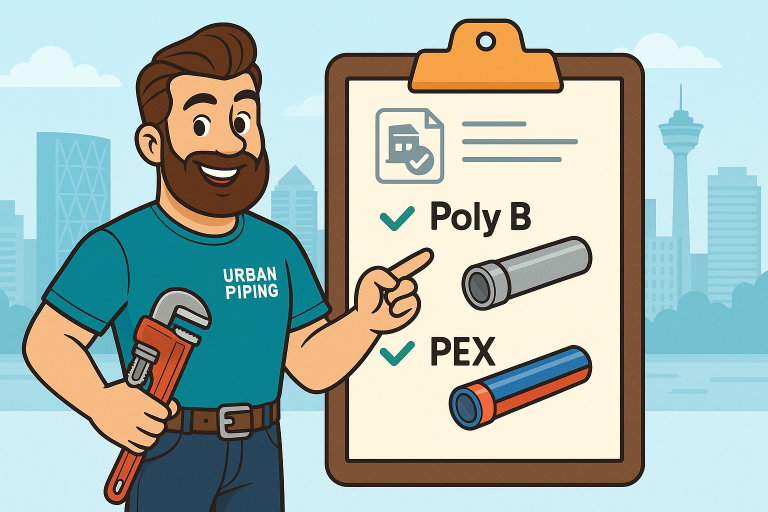
Urban Piping expert highlights Poly B and PEX pipes in Calgary, Edmonton, and Vancouver.
Choosing the right type of plumbing pipe for your Calgary home involves more than just picking the most affordable option—it’s about performance, compatibility, local code compliance, and long-term investment. Whether you’re tackling a partial repair or planning a full-home repipe, selecting the ideal pipe material ensures leak-free service during harsh winters and aligns with current Alberta plumbing regulations.
Matching pipe to your water pressure system
Water pressure in Calgary homes can vary depending on local infrastructure and home elevation. PEX and copper are commonly used for their proven ability to withstand fluctuating pressure. Urban Piping recommends upgraded piping solutions that are pressure-rated and tested under municipal conditions. Builders often favor PEX class A for its flex-construction, which reduces the number of joints—limiting potential failure points under dynamic pressure changes.
Hot vs. cold water compatibility
Not all pipes are created equal when it comes to temperature handling. PVC, for example, is useful for cold-only lines but fails under hot water. CPVC and PEX outperform older materials like Poly B in resisting thermal expansion and contraction, making them ideal for hot water lines in bathrooms, kitchens, and laundry rooms. Homeowners retrofitting older Calgary houses should aim for high thermal-resistance materials to avoid long-term stress fractures or warping.
Local codes: Calgary building permits and pipe rules
Calgary and surrounding municipalities enforce plumbing codes that restrict certain outdated materials such as Poly B and galvanized steel. Urban Piping’s licensed technicians ensure all upgrades meet or exceed the Alberta Building Code. As always, a permit is required for major repipes or structural plumbing modifications. One key consideration: PEX Class A is favored by inspectors and is fully code-compliant across Calgary and the surrounding areas.
Tip from Urban Piping: “PEX Class A is code-compliant in Calgary and ideal for full-home repipes replacing old Poly B.”
Budget, lifespan, and installation cost considerations
While copper offers legendary longevity, it comes at a high material and labor cost. PEX, meanwhile, provides lower installation costs and excellent freeze-resistance, making it a smart choice for Calgary’s climate. Be sure to factor in the scope of your renovation. For example, trenchless installation methods for PEX significantly reduce drywall damage costs. Pair this with a trusted provider like Urban Piping to maximize value.
- Checklist for Pipe Selection:
- ✔ Home Age: Older homes may require full repipes for compliance
- ✔ Renovation Scope: Minor fix vs. total overhaul
- ✔ Climate Resistance: Does the material handle freeze-thaw cycles?
- ✔ Budget Alignment: Are you balancing short- and long-term costs?
Ready to match your plumbing upgrade to your Calgary home perfectly? Get A Quote, Free Estimates, Call Now.
Signs It Might Be Time to Replace Your Pipes
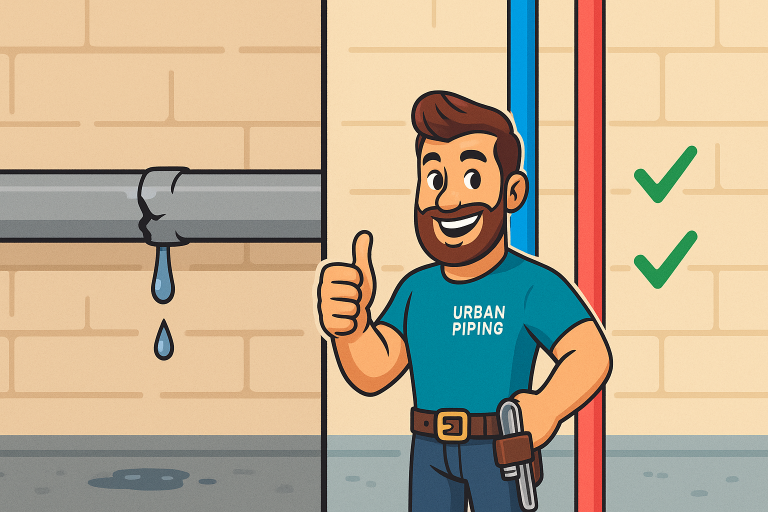
Choosing the right types of plumbing pipes ensures reliable and leak-free systems in Calgary, Edmonton, and Vancouver.
How can you tell if your home’s pipes are past their prime? Knowing what to look for can prevent water damage, costly repairs, and even potential health risks. Whether it’s decade-old Poly B or rust-prone galvanized steel, Calgary homeowners need to stay alert to indicators of plumbing failure, especially given the region’s temperature extremes and aging housing stock.
Discoloration, odour, or rusty water?
Discoloured water that smells metallic or tastes strange is a common early indicator of internal pipe corrosion. Rust stains in sinks or bathtubs typically mean deteriorating galvanized pipes. If you notice brown or yellow water from your taps—especially after long periods of inactivity—it’s time for a professional inspection.
Visible corrosion, flaking or leaks
Exposed piping beneath sinks, in basements, or utility rooms should be checked regularly. If you see greenish oxidization on copper pipes or white mineral buildup around joints, these are red flags. Poly B pipes often show hairline cracks or flaking fittings at bends—signs they’re beginning to degrade under pressure or thermal cycling.
Clues Calgary weather might be damaging your pipes
Cold Alberta winters wreak havoc on older plumbing systems. Freeze-thaw patterns increase stress on joints and walls, especially in under-insulated or exterior-facing installations. Urban Piping responds to more pipe bursts in winter than at any other time of year.
“Each winter in Calgary, we respond to more pipe failures caused by freeze-thaw than any other issue.” — Urban Piping Field Supervisor
Specific risks from aging Poly B systems
Polybutylene (Poly B) pipes installed between the 1970s and 1990s are notorious for leaking at fittings and reacting poorly to chlorine in municipal water. If your home was built or last plumbed during that period, replacement is strongly advised. Urban Piping specializes in safe, efficient Poly B removals across Calgary and surrounding municipalities.
Fact: Lead or galvanized pipes pose health risks in older Calgary homes.
See leak symptoms in your home? Don’t wait for damage to worsen. Get A Quote, Free Estimates, Call Now.
Pipe Material Comparison Chart
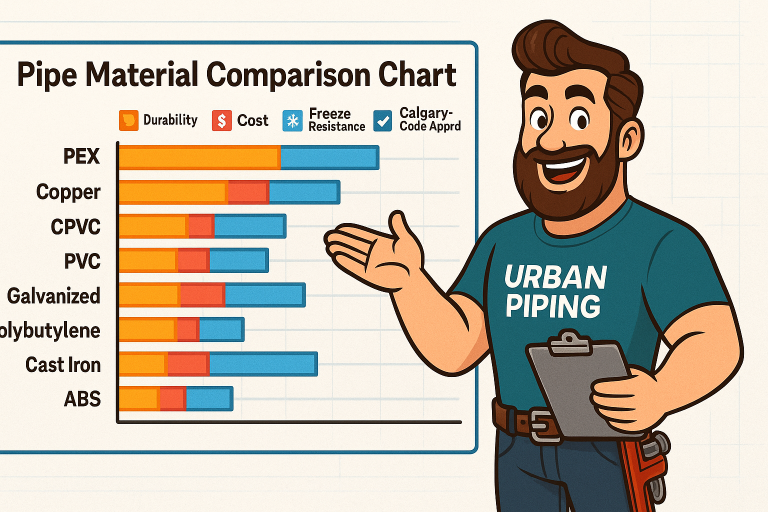
A clear chart from Urban Piping compares the main types of plumbing pipes used in Calgary, Edmonton, and Vancouver for durability, cost, and freeze resistance.
Looking for a side-by-side breakdown of pipe material options? Whether you’re replacing legacy Poly B pipes or outfitting a new build, this comparison chart helps Calgary homeowners identify the ideal piping solution based on safety, lifespan, regional code compliance, and budget. Urban Piping’s decades of field experience informed this data to simplify your selection process.
Compare by lifespan, cost, temperature range, and safety
Not all pipes are created equal. Copper, while durable, is vulnerable to corrosion and comes at a premium. PEX offers affordable flexibility but requires quality installation to avoid failures. CPVC is heat-tolerant but brittle in cold. See below how popular pipes compare:
- PEX: 40–50 yrs, low cost, excellent freeze resistance, code-approved, potable safe
- Copper: 50+ yrs, high cost, limited freeze resistance, code-approved, safe
- PVC: 25–40 yrs, low cost, only for cold water, not for potable use
- CPVC: 40–50 yrs, moderate cost, handles hot water well, code-compliant
- Galvanized: 30–40 yrs, high corrosion risk, not recommended for potable use now
- Poly B: 10–25 yrs, now discontinued due to high failure rate
- ABS: Drain/waste lines only, not for supply purposes
- Cast Iron: 50–100 yrs, very heavy, only used in certain drains
“Not all pipes are created equal. Matching material to your local climate is critical.” — Urban Piping
Which pipe is right for retrofits like Poly B replacements?
PEX Class A is the gold standard when replacing Poly B piping in Calgary. It offers unparalleled flexibility, high freeze resistance, and seamless integration into older framing layouts with minimal drywall removal. Urban Piping exclusively uses this material for Poly B repipes, ensuring code compliance and efficient installs under warranty.
Visual comparisons make decisions easier. Get A Quote, Free Estimates, Call Now.
Conclusion: Make the Right Choice with Trusted Local Experts
An Urban Piping professional consults with a satisfied homeowner about different types of plumbing pipes in Calgary, Edmonton, and Vancouver.
Your home’s plumbing system is only as strong as the materials and craftsmanship used. From understanding pipe materials to navigating local code requirements, Calgary homeowners need expert guidance to upgrade both safely and effectively. Urban Piping stands ready to help with unmatched Poly B replacement experience and licensed specialists ready to walk you through every step. Investing in a professional service ensures that your plumbing upgrades meet safety standards and function efficiently for years to come. Additionally, understanding poly b pipe replacement costs upfront will help you budget accordingly and avoid unexpected expenses. With comprehensive estimates and transparent pricing, Urban Piping guarantees you get the best value for your investment.
Recap of top pipes for Calgary homes
PEX Class A leads for cost-effective and winter-resistant installs, while copper remains ideal for homeowners who prioritize maximum durability. Modern alternatives like CPVC and PVC serve niche needs but often fall short for whole-home applications. Poly B or galvanized? It’s time to replace them.
What sets Urban Piping apart: Expertise in Poly B replacements
Testimonial: “Urban Piping replaced all our old Poly B with PEX and the drywall finish was flawless.” — Local Calgary Homeowner
No other plumbing contractor in Calgary has completed as many Poly B repipes as Urban Piping. From pipe inspection to drywall repair post-install, the entire process is streamlined and transparent. Our licensed team ensures every job meets Alberta Building Code and passes inspection.
Next steps: Free quotes and inspection
The best way to begin is with a no-pressure consultation. Urban Piping provides free site evaluations across Calgary, Edmonton, Vancouver, and surrounding communities. Whether you’re dealing with discolored water or planning a full renovation, we’ll help you choose the pipe type that matches your future plans and property anatomy.
Don’t guess—get expert help from Calgary’s top-rated plumbing team. Get A Quote, Free Estimates, Call Now.