What Is Poly B Plumbing?
If your Calgary, Edmonton, or Vancouver home was built between 1985 and 1997, there’s a good chance it contains Poly B plumbing—also known as polybutylene pipes. Understanding what Poly B is, how it was used, and why it poses long-term risks is essential for anyone looking to protect their home investment, meet Canadian building codes, and avoid costly future repairs. One of the main issues with Poly B plumbing is its susceptibility to deterioration over time, which can lead to leaks and significant water damage. Homeowners should focus on understanding poly b plumbing risks, as proactive measures can help mitigate potential problems. Regular inspections and considering replacement options are crucial steps to ensure your home’s plumbing system remains reliable and compliant with safety standards.
Definition of Polybutylene (Poly B)
Polybutylene, commonly referred to as Poly B, is a flexible grey plastic piping once promoted as a low-cost alternative to copper and other metal pipes. Labeled with “PB2110,” these pipes were designed to carry both hot and cold water throughout residential plumbing systems. Their flexibility allowed for simpler and quicker installations, especially in tight spaces.
If you are a Calgary homeowner dealing with Poly B pipes, you are not alone — thousands of homes in the city were built with this outdated plumbing. Urban Piping specializes in Poly B Replacement Calgary and has helped over 3,000 homeowners make the switch. Ready to get started? Call (403) 988-3801 for your free estimate.
When and where Poly B was commonly installed
Between 1985 and 1997, an estimated 700,000 homes across Canada were outfitted with Poly B piping. In Calgary, Edmonton, and surrounding areas, homebuilders chose this material for everything from full-home plumbing systems to localized installations under sinks and in basements. Due to its cost savings and availability in that era, Poly B was especially favored in middle-income and newly developed suburban communities.
Why it was popular with home builders
Poly B gained widespread adoption because it was lightweight, easy to install, and initially backed by manufacturers’ claims of durability. Builders found the piping appealing due to reduced labor costs and material affordability. However, the long-term risks—unknown at the time—eventually led to its phase-out and strong discouragement from Canadian plumbing guidelines today.
Homeowners in Western Canada should take proactive steps to check for Poly B before issues arise—it’s never too early to upgrade your plumbing.
Want to see how we have helped Calgary homeowners just like you? Browse our Calgary Poly B case studies and resources to see real projects, real results, and why thousands trust Urban Piping for their Poly B replacement.
Major Risks of Poly B Plumbing in Canadian Homes
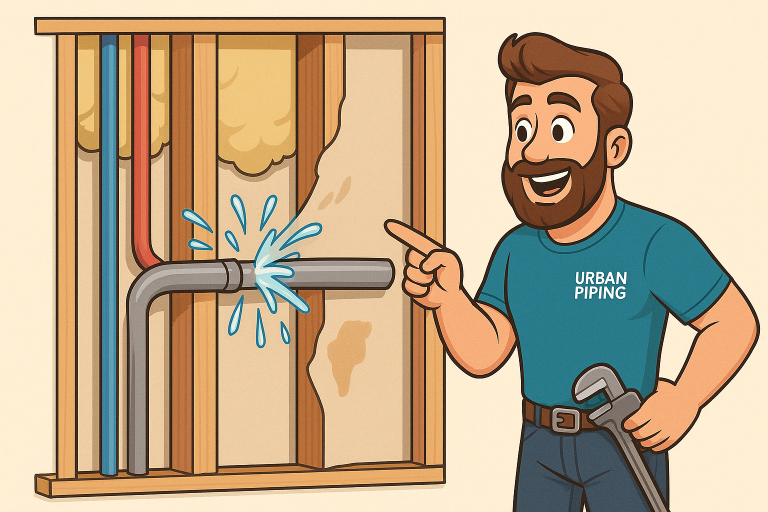
Still have Poly B in your walls? You’re sitting on a plumbing time bomb. From hidden leaks to denied insurance claims, Poly B plumbing has proven to be one of the most problematic materials in Canadian home construction. Understanding these dangers can help you make informed decisions about inspections, repairs, or total pipe replacement—before it’s too late.
Common failure points and pipe degradation
Poly B degrades over time due to exposure to heat, chlorine, and improper fittings. The pipe’s plastic material tends to crack, especially at joints or connections near heat sources like water heaters. Homeowners also report brittleness in older Poly B, increasing the risk of spontaneous ruptures.
Leak and flood risks to your home interior
Even minor Poly B leaks can quickly escalate into extensive water damage. When installed behind walls or drywall—as was common in Calgary and Edmonton homes—leaks may go unnoticed until visible damage appears. A 2020 CBC report uncovered that Canadian homeowners have collectively spent millions on repairs after surprise pipe failures. Homeowners often find themselves facing significant repair costs as they address these issues. Poly B pipe problems in Calgary have prompted many residents to consider costly replacements, leading to an increased demand for professional plumbing services. Furthermore, awareness of the potential risks associated with these pipes is growing, encouraging preventative measures among homeowners.
A CBC report in 2020 revealed that damaged Poly B piping cost Canadian homeowners collectively millions in repair bills.
Health concerns from water contamination and materials
Over time, degrading plastic may release contaminants into your water supply, raising concerns about possible health hazards associated with plastic piping and chlorine interactions. Though no definitive studies have labeled Poly B as toxic, suspicious taste or odor in your water could indicate pipe deterioration.
Insurance premium hikes and claims denials
Many insurance companies now recognize Poly B as a major liability. Some raise premiums for homes with known Poly B plumbing—or worse, deny claims outright. If you experience a flood from Poly B failure, coverage could be limited or refused, regardless of your policy’s fine print.
Insurance claims due to Poly B leaks have led to rate increases and denied coverage in many cases.
If your home still relies on Poly B piping, talk to a certified plumber before damage and denial disrupt your family’s comfort and finances.
How to Identify Poly B Piping in Your Home
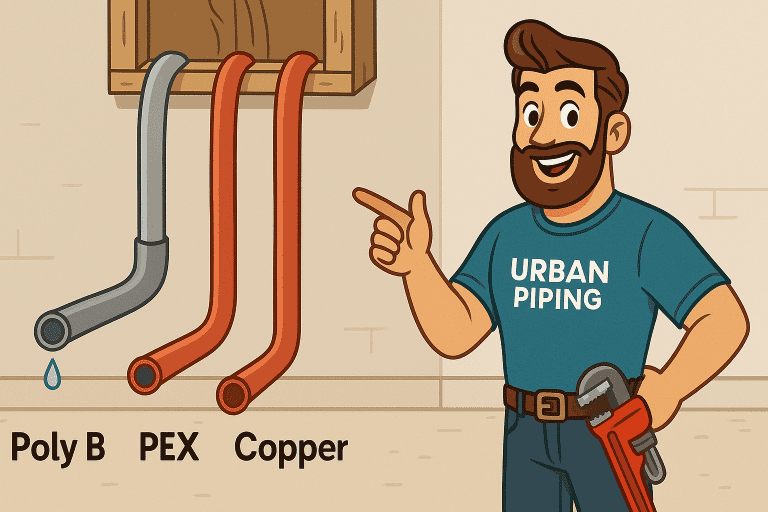
Wondering if your home contains high-risk Poly B pipes? Accurate identification is the critical first step toward safer, code-compliant plumbing. This is particularly important for homes built or renovated in Western Canada between the mid-80s and late 90s. Whether you’re buying, selling, or renovating, learn how to visually detect Poly B or get professional help before small issues lead to costly surprises.
Visual signs of Poly B pipes
The easiest way to spot Poly B is by its color and markings. Pipes are typically grey in color, flexible, and often stamped with “PB2110”. They’re commonly found near water heaters, under sinks, or in unfinished basements. The fittings may be either metal or plastic, and often lack the permanence found in copper or PEX systems.
Look for grey flexible plastic pipes with metal or plastic fittings, often stamped with “PB2110”.
Typical locations to inspect (basements, under sinks)
Start your inspection in accessible areas like the basement utility room, below bathroom sinks, or behind washer/dryer setups. Poly B was run through ceilings and floors, so peek through any removable ceiling tiles or utility panels. However, many installations are concealed behind drywall, making them harder to detect without professional help.
When to call for an expert inspection
Because Poly B piping can be hidden behind finished walls or improperly connected to copper lines, a licensed plumber is your best resource. Urban Piping technicians use advanced detection methods to identify Poly B with minimal disruption. They can also provide a quote for full replacement using PEX—an industry-standard solution that exceeds current Canadian plumbing codes.
Poly B is frequently hidden behind drywall—a certified plumber can confirm with minimal intrusion.
If you’re unsure, get peace of mind with a professional assessment––an early inspection could save you thousands in future repairs.
“`html
Replacing Poly B Pipes: What Calgary Homeowners Need to Know
Urban Piping expert explains the risks of Poly B plumbing versus PEX and copper options in Western Canada.
If you’re a Calgary homeowner with polybutylene (Poly B) plumbing, replacing your pipes isn’t just proactive—it’s critical. This guide walks you through the safe and affordable ways to replace Poly B in your Alberta property, keeping you aligned with local codes and protecting your investment. With thousands of replacements completed across Calgary, Urban Piping brings proven solutions and peace of mind to every home we upgrade.
Is Poly B still to code in Alberta?
Poly B pipes are not banned in Alberta, but they are no longer considered up to modern plumbing standards. While not explicitly illegal, Poly B is flagged during home inspections and is excluded in most new construction projects due to its history of leaks, brittleness, and incompatibility with hot water lines. Most insurers now frown upon homes with intact Poly B systems, making replacement essential for risk mitigation.
Timeline and process of pipe replacement
The average Poly B replacement takes 5–10 days, depending on home size and complexity. Experts from Urban Piping begin by mapping out the plumbing routes using infrared and diagnostics. Next comes careful removal of Poly B lines, replacement with PEX or Copper, followed by wall restoration—including premium drywalling, taping, painting, and site cleanup.
“By 2023, our team at Urban Piping has replaced Poly B systems in over 1,000 Calgary homes,” – Graham Drew, CEO.
Costs involved for a typical home in Calgary
Replacement costs vary based on square footage, plumbing layout, and pipe accessibility. On average, a complete Poly B replacement in Calgary ranges from $8,000 to $15,000. Urban Piping provides transparent, free estimates so you know exactly what to expect with no surprises. Investing in replacement protects against future water damage and boosts home resale value.
PEX, Copper, or CPVC? Pros and cons of alternatives
- PEX Class A: Most recommended; flexible, corrosion-resistant, withstands freezing, lower labor cost
- Copper: Durable and traditional, but higher material cost and labor-intensive installation
- CPVC: Inexpensive, rigid and less ideal for retrofits, more prone to cracking in cold climates
PEX Class A is currently the top choice for Calgary homes due to its balance of durability, affordability, and ease of installation.
Need trusted professionals for your Poly B replacement in Calgary? Get A Quote, Free Estimates, Call Now
Buying or Selling a Home with Poly B: What You Need to Know

A professional from Urban Piping highlights Poly B risks found in local homes across Calgary, Edmonton, and Vancouver.
In Calgary’s real estate market, Poly B plumbing can make or break a deal. Whether you’re buying or selling, understanding the implications of polybutylene pipes in a home ensures you avoid costly surprises and use this knowledge as negotiation leverage. Urban Piping has helped hundreds of local homeowners safely navigate these transactions with confidence.
How Poly B affects home resale value and buyer interest
Homes with Poly B often stay on the market longer and receive significantly lower offers—sometimes by $5,000 to $10,000—compared to similar properties with updated plumbing. This is due to the perceived liability and future repair costs. Savvy buyers recognize Poly B as a red flag and may ask for professional replacement or lower their offer accordingly.
Homes with Poly B can sit on the market longer and attract lower offers due to perceived risk.
Disclosure obligations in Alberta real estate transactions
Sellers in Alberta must disclose known issues with plumbing systems. While Poly B presence is not inherently illegal, failure to notify buyers can lead to withheld funds, contract cancellations, or even legal action. It’s best practice to include documentation in MLS listings and discuss Poly B concerns transparently with buyers and agents.
Calgary inspectors may flag Poly B as a deficient material during pre-sale evaluations.
Negotiating Poly B replacement into purchase contracts
Both parties can use Poly B piping as a negotiation tool. Buyers may request the seller to complete replacement before closing or offer to split the cost. Alternatively, a home sale price can be lowered to reflect the anticipated investment in plumbing updates. Urban Piping offers detailed estimates that agents can attach to real estate documentation for clarity.
Concerned about buying or selling a home with Poly B? Get A Quote, Free Estimates, Call Now
Why Trust Urban Piping for Poly B Replacement?
Urban Piping’s expert plumber is ready to help homeowners in Calgary, Edmonton, and Vancouver handle Poly B risks with trustworthy replacement services.
When it comes to Poly B replacement in Western Canada, there’s a good reason why over a thousand homeowners have chosen Urban Piping. We don’t just replace pipes—we restore trust in your plumbing system through meticulous workmanship, honest pricing, and full-service restoration. With decades of collective experience in Calgary, Edmonton, and Vancouver, we’ve earned our reputation as Poly B experts. Our commitment to customer satisfaction means that we provide tailored poly b plumbing solutions in Calgary that cater to each homeowner’s unique needs. We utilize the latest technology and materials, ensuring the longevity and reliability of your plumbing system. Trust us to transform your home with high-quality services that exceed expectations.
Our proven experience: 1,000+ Calgary Poly B replacements
Urban Piping stands unmatched in volume and quality of Poly B replacements completed across Calgary and Alberta. Our team combines seasoned journeyman plumbers with advanced leak detection tools and refined processes to guarantee clean, code-compliant upgrades that last.
Urban Piping is Calgary’s most experienced Poly B replacement company with in-house drywall restoration teams.
Full-package service: Plumbing + Drywall + Painting
Most plumbing companies stop at pipework. We go further. After safely removing Poly B materials, we professionally restore walls, ceilings, and paint finishes using our dedicated drywall and painting crews—ensuring your home looks untouched post-project. You won’t need to hire extra contractors or worry about cleanup.
What our clients say: Real reviews and success stories
Calgary residents repeatedly praise our integrity, efficiency, and quality results. From fast resolutions to polished restorations, client testimonials speak volumes.
“They fixed our Poly B issue fast, and left our walls looking like new.” – Jen M., Calgary homeowner
Ready for a worry-free Poly B replacement? Get A Quote, Free Estimates, Call Now
“`