What Are Poly B Materials?
If your Calgary home was built or renovated between the mid-1980s and late 1990s, it may contain Poly B piping—a once-popular, now problematic plumbing material. Understanding what Poly B (short for polybutylene) is and how it stacks up against current standards is essential for protecting your home value, safety, and insurance eligibility. This section explores its characteristics, history, and drawbacks compared to modern alternatives used in Edmonton, Vancouver, and surrounding areas.
Definition and characteristics of Poly B (polybutylene)
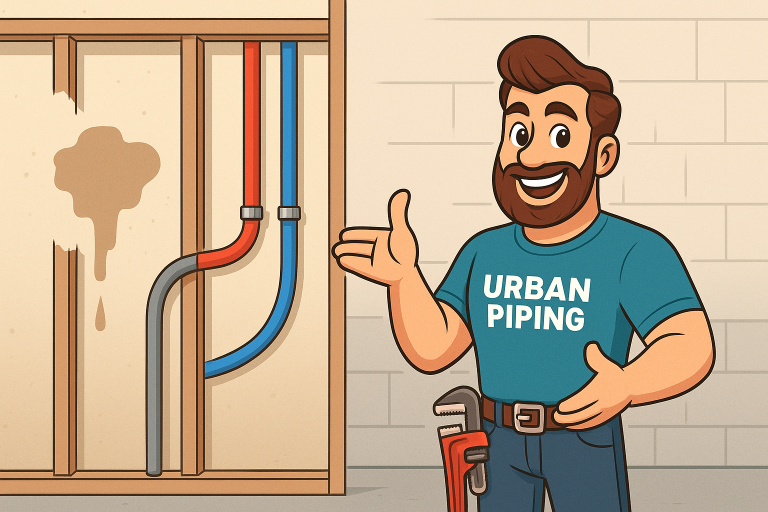
Polybutylene, commonly known as Poly B, is a plastic resin used in water supply piping systems. Poly B pipes are usually grey in colour, measuring between ½” and 1” in diameter. Easy to produce and install, they were initially promoted as cost-effective plumbing solutions. The pipes are flexible, non-metallic, and joined using copper or plastic fittings with metal clamps.
For everything you need to know about Poly B, check out our Guide to Poly B Plumbing. Or, if you are ready to replace your Poly B pipes, explore our Poly B Replacement Services — handled by the Canadian leaders in Poly B replacement.
Poly B pipes were widely used between 1985 and 1997 across Canadian homes.
When and where Poly B was commonly used
This piping type was extensively installed in Canadian residential homes, particularly in Calgary, Edmonton, and surrounding regions during suburban housing booms. It runs through basements, crawl spaces, utility closets, and sometimes discreetly behind drywall. In single-family homes, townhouses, and condos built in this period, Poly B may be the main piping for indoor water supply.
How Poly B compares to other materials from its era
Compared to copper or early PEX systems available in that era, Poly B was cheaper and faster to install. However, post-install observations revealed that Poly B degrades faster, especially when exposed to high temperatures or chlorine-treated municipal water. This led to increased vulnerability to pipe leaks, pressure issues, and early system failure. While copper pipes often last 50+ years, Poly B systems have shown degradation in under 20.
Want to see our work across Canada? Browse our Poly B replacement case studies for real project examples, or visit our blog for expert guides and homeowner resources.
Homeowners today should assess their plumbing material to avoid future failures linked to outdated systems.
Why Poly B Pipes Are a Problem
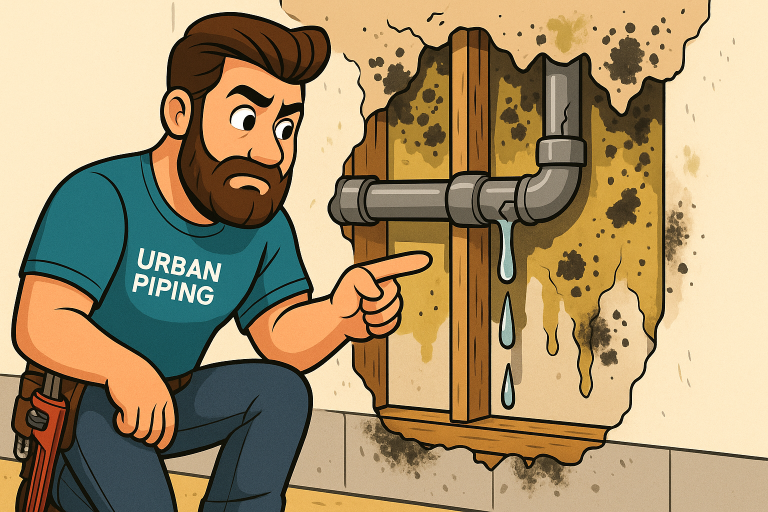
Urban Piping professional assesses Poly B materials leaking behind a damaged wall to ensure safe and effective plumbing solutions.
If you haven’t checked your plumbing in years, your home could be hiding unseen risks. Poly B plumbing may seem harmless at a glance, but beneath the drywall, it poses serious issues—from long-term durability concerns to expensive water damage liabilities. Homeowners in Calgary, Edmonton, Vancouver, and similar climates need to act before problems become disasters. Ignoring these risks could lead to significant repair costs and even health risks of poly B pipes, as they can degrade over time, potentially leaching harmful contaminants into your water supply. It’s crucial to consult with a professional to assess the condition of your plumbing and to explore safer alternatives if necessary. Taking proactive measures today can safeguard your home and your family’s well-being in the long run.
Case studies of failed Poly B plumbing
Urban Piping has documented hundreds of cases throughout Western Canada involving catastrophic Poly B failures. In several Calgary properties, pipe splitting caused flooding and tens of thousands in repairs. A common pattern emerges: failure tends to cluster around stress points like manifolds, joints, and elbows, particularly in older systems with original fittings.
Common failure points—joints, pressure issues, and corrosion
The most vulnerable areas of a Poly B system include connection points and locations under consistent high water pressure. Poly B’s outer layer deteriorates when exposed to oxygen and heat, intensifying in homes where hot water systems operate above 60°C. Additionally, metal fittings can corrode, leading to slow leaks that go unnoticed until significant damage occurs.
Insurance companies may deny claims due to known Poly B vulnerabilities.
Potential health risks and chemical leaching
While Poly B does not release toxins under all conditions, a 2022 study by Canadian water safety experts revealed concerns about trace chemical leaching from aged polybutylene exposed to chlorinated water. This emphasizes not just property risk, but potential health implications in long-term use. While not yet banned, major building codes across Canada now strongly discourage its installation.
Being proactive about Poly B replacement can save your home from health hazards and repair nightmares.
How to Tell If You Have Poly B Plumbing
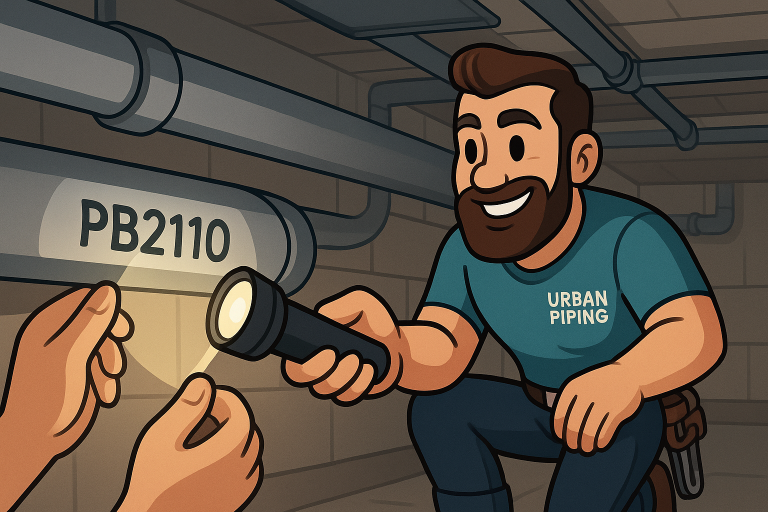
Urban Piping expert inspects Poly B materials to ensure safe plumbing in Calgary, Edmonton, and Vancouver homes.
Think you might have Poly B plumbing? With a bit of detective work—and careful inspection—you can figure it out before it becomes a costly repair. Canadian homeowners need to know where Poly B hides and how to identify it quickly through markings and colour. The sooner you know, the better your chances at preserving your plumbing and your property value.
Where Poly B is typically hidden in homes
Poly B pipes are often routed through basements, crawlspaces, utility closets, or behind access panels under sinks and near hot water tanks. Recently renovated bathrooms and kitchens may have newer visible fixtures but retain old Poly B piping behind the walls. In colder climates like Calgary and Edmonton, portions of the system may also run along ceilings and exterior walls susceptible to temperature shifts.
DIY inspection checklist with visual cues
- Look for grey flexible pipes near your water heater or under bathroom sinks
- Check for stamps like “PB2110”—a universal indicator of polybutylene
- Look at fitting types: older Poly B systems often use metal clamps or copper elbows
- Inspect pipe texture—Poly B has a smooth, plasticky finish compared to the matte surface of PEX
Look for ‘PB2110’ printed on pipes — a key marker of Poly B systems.
When to call a professional for inspection
If you suspect your home has Poly B pipes—especially if you’ve seen grey piping or suffered unexplained leaks—it’s time to call in a licensed specialist. Urban Piping technicians offer thorough home pipe inspections throughout Calgary, Edmonton, Vancouver and surrounding areas. Their expertise ensures issues are caught early and replacement options like polybutylene to PEX conversion are thoroughly explored.
Don’t wonder—get peace of mind with a qualified inspection from industry professionals.
What to Do If You Have Poly B Pipes in Calgary
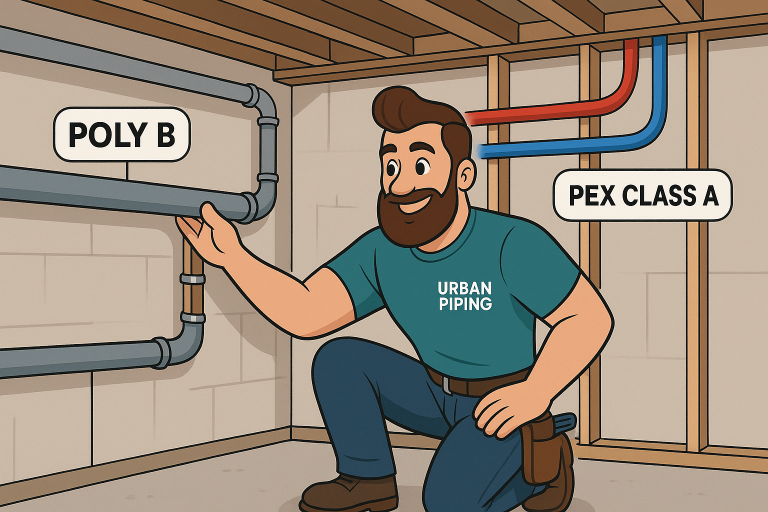
An Urban Piping expert points out the difference between Poly B and PEX piping used in home plumbing systems across western Canada.
If you’re a homeowner in Calgary or nearby communities and your house still contains Poly B plumbing, now is the time to act. This outdated material not only increases your risk of leaks, mold, and water damage, but it may also impact your insurance eligibility and property value. Thankfully, expert solutions are readily available—ranging from targeted Poly B repairs to full system replacements using PEX Class A, the gold standard in modern plumbing.
Replacement methods: full vs partial
Homeowners often ask whether a partial repair of Poly B piping is enough. While replacing only the visibly damaged sections might offer short-term relief, it’s important to note that Poly B degradation occurs behind walls and in unseen areas. A full replacement ensures long-term reliability, removes hidden risks, and satisfies most insurance and resale requirements.
- Partial Replacement: Economical upfront but risky in the long term as undetected sections may still fail.
- Full Replacement: Involves removing all Poly B piping, even behind drywall, and replacing it with modern materials like PEX Class A.
“PEX Class A is now the gold standard for modern residential plumbing.”
Cost ranges and insurance considerations
The cost of Poly B pipe replacement in Calgary varies by home size, layout, and accessibility, but average full-replacement pricing ranges from $6,000 to $15,000. Urban Piping’s turnkey service includes wall access, plumbing upgrades, drywall restoration, and finishing—making it a one-stop process for homeowners.
Many insurance carriers now limit coverage or deny claims outright if Poly B pipes are present. That’s why replacing your system proactively can help maintain full coverage and avoid costly claim denials during emergencies.
Poly B to PEX conversion benefits
Switching from Poly B to PEX Class A is an investment in safety, performance, and property value. PEX is flexible, resistant to scale buildup, and rated for both hot and cold water applications. It also withstands Calgary’s freeze-thaw cycles better than older piping systems.
- Increased Resale Value: Homes with PEX plumbing show better buyer confidence and compliance with modern residential codes.
- No More Stress About Leaks: PEX systems are built to last, with industry certifications and high pressure ratings.
- Insurance Friendly: Upgrades reduce risk and often restore full home insurance eligibility.
Urban Piping offers code-compliant Poly B replacements throughout Calgary, Edmonton, Vancouver, and surrounding areas—with every step handled in-house, including full drywall and paint restoration.
Unsure if your home still has Poly B? Book a professional inspection and consultation with Urban Piping today.
Get A Quote · Free Estimates · Call Now