What is Poly-B Plumbing?
If your Calgary home was built between the mid-1980s and the late-1990s, there’s a good chance Poly B plumbing might be hidden behind your walls. Known for its flexibility and affordability at the time, this grey plastic piping—referred to as Poly B or Polybutylene—was once standard in many homes across Alberta and throughout Canada. As building codes and water chemistry have evolved, so has the understanding of how Poly B performs over time, especially compared to modern materials like PEX or copper.
Poly B vs Polybutylene: Are They the Same?
Yes—Poly B is simply shorthand for polybutylene, a type of plastic resin once used extensively in residential plumbing systems. The terms “Poly B” and “polybutylene” are often used interchangeably by professionals. Polybutylene pipes are typically grey in colour and have a flexible, rubber-like texture that made them faster and cheaper to install than traditional copper piping. Despite their early appeal, Poly B pipes have since become notorious for early wear and unexpected failure due to chemical vulnerabilities.
If you are a Calgary homeowner dealing with Poly B pipes, you are not alone — thousands of homes in the city were built with this outdated plumbing. Urban Piping specializes in Poly B Replacement Calgary and has helped over 3,000 homeowners make the switch. Ready to get started? Call (403) 988-3801 for your free estimate.
Timeline: When Poly B Was Installed in Homes
Poly B was widely used in Canadian homes from about 1985 until it was phased out in 1997. It became especially common during the housing boom in Calgary and Edmonton during the early 1990s. Many homeowners are unaware their homes contain Poly B, as the pipes are often concealed behind walls or ceilings.
“Poly B was commonly used between 1985–1997 as a cost-effective plumbing solution in Canadian households.”
Why It Was Popular in the 80s and 90s
At the time, Poly B offered several advantages: low cost, ease of installation, and flexibility, especially for homes with complex layouts. Builders and plumbers embraced it as a faster alternative to rigid copper. Unfortunately, long-term studies and rising reports of pinhole leaks and pipe failures caused concern—and ultimately led to its removal from building codes across Canada. Homeowners today face the consequences of this material aging poorly over decades of use.
Want to see how we have helped Calgary homeowners just like you? Browse our Calgary Poly B case studies and resources to see real projects, real results, and why thousands trust Urban Piping for their Poly B replacement.
Wondering what’s behind your walls? Stay informed so you can take action before costly failures occur.
Is Poly-B Plumbing Dangerous?
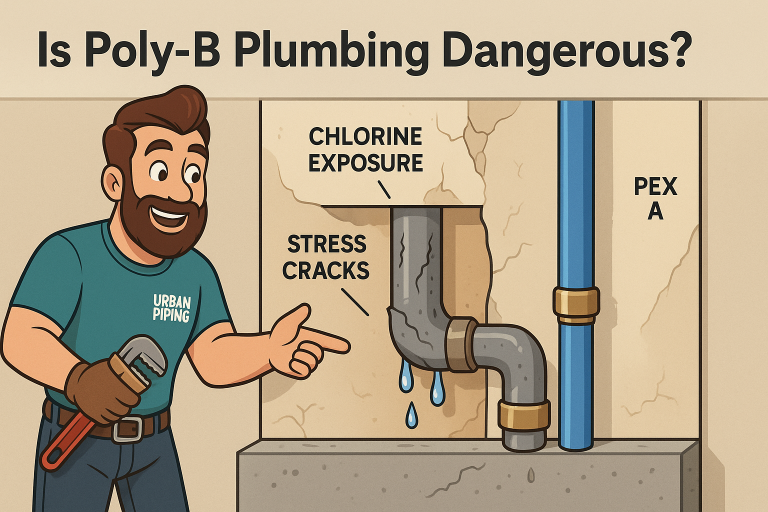
Replacing aging Poly B plumbing is about more than avoiding leaks—it’s about protecting your investment and your family’s safety. Calgary, Edmonton, and Vancouver homeowners with Poly B pipes often ask: “Is it dangerous?” While studies haven’t identified direct health threats from Poly B plastic itself, the structural risks are critical. From silent leaks to insurance complications, living with Poly B plumbing poses a series of under-the-radar hazards every homeowner should understand before it’s too late.
How Poly B Reacts With Chlorinated Water
Municipal water systems in Calgary and most Canadian cities use chlorine as a disinfectant. Unfortunately, this essential water treatment is one of the biggest enemies of Poly B. Over time, chlorine oxidants attack the pipe from within, making it brittle and causing microscopic cracks that grow with every pressure cycle.
Chlorine oxidants in tap water are known to weaken Poly B from the inside.
Once the inner wall of the pipe is compromised, leaks can appear suddenly and without warning, often leaving homeowners with water damage remediation costs exceeding tens of thousands of dollars.
Can It Cause Health Issues?
There’s no evidence that water flowing through Poly B piping poses direct health concerns. However, when Poly B fails, it often leads to hidden water leaks that foster dangerous mould growth, bacterial contamination, and damage to structural materials. This can reduce indoor air quality and may aggravate asthma, allergies, or respiratory conditions.
In that respect, while the pipe itself isn’t toxic, its failures create unhealthy conditions for the home environment.
Common Failure Points and Warning Signs
- Stress Cracks: Often found near joints, elbows, or crimped connections
- Leaks Around Fittings: Poly B fittings were often made of plastic or low-quality brass, both prone to failure
- Discolouration: Stains on walls or ceilings, warped baseboards, or swollen drywall may indicate slow Poly B leaks
- Pipe Flexing or Bulging: Signs of pressure buildup inside compromised pipe walls
If your home still uses Poly B, replacing it proactively is the safest way to avoid future disasters and rebuild trust with your insurance provider.
How to Identify Poly-B in Your Home
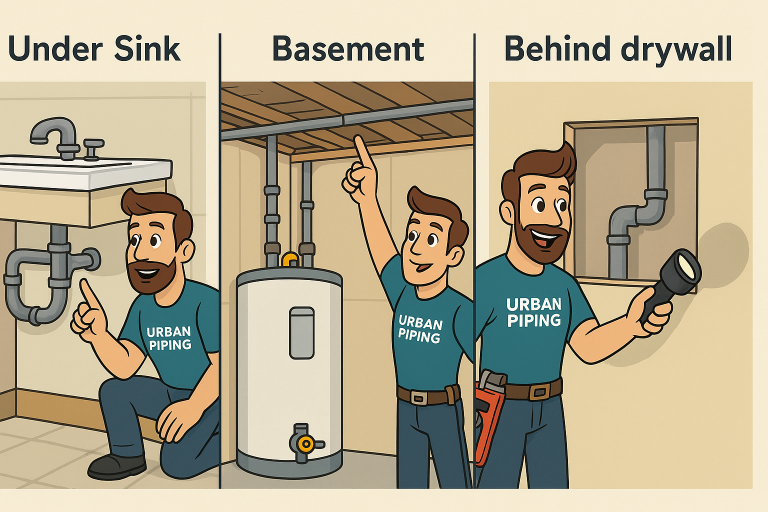
Not sure if your home has Poly B? Many Calgary residents are surprised to find out their dream home contains this aging—and risky—pipe material. Recognizing Poly B is the first step in protecting your home from devastating water damage. Luckily, identification doesn’t require tearing through drywall. With a sharp eye and a few targeted checks, you can spot Poly B piping in key places throughout your home.
What Poly B Looks Like
Poly B is typically grey, semi-flexible plastic tubing with a diameter ranging from ½ inch to 1 inch. You may find labeling on the pipe wall reading “PB2110,” which definitively identifies it as Polybutylene. While grey is the most common colour, some variants come in white, black, or even blue, especially those used for cold water lines.
Poly B is grey, flexible plastic piping often found near water heaters and under sinks.
Because Poly B was installed behind walls, you’ll usually have to inspect accessible areas like basements, utility rooms, and areas under sinks to find visual proof.
Common Installation Areas in Calgary Homes
- Under kitchen or bathroom sinks (check where water lines emerge)
- Near hot water tanks or boiler systems
- In unfinished basements or crawl spaces
- Behind washing machines or near laundry hookups
- Inside ceiling or wall cavities visible through attic hatches or drywall cutouts
Focus your inspection near shutoff valves or transition points, where Poly B may connect to copper or PEX piping installed during past repairs.
Visual Signs of Deterioration
Even if your home has Poly B, not all piping is equally at risk. Look for these red flags that indicate urgent attention is needed:
- Discolouration or Staining: Especially near joints and shutoff valves
- Cracked Fittings or Deformed Pipe: Usually from chlorine exposure or poor installation
- Pinhole Leaks: Hard to detect until secondary damage (like mould or wood rot) appears
Don’t wait for inspection time to uncover risky plumbing—your home’s longevity depends on early detection and action.
Repairing vs Replacing Poly-B: What Are Your Options?
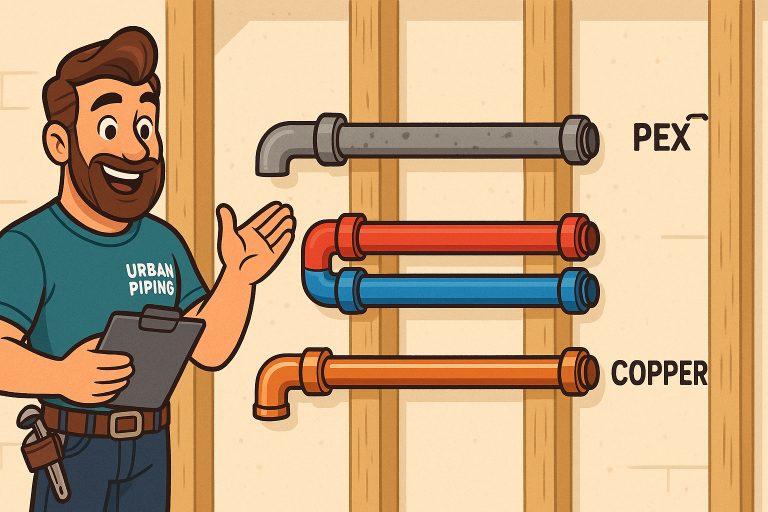
Uncertain whether to repair or fully replace your Poly B plumbing? For many Calgary homeowners, the decision comes down to more than just cost—it’s about long-term peace of mind, safety, and home value. Understanding the limits of simple repairs and the benefits of modern replacement solutions like PEX can protect you from catastrophic pipe failures and costly water damage.
Can Poly B Be Safely Repaired?
Technically, yes—Poly B plumbing can be patched in certain cases using clamps or by replacing small sections. However, most experts agree that these fixes are only temporary solutions. Polybutylene pipes tend to degrade from the inside due to chlorine exposure, meaning the next leak could happen in an entirely different location.
Repairs also don’t address aging pipe joints and hidden weaknesses. Many insurance companies won’t fully recognize a partially repaired Poly B system as “safe,” putting your coverage at continued risk.
Why Full Replacement Is Usually Recommended
Full-home Poly B replacement is often the smartest option for homeowners in Calgary, Edmonton, Vancouver, and surrounding areas. This process eliminates the weak Poly B infrastructure and replaces it with durable, modern-grade materials such as PEX or copper, ensuring compliance with current building codes and insurance standards.
“In most cases, patch repairs only act as a temporary fix. Full-home repiping ensures long-term peace of mind.”
PEX pipe, for example, is highly resistant to corrosion, freeze damage, and expansion stress, making it a future-proof choice for residential plumbing.
Estimated Cost of Replacing Poly B in Calgary
Replacement costs usually range between $6,000 and $15,000 across Calgary, depending on the size of the home, pipe location accessibility, and whether drywall repair is needed. Urban Piping provides all-inclusive quotes that cover plumbing AND cosmetic repairs, offering homeowners a stress-free experience with no hidden surprises.
If you’re planning on staying in your home long-term—or looking to sell soon—replacement will increase both your property value and buyer confidence.
Get A Quote, Free Estimates, Call Now
Poly-B and Insurance in Calgary: What You Must Know
If there’s Poly B in your home, your insurance coverage might be at serious risk. Many Calgary-area homeowners are shocked to learn that their insurance premiums could increase—or worse, that claims might be denied entirely—due to outdated polybutylene plumbing. Here’s what you need to know to stay protected and compliant.
Will Insurance Cover Poly B Related Damage?
Not always. Some Alberta homeowners have discovered, often too late, that insurance policies exclude damage caused by Poly B pipe failures. This is due to the known history of brittleness, cracking, and failure under normal water pressure or temperature fluctuation. If you experience a leak and Poly B is identified as the culprit, your insurer may contest the claim.
Can Poly B Lead to Higher Premiums?
Yes. Many insurers now factor plumbing materials into risk assessments. Homes with Poly B often attract higher premiums because of their failure history. Even if your claim goes through, recurring repairs can lead to long-term cost hikes—or outright policy cancellations.
“Some insurers in Alberta may deny claims or charge higher premiums if Poly B piping is present in homes.”
Do You Need to Inform Your Home Insurance Provider?
Absolutely. Failure to disclose Poly B piping could be considered a non-disclosure, affecting your policy’s validity. It’s recommended you inform your provider during inspections, updates, or renewals.
Additionally, appraisers and home inspectors frequently flag Poly B systems during real estate transactions or refinancing. This could impact your ability to secure funding or complete a smooth home sale.
Get A Quote, Free Estimates, Call Now
The Urban Piping Approach to Poly B Replacement
Why do so many Calgary homeowners trust Urban Piping with Poly B replacements? Unlike general trades or contractors, we specialize in full-scope Poly B removal done entirely in-house—from licensed plumbing to drywall finishing. This makes the entire process seamless, faster, and more accountable from start to finish. Our team is dedicated to ensuring that every aspect of the project meets the highest standards of quality and safety. Homeowners appreciate our commitment to using top-tier materials and our transparent communication throughout the process. That’s why so many choose us to replace poly b plumbing in Calgary; they know they’re getting a service they can rely on.
Why Full-Service In-House Replacement Matters
Traditional Poly B replacement often involves coordination between an external plumber and a drywall repair contractor. This leads to timeline delays, miscommunication, and inconsistent workmanship. At Urban Piping, we handle every phase under one roof, including repiping, wall patching, and painting—reducing downtime and improving quality control.
“Urban Piping has completed more Poly B replacements in Calgary than any other company — all in-house, from plumbing to drywall.”
How We Ensure Minimal Disruption During Work
Disruption is a common concern for families, and we take that seriously. Our licensed technicians work room by room, using dust protection barriers and focused scheduling to minimize downtime in your kitchen, bathrooms, or basement areas. We prioritize your peace of mind while enhancing your plumbing system’s integrity.
What Our Customers Say: Local Homeowner Stories
We’re proud of the reputation we’ve built in Calgary, Edmonton, and Vancouver. From single-family homes to multi-unit townhouses, our clients consistently praise the meticulous work, on-time execution, and respectful crews. “We didn’t even have to paint afterward,” says one SE Calgary homeowner. “Urban Piping took care of everything—start to finish.”
Get A Quote, Free Estimates, Call Now