What is Poly B Plumbing?
Thinking about the plumbing hidden behind your Calgary home’s walls? If your house was built between the late 1980s and mid-1990s, there’s a good chance it uses Poly B (polybutylene) piping—an aging system now known for its hidden risks. Understanding what Poly B plumbing is, where it’s typically located, and why it’s a concern is key to preventing costly damage and aligning with current Calgary plumbing codes.
History of Poly B use in Canadian homes (1985–1997)
Over 700,000 Canadian homes were built using Poly B plumbing between 1985 and 1997. Polybutylene was praised for its affordability and simple installation, making it a go-to material for builders during that era. It was especially prominent in residential properties across Western Canada, including Calgary. However, after reports surfaced of premature pipe failures and insurance issues, Poly B quickly fell out of favor and was discontinued.
If you are a Calgary homeowner dealing with Poly B pipes, you are not alone — thousands of homes in the city were built with this outdated plumbing. Urban Piping specializes in Poly B Replacement Calgary and has helped over 3,000 homeowners make the switch. Ready to get started? Call (403) 988-3801 for your free estimate.
What Poly B pipes look like and where they’re found
Poly B pipes are typically light grey with a flexible, plastic-like texture and are often stamped with “PB2110.” Homeowners may find them running through unfinished basements, behind drywall, or under kitchen and bathroom sinks. These pipes primarily connect to copper fittings and may also include grey or beige plastic elbows and T-connections, many of which are now associated with leaks or cracking over time.
Why Poly B was originally a popular material
Originally introduced as a low-cost alternative to copper, Poly B pipes were light, easy to install, and compatible with a wide range of fittings. Builders favored them to reduce labor costs and project completion times. Unfortunately, post-installation studies and field use revealed long-term vulnerabilities—particularly when exposed to sunlight, chlorine-treated water, and inconsistent water pressure—leading to premature cracking and widespread system failures.
Protecting your home’s pipes starts with knowledge. If you suspect Poly B, getting professional advice can save you thousands in water damage and future upgrades.
Want to see how we have helped Calgary homeowners just like you? Browse our Calgary Poly B case studies and resources to see real projects, real results, and why thousands trust Urban Piping for their Poly B replacement.
Common Signs of Poly B Damage
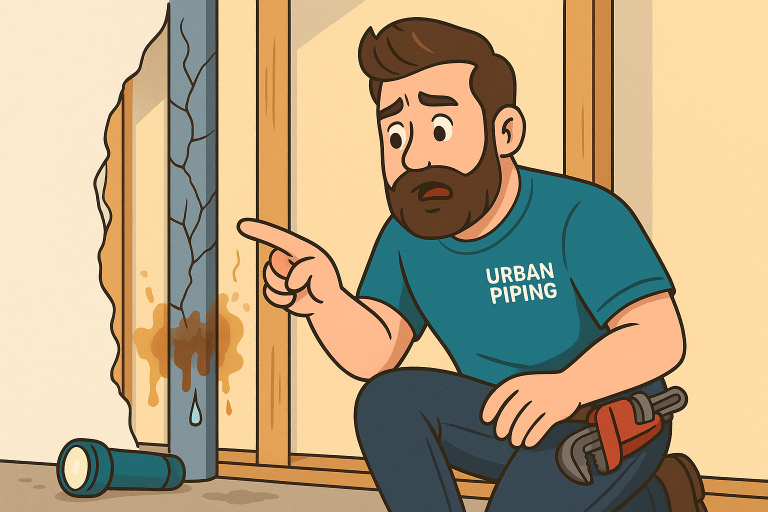
Noticing unusual stains on your wall or water pressure issues in your Calgary home? These could be signs of Poly B pipe deterioration. Polybutylene piping failures often appear silently and escalate rapidly—recognizing the red flags early gives you an edge in preventing catastrophic pipe bursts or costly drywall repairs. Here’s how to spot Poly B pipe damage before it’s too late.
Cracking or flaking on pipe surface
Poly B pipes are prone to surface cracks that can form internally and externally. Cracking is especially common near joints or around elbows where water sits longer or velocities spike. In advanced cases, sections of the pipe may even flake away or develop pinhole leaks. These cracks are often triggered by aging plastic, UV exposure during renovation, or elevated chemical levels in treated municipal water.
Discoloured fittings and damp drywall
Visible water spots on ceilings, discolored drywall, or bubbling paint may all point to hidden Poly B failures behind the walls. Elbows and connectors, especially plastic ones, are susceptible to micro-leaks over time. Damaged fittings can cause ongoing moisture accumulation, which might not trigger an alarm until mold sets in or structural materials begin to deteriorate.
Increased water pressure as a red flag
Older Poly B systems were not engineered to withstand modern water pressure standards above 70 PSI. A damaged or compromised pressure regulator can stress the brittle pipe material, significantly increasing the risk of rupture. If you feel sudden surges in your tap’s force, it’s time to inspect your system’s pressure and safeguard against auto-failures.
Sudden drops in water pressure
Decreased water pressure in specific fixtures may indicate an internal collapse or restriction in a Poly B pipe. Leaks from cracked segments can also reduce flow, especially if water is escaping before reaching the endpoint. These drops often go unnoticed for months but can signal slow-developing deficiencies that eventually lead to pipe bursts.
Urban Piping has seen pinhole leaks form behind walls without any early warning.
Early detection is vital—if you’re spotting any of these symptoms in your Calgary property, a Poly B plumbing inspection could prevent costly water damage. These inspections are designed to identify potential issues before they escalate, saving you time and money in the long run. Engaging professionals for polybutylene pipe inspections in Calgary ensures that any hidden vulnerabilities in your plumbing system are addressed promptly. Don’t wait until it’s too late; proactive measures can safeguard your home and enhance its longevity.
How to Prevent Poly B Pipe Damage
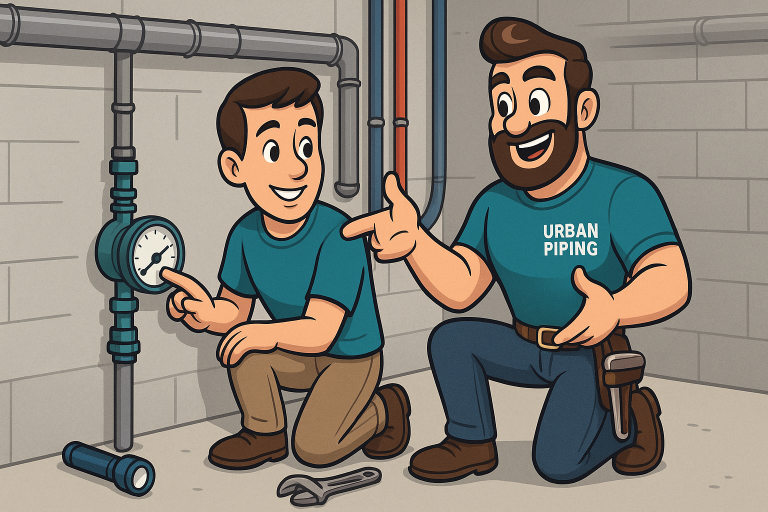
If your Calgary home contains legacy Poly B piping, staying one step ahead of deterioration is not just smart—it’s essential. While complete repiping is the most long-term solution, there are effective steps every homeowner can take to reduce failure risk and protect against moisture and insurance liability issues. Follow this expert-approved plan to extend your system’s lifespan and avoid plumbing emergencies.
Keep your water pressure regulated under 70 PSI
Excessive water pressure is a well-documented trigger of Poly B pipe failure. Use a pressure gauge to ensure your home’s water pressure stays in the safe range of 40–70 PSI. If necessary, enlist a certified plumber from Urban Piping to install a pressure-reducing valve (PRV). Pressure regulation is one of the most cost-effective ways to minimize pipe strain and slow degradation.
Avoid chlorinated cleaning agents near pipe joints
Harsh cleaning agents, especially those that release chlorine vapors, can exacerbate pipe deterioration. Poly B is chemically sensitive to chlorine exposure, which can cause micro-cracking along interior surfaces. Always ventilate bathrooms and kitchens well, and avoid using bleach or chlorine-base cleaners near plumbing fixture connections or cabinet enclosures where pipes run.
Schedule annual plumbing inspections
Annual plumbing assessments can uncover early signs of corrosion, fatigue, or pressure imbalance before a complete failure occurs. During an inspection, trusted professionals—like those at Urban Piping—check for joint integrity, moisture pockets, and discoloration on walls or fittings. Regular inspections offer peace of mind and can even help with insurance compliance if your provider requires Poly B documentation.
Install leak detection systems
Smart leak sensors and shut-off valves can serve as a fail-safe for Poly B systems nearing their life expectancy. These smart devices can alert you instantly to leaks and even auto-shut off water flow to limit flood damage. Installing a system near your water heater or under bathroom vanities is a low-cost/high-reward safety measure for any homeowner with legacy piping.
Homeowners can reduce failure risk by 40% with proper moisture monitoring and water pressure regulation.
Every action you take today—be it inspecting joints or installing smart detectors—can add years to your system and avert polybutylene failure down the road.
“`html
Local Guidelines & Code Requirements in Calgary
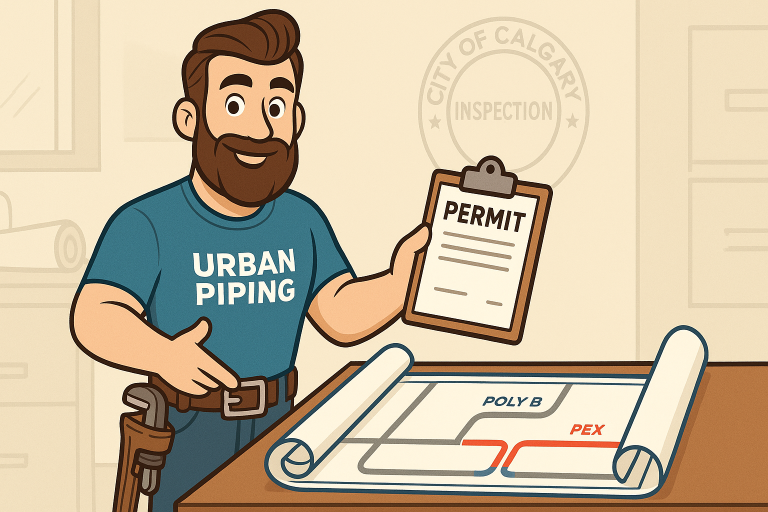
Before considering any plumbing upgrades, every Calgary homeowner should be aware of the specific local codes, bylaws, and permitting requirements surrounding Poly B replacement. Not only are legal compliance and safety involved—non-compliance could also affect home insurance claims and resale value in Calgary. Understanding when a permit is required and when disclosure is mandatory will ensure your Poly B damage prevention efforts are fully aligned with City regulations.
Do Calgary building codes allow Poly B?
While Poly B (polybutylene) piping is not explicitly banned by the Calgary Building Code, it’s no longer considered an acceptable material in new plumbing installations. Builders transitioned away from Poly B in the late 1990s due to its high failure rate. Today, industry best practices and compliance standards strongly push Calgarians toward PEX (cross-linked polyethylene) as the preferred alternative. Homeowners looking to upgrade or remodel their plumbing system will not be permitted to reinstall Poly B under new renovation permits.
City permit requirements for plumbing upgrades
According to the City of Calgary, any major plumbing retrofit—including Poly B removal—requires permitting and licensed contractor work. This ensures code adherence, inspection by municipal officers, and peace of mind. Attempting DIY replacements or skipping permits can lead to fines and failed inspections, particularly when associated drywall or structural access is involved. Urban Piping advises Calgary homeowners to always pull the appropriate permits before starting demolition or reconnection work on Poly B infrastructure.
When you must disclose Poly B during home sales or insurance renewals
Poly B piping is a known defect in many real estate transactions throughout Calgary and surrounding regions. Sellers have a legal obligation to disclose the presence of Poly B piping if known. Similarly, many insurance companies may deny coverage or severely restrict water damage policies unless the system is updated to a modern, risk-tolerant material like PEX. Failure to be transparent can result in claims disputes or costly remediation post-sale. It is crucial for sellers to address any issues related to Poly B piping proactively, as buyers may face challenges securing financing or insurance for properties with this defect. Additionally, the relationship between homeowners insurance and poly b replacement can complicate transactions, as potential buyers must navigate the costs associated with upgrades to meet insurance requirements. Ensuring transparency throughout the selling process not only protects sellers but also fosters trust with potential buyers.
Urban Piping ensures every repipe project is properly permitted and inspected, eliminating homeowner risk during resale or renovation.
When Should You Replace Poly B Piping?
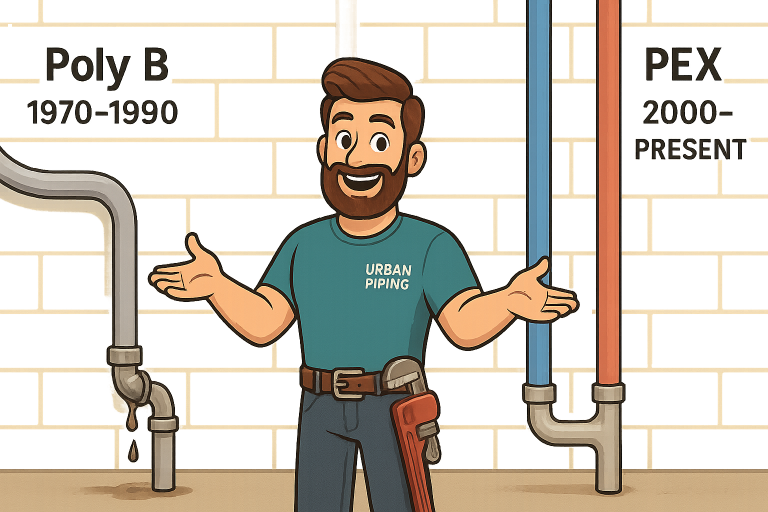
Replacing Poly B piping is not just a proactive decision—it’s typically a necessary one. If you’re a Calgary homeowner weighing the risks, timing, and costs, this section will guide you toward a confident, informed choice. Prevention always outweighs emergency response, especially when dealing with aging pipe systems that can cause hidden leaks and major structural damage.
Signs it’s time to replace—not repair
Visible pipe cracking, leaks at fittings, unusual water pressure fluctuations, or discolored water are common warning signs. In many homes, Poly B is concealed behind walls, making damage go unnoticed until a major failure occurs. If homeowners see gray polybutylene pipes running through their basement or utility spaces, it’s already time for a replacement consultation. Repairs may be temporary but don’t eliminate risk.
Cost vs. risk of waiting
A full Poly B replacement involves a cost investment—typically varying by home size, accessibility, and layout—but waiting comes at a higher price. Emergency water damage can quickly surpass five figures, especially when flooring, drywall, and electrical systems are compromised. The cost of delaying must consider potential deductibles, uninsurable incidents, and personal frustration. Many homeowners in Calgary find strategic upgrades more affordable when done before visible damage occurs.
Average lifespan of Poly B installations
Most Poly B pipes are now over 30 years old—well beyond their expected service life. Originally designed to last 20–25 years, environmental stress, UV exposure, and pressure variability shorten that lifespan further. Poly B installed in the late 1980s or early ’90s has already aged out of reliability, making immediate replacement the smartest long-term decision.
If your Calgary home still contains Poly B pipes, you’re living on borrowed time—plan a full replacement before damage strikes.
Why Choose Urban Piping for Poly B Prevention or Replacement?
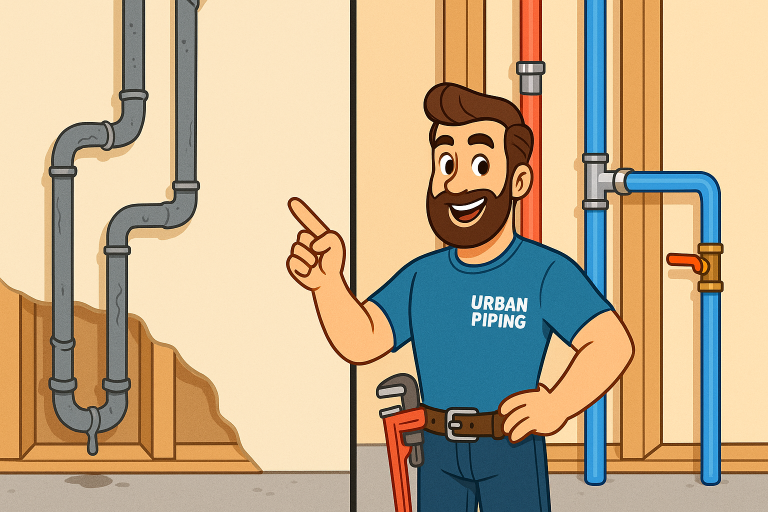
Choosing the right contractor for your Poly B replacement can mean the difference between peace of mind and repeat problems. Urban Piping is Calgary’s trusted leader in Poly B damage prevention and full-scope repipes—with more local experience, better transparency, and turnkey service designed for Canadian homeowners. Our reputation is built on results, not sales pitches.
What makes Urban Piping the industry leader
Urban Piping has completed more Poly B replacements in Calgary than any other company. We’re one of the few specialized plumbing firms entirely focused on Poly B removal, not just general plumbing. That means better diagnostic skills, cleaner drywall cuts, and more efficient replacements. We understand the unique structural conditions in Calgary homes, and we tailor every project to comply with city codes and your long-term comfort.
Before and after case studies from Calgary homes
Time and again, Calgary homeowners call us to repair catastrophic Poly B failures—often after other companies gave quick fixes. We’ve transformed homes with failing pipe systems into worry-free residences protected by modern PEX piping. Detailed walkthroughs, before-after comparisons, and final inspections are all part of our process, ensuring nothing is left to chance.
Everything included in our full-scope repipe service
Our comprehensive repipe service includes:
- City permitting and final inspections
- Targeted drywall access and repairs
- Removal of all accessible Poly B piping
- Installation of high-quality PEX piping backed by warranties
- Professional finish work with minimal disruption
We don’t just replace pipes—we restore confidence in your plumbing system.
Join thousands of Calgary homeowners who upgraded with Urban Piping and eliminated their Poly B risks for good.
Get A Quote, Free Estimates, Call Now
“`