What Is Poly B and Why Is It a Problem?
If your home was built or renovated between 1985 and the late 1990s, there’s a good chance it’s hiding a silent plumbing threat behind its walls: Polybutylene, more commonly known as Poly B piping. Often overlooked, this once-popular grey plastic pipe is now infamous across Canada—especially in homes in Calgary, Edmonton, Vancouver, and surrounding areas—for its vulnerability to corrosion, deterioration, and catastrophic failures. Educating yourself on the risks of this aging system is essential if you want to protect your property and avoid denied insurance claims, costly repiping jobs, and water damage nightmares.
A brief history of Poly B plumbing (1985–1997)
Poly B was introduced as a modern alternative to copper piping during the housing boom of the late 20th century. Marketed as affordable, flexible, and easy to install, it became the default plumbing choice in over 700,000 homes across Canada. However, as early as the mid-1990s, plumbers began observing unexpected failures and pinpoint leaks—many of them caused by internal chemical breakdowns rather than physical damage.
For everything you need to know about Poly B, check out our Guide to Poly B Plumbing. Or, if you are ready to replace your Poly B pipes, explore our Poly B Replacement Services — handled by the Canadian leaders in Poly B replacement.
“Poly B pipes were once considered an industry breakthrough—but time has shown their fatal flaws.”
Why Poly B was popular—and what went wrong
Initially celebrated for its cost-efficiency and flexible installation, Poly B’s downfall came from its chemical composition. It reacted dangerously to chlorinated municipal water supplies, a common element in city water systems across Calgary, Edmonton, and Vancouver. As a result, homeowners began facing premature pipe failures—many within just 10–15 years of installation. The industry quietly phased out the material by the late 1990s, leaving countless homes with a hidden liability behind their drywall.
What makes Poly B prone to corrosion
The core issue lies in the material itself. Polybutylene oxidizes over time, especially when exposed to disinfectants like chlorine. This oxidation leads to micro-fractures, flaking, and eventual leaks. Additionally, some fittings used with Poly B pipes—especially plastic or aluminum crimp rings—contributed to system instability. These flaws significantly reduced the Poly B plumbing lifespan and put many homes at risk of unexpected plumbing failure.
Want to see our work across Canada? Browse our Poly B replacement case studies for real project examples, or visit our blog for expert guides and homeowner resources.
Don’t wait for a pipe to burst before taking action. Early awareness can save thousands in repairs.
Common Signs of Poly B Corrosion in Home Plumbing
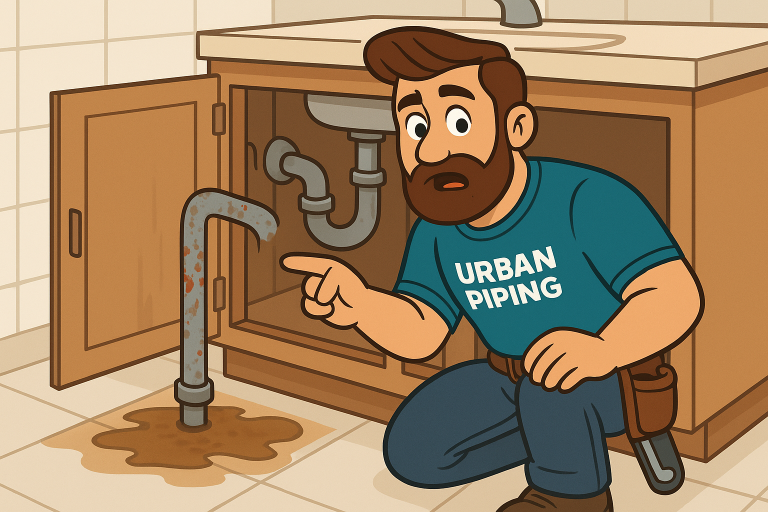
An Urban Piping professional inspects a corroded poly b pipe causing leaks under a sink in Calgary, Edmonton, or Vancouver.
Wondering if your grey plumbing pipes might be ticking time bombs? Spotting early signs of Poly B corrosion problems can mean the difference between manageable repairs and catastrophic water damage. Whether you’re noticing subtle leaks or unexplained changes in water pressure, homeowners in Calgary, Edmonton, and Vancouver need to know what warning signals point to deteriorating Poly B—before it’s too late.
Telltale signs you may have Poly B pipes
Identifying Poly B starts with knowing what it looks like. The piping is typically gray or silver-grey plastic with flexible, slightly dull finishes. Stamped markings like “PB2110” are further confirmation. These pipes often run through basements, behind drywall, and under sinks, connecting to various fixture points throughout the home.
“We started seeing water spots under cabinets — a week later the pipe burst.” – Calgary homeowner
Visible corrosion, discolouration, or swelling
Poly B pipes tend to show early signs of deterioration through discoloration, blistering, or bubbling—especially near joints and fittings. White or green corrosion rings around valves or swelling seams may indicate the beginning of a serious oxidation degradation process that ultimately leads to failure.
Pinpoint water leaks or wall staining
Many homeowners report subtle signs like stained drywall, dripping from ceiling corners, or water damage underneath sinks. These leaks often appear minor at first but can mask more extensive breakdown behind walls. Left unchecked, they worsen into mold issues or full-blown pipe bursts.
Customers often report minor wall stains that later reveal extensive pipe deterioration.
Drop in water pressure or damage around valves
Noticeably lower water pressure or difficulty in turning shut-off valves may indicate internal pipe shrinkage or buildup from chemical corrosion. This is especially common in older Poly B systems, where frequent exposure to fluorinated water reacts over time to compromise flow efficiency.
If you’ve spotted any of these signs, it’s time to schedule a certified pipe inspection before disaster strikes.
Health, Insurance, and Legal Risks of Damaged Poly B
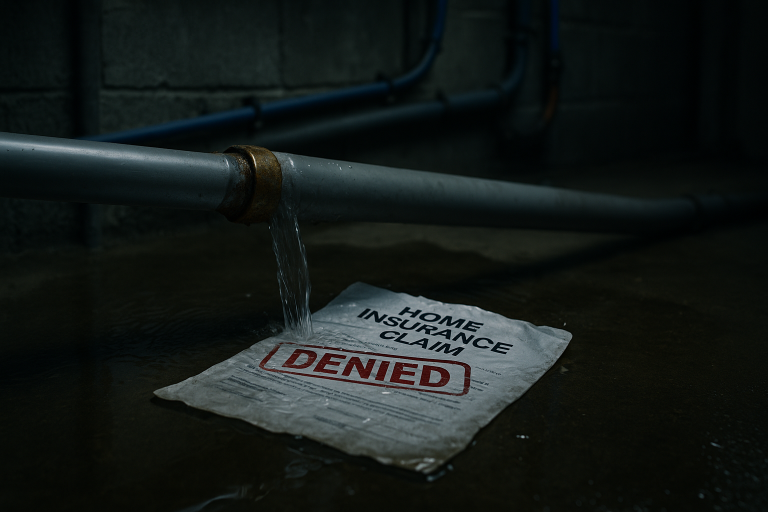
Poly B corrosion can lead to costly leaks and insurance claim denials for homeowners in Calgary, Edmonton, and Vancouver. The consequences of poly b pipe corrosion issues can be severe, as they not only result in water damage but can also compromise the structural integrity of a home. Many homeowners may find themselves facing expensive repairs that could have been avoided with proper maintenance and timely interventions. It is crucial for those living in affected areas to be aware of the signs of deterioration and to seek professional assistance as soon as possible.
The hazards of Poly B plumbing don’t end with burst pipes and water damage. Damaged Poly B is increasingly linked to denied home insurance claims, decreased property value, and potential legal disputes during resale. If you’re a homeowner in Alberta or British Columbia, overlooking these dangers can result in steep financial losses and compliance headaches you didn’t see coming.
Poly B and home insurance denial clauses
Major insurers across Canada are catching on to the widespread liability of deteriorating Poly B. In cities like Calgary and Edmonton, several home insurance providers now include exclusion clauses—meaning water damage caused by Poly B pipes may not be covered, even if pipes were not visibly failing at policy renewal time.
Some insurers in Alberta may deny water damage claims if Poly B is present and unreplaced.
Risks to property resale and legal disclosure
Failing to disclose the presence of Poly B piping when selling your home can expose you to legal action. In Vancouver and across B.C., there have been multiple cases where undisclosed Poly B issues resulted in post-sale lawsuits. Homebuyers are becoming increasingly wary of homes with grey plumbing—often demanding full repipes or offering lower bids when Poly B is present.
In B.C., failure to disclose Poly B has even led to lawsuits over undisclosed plumbing defects.
Potential health risks of internal water contamination
While Poly B pipes themselves aren’t inherently toxic, long-term breakdown from extrinsic factors like chlorinated water and acidic soil conditions can lead to leaching or microbial exposure. In rare cases, leaky fittings and stagnant water around failing joints can encourage mold growth or localized contamination concerns.
From insurance to resale to water quality—addressing Poly B now protects your health, finances, and future peace of mind.
Poly B Pipe Replacement: Your Options in Calgary and Beyond
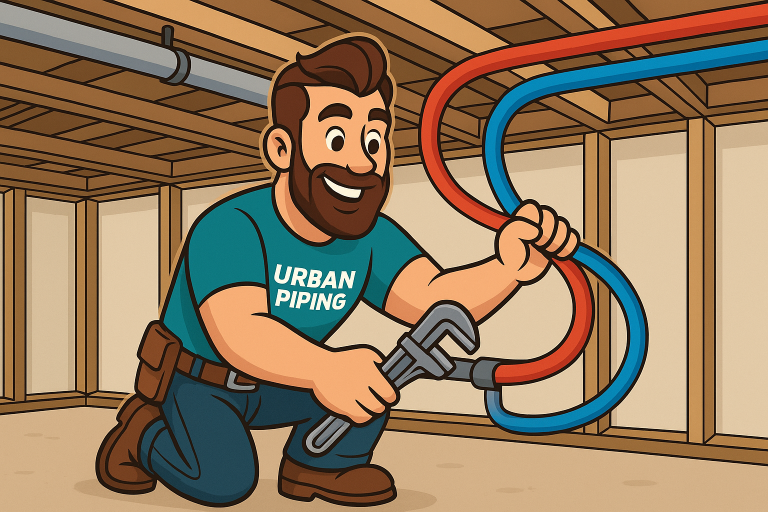
Urban Piping specialist investigates Poly B corrosion problems in residential plumbing.
If you’re a homeowner in Calgary, Edmonton, Vancouver, or surrounding areas facing Poly B corrosion problems, replacing your aging plastic plumbing might feel overwhelming. But understanding your options—from material choices to the replacement process—can empower you to make the right long-term decision for your home’s safety, insurability, and resale value. Polybutylene (Poly B) pipes, once widely used in Canadian homes built between 1978 and 1998, are now a known liability. Upgrading is not just a repair—it’s a proactive investment.
PEX vs Copper: What’s Best for Your Home?
When it comes to repiping, most homeowners weigh the benefits of PEX Class A piping versus copper. Copper, while long-lasting, is costlier, susceptible to freezing in exposed areas, and more challenging to retrofit. On the other hand, PEX Class A is today’s standard for durability, flexibility, and code compliance in Alberta. It weaves through existing structures with minimal disruption and resists scale and corrosion—ideal for climates with freeze-thaw cycles like Calgary’s.
PEX Class A piping is today’s standard for durability, flexibility, and code compliance in Alberta.
Full vs Partial Replacement—What You Should Know
Although some companies offer partial Poly B replacements—typically repairing only visibly corroded sections—Urban Piping strongly advises against this patchwork approach. Full-home repiping eliminates all hidden risks and prevents future water damage, mold, and insurance denials. Partial replacements also often fail to address inaccessible runs behind walls, leaving vulnerable sections untouched.
Urban Piping seamlessly replaces your entire plumbing system, including drywall patching and paint touch-ups, ensuring a finished, homeowner-ready space.
“Our repipe service includes patching and paint touch-ups — one quote, no surprises.” – Urban Piping
Do You Need Permits for Poly B Removal in Alberta?
Yes—most municipalities in Alberta, including Calgary and Edmonton, require a plumbing permit for Poly B pipe replacement. This ensures that licensed professionals are doing the work to code, protecting your household’s health and safety. Urban Piping manages all required permits and scheduling directly with your local building authority, offering a hands-off process for homeowners.
- Permit filings and inspections are handled in-house
- Workmanship is guaranteed to meet Alberta Building Code standards
- Certificate of completion available for your records and resale
Cost Estimator and Financing Options
The cost of repiping a home with Poly B varies based on square footage, pipe access, number of fixtures, and whether the basement is finished. In Calgary and surrounding regions, a typical 2-story home might range from $8,000 to $16,000 for full Poly B replacement. However, Urban Piping provides transparent, all-inclusive quotes with no surprise fees. Financing options are available to make the process more manageable for families budgeting for necessary upgrades.
We also offer virtual and in-home consultations so you can understand your plumbing system’s condition and get a detailed replacement estimate tailored to your property.
Don’t wait for pipe failure or a denied insurance claim. Contact Urban Piping for your free quote today and experience Canada’s leading Poly B replacement specialists.