What Is Poly B and Why Was It Used?
If your Calgary home was built between 1985 and 1997, there’s a high chance it contains Poly B plumbing. Also known as polybutylene piping, this grey plastic tubing was once considered the future of residential plumbing across Western Canada. Before you decide whether to repair or replace it, understanding how and why it ended up in your walls is critical for making an informed, long-term decision about your home’s plumbing health and insurance compliance.
History of Polybutylene Use in Homes
Polybutylene, or Poly B, emerged in the late 1970s as a flexible and cost-effective alternative to copper piping. By the mid-1980s, it was widely adopted for residential water systems across North America. Its plastic composition, ease of handling, and lower installation costs made it especially attractive for builders and remodelers. As urban development grew in Calgary and beyond, Poly B became a go-to choice for plumbing in newly constructed homes and remodels alike.
If you are a Calgary homeowner dealing with Poly B pipes, you are not alone — thousands of homes in the city were built with this outdated plumbing. Urban Piping specializes in Poly B Replacement Calgary and has helped over 3,000 homeowners make the switch. Ready to get started? Call (403) 988-3801 for your free estimate.
Why Poly B Became a Popular Choice in Canada
In Western Canadian cities like Calgary and Edmonton, Poly B gained rapid popularity thanks to its affordable materials and faster installation time compared to metal pipes. Contractors could install water supply lines in less time, passing those savings on to homeowners. Poly B was also freeze-resistant—an important benefit in Canada’s colder climate zones. At the time, it complied with building code requirements and seemed like the right solution for homebuilders aiming for efficiency and cost control.
Years of Installation and Former Building Code Allowance
The peak era for Poly B installation in Calgary-area homes was from 1985 through 1997. During this time, it met local and national building code standards, which endorsed its use in single-family homes, townhomes, and condos. However, as failure rates rose and lawsuits followed, most building codes began removing it from approved material lists in the late 1990s. Homeowners today may still be unaware they’re living with a legacy material that no longer meets modern plumbing standards.
Did You Know? Poly B was predominantly installed between 1985 and 1997 in Western Canadian homes, including Calgary and Edmonton homes built in that era.
Want to see how we have helped Calgary homeowners just like you? Browse our Calgary Poly B case studies and resources to see real projects, real results, and why thousands trust Urban Piping for their Poly B replacement.
Tip: If your home was built during that window, it’s worth scheduling an inspection to determine if Poly B piping is still in use—and whether corrosion has already started affecting performance.
What Causes Poly B Corrosion?
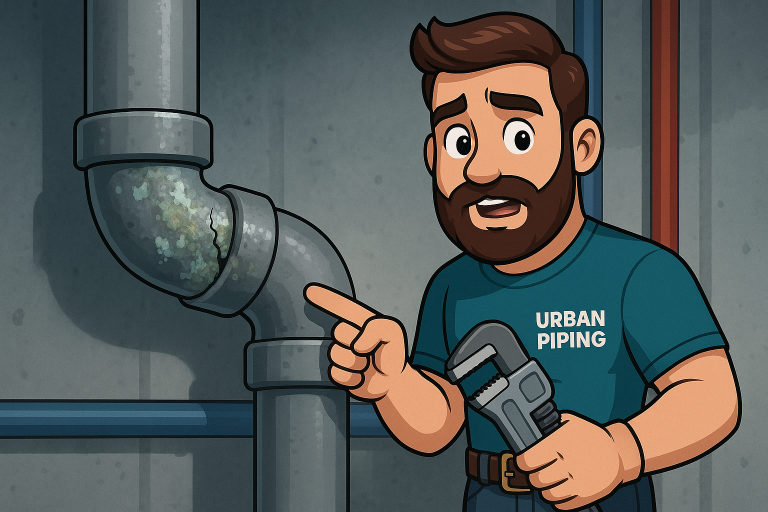
Urban Piping professional explains Poly B pipe corrosion risks seen in Calgary, Edmonton, and Vancouver homes.
Many Calgary homeowners are surprised to learn that Poly B piping fails not from old age—but due to chemical reactions with water. Understanding what causes this corrosion can help you mitigate further damage before you face a costly flood or plumbing emergency. As regional experts, Urban Piping has investigated hundreds of these systems and will guide you through the most common causes of pipe degradation specific to Western Canada. Our team of Calgary experts on Poly B piping can provide valuable insights into how to identify potential issues early on. By recognizing the signs of deterioration, you can take proactive measures to ensure your plumbing system remains intact. Additionally, we offer tailored solutions to address specific problems associated with Poly B installations, helping you preserve your home’s value and safety.
Chlorinated Water and Poly B Breakdown
One of the leading causes of Poly B corrosion is exposure to chlorine—an element commonly added to municipal water treatments across Canada. Over time, chlorine interacts with the inner lining of polybutylene pipes, weakening the plastic and triggering microfractures. While invisible to the naked eye at first, these fissures allow water to seep or spray through, often inside walls or ceilings where leaks go unnoticed for months.
Oxygen and Metal Contact in Fittings
Poly B systems frequently relied on metal crimp rings or aluminum fittings to join pipe sections. When oxygen-rich water contacts dissimilar metals, galvanic corrosion can occur. This chemical reaction accelerates pipe deterioration around joints—often where leaks begin. The combination of incompatible materials and plastic’s porous structure ultimately shortens a Poly B system’s lifespan, regardless of installation quality.
Role of Calgary’s Water Chemistry
Calgary’s water profile is classified as moderately hard and chlorinated—both factors that heighten Poly B’s vulnerability. According to Calgary municipal water reports, high chlorine levels may accelerate internal pipe oxidation in Poly B systems. This makes your home’s plumbing more susceptible to pinhole leaks, fitting failures, and long-term structural concerns affecting resale value and insurability.
Expert Note: “Poly B performance heavily depends on water chemistry. In municipalities like Calgary and Edmonton, we’ve seen cases where pipe walls flake internally long before cracks appear on the surface,” says a senior technician from Urban Piping.
Advice: The earlier a homeowner identifies signs of Poly B degradation, the more affordable and straightforward solutions—like full system replacement with PEX piping—can be.
How to Identify Poly B in Your Home

A professional plumber from Urban Piping examines poly b piping for corrosion, providing trusted service across Calgary, Edmonton, and Vancouver.
If you’re unsure whether your home has Poly B piping, don’t wait for a leak to find out. With a few helpful tips and a flashlight, you can check key areas in your home for telltale signs. Visual inspections are an excellent first step in assessing potential plumbing risks—especially if your house was built in the late ‘80s or ‘90s in Calgary or other Western Canadian cities.
Look for Grey Plastic Pipes
Poly B piping is most easily recognized by its distinct solid gray color. These pipes are usually flexible and often routed through joist spaces, wall cavities, and behind drywall. In some homes, the gray pipes may be painted over or partially hidden by insulation, making their detection tricky without closer inspection.
Check Basement Ceilings and Utility Rooms
One of the easiest places to spot Poly B piping is where water lines are exposed—typically in unfinished basements, mechanical rooms, or directly under sinks. Use a flashlight to examine plumbing in ceiling joists and look for any discoloration, cracking, especially near fittings or joints. Areas near water heaters and under laundry sinks often reveal long segments of original piping systems.
Common Markings Indicating Polybutylene
Authentic Poly B pipes are often labelled with stamp codes like PB2110, printed along the exterior. These alphanumeric tags confirm the material specification. If you see this marking anywhere in your home, it’s a clear sign that this high-risk material is present and should be evaluated by an experienced plumber.
Helpful Hint: Poly B pipes are typically grey and may have markings like ‘PB2110’ stamped on the surface. That marking is your strongest evidence during a home inspection or insurance claim review.
Action Step: Even if you don’t see visible damage, spotting PB markings or grey plastic lines means it’s time to assess next steps—before moisture finds its way into your walls or ceiling.
“`html
Should You Replace Poly B or Just Repair It?
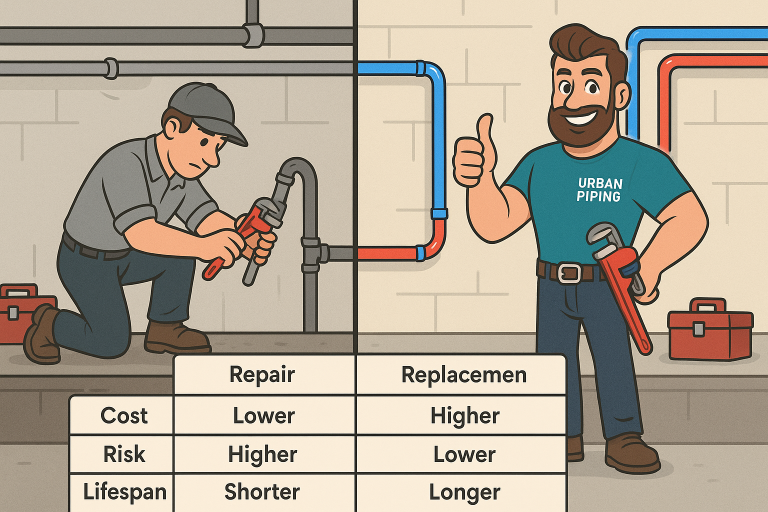
If you’ve discovered Poly B pipes in your Calgary, Edmonton, or Vancouver home, you’re likely wondering if a simple repair will buy you more time—or if replacement is the smarter move. With corrosion risks rising and insurance policies tightening, it’s essential to weigh all options from financial, structural, and long-term safety perspectives. Homeowners need actionable insights—not guesswork.
Risks of Short-Term Patch Jobs
Repairing Poly B pipes might seem like a quick fix, especially in the case of minor leaks or visible damage. However, these patch jobs often fail to address the systemic issue: polybutylene’s vulnerability to chlorinated water, oxygen degradation, and internal stress cracking. Calgary’s water chemistry, in particular, accelerates this wear.
Repeated spot repairs can condition homeowners into a cycle of unexpected plumbing emergencies—each time risking water damage, insurance complications, and growing costs. Since Poly B degrades from the inside out, a pipe that looks fine externally can still burst without warning.
Cost Comparison Over 10–15 Years
Over a 15-year period, replacing Poly B entirely can be 40–60% more cost-effective than repeated emergency fixes. While repairs may appear cheaper upfront, each service call, drywall tear-out, and flood repair adds up—not to mention insurance premium hikes from frequent claims.
- Cost of full replacement (average-sized home): $8,000–$12,000 CAD
- Average cost of three emergency repairs over 10 years: $9,000–$15,000 CAD
- Lifespan of new PEX system: 50+ years with manufacturer warranty
Data from Urban Piping projects shows Calgary homeowners consistently save more in the long run after full Poly B conversions compared to those who choose repeated repairs.
What Professionals Recommend in Calgary
Given the unique plumbing code updates and water quality in Calgary and the surrounding regions, professional plumbers overwhelmingly endorse full Poly B replacement—not just as a preventative measure, but as an investment in home value. Realtors are increasingly flagging Poly B as a disclosure issue, and insurance providers often decline coverage or increase premiums for homes still using this material.
“In the last five years, we’ve replaced Poly B in over 1,000 Calgary homes. In nearly every case, the homeowners wished they’d done it sooner rather than spending years chasing leaks.” — Urban Piping Technician
Homeowners seeking peace of mind—along with long-term cost control—are encouraged to explore full replacement with modern materials like PEX or copper.
Replacement Options: PEX vs. Copper vs. Poly B
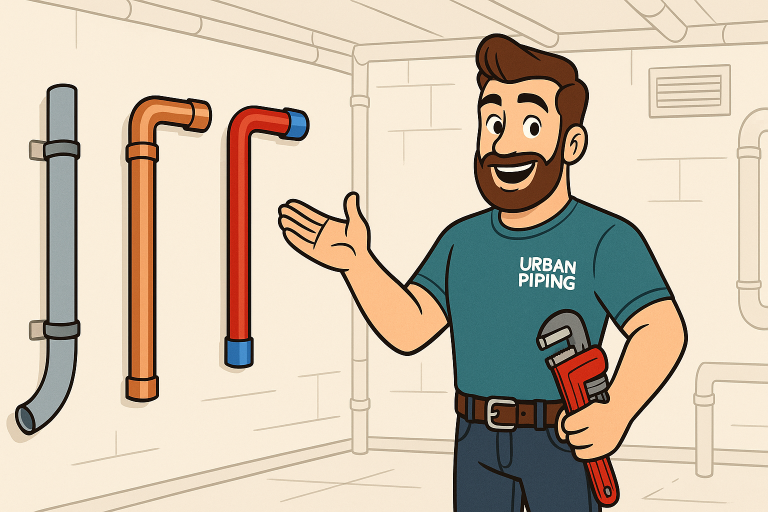
Choosing the right replacement for your outdated Poly B system isn’t just about code compliance—it’s your opportunity to futureproof your plumbing. In Calgary, Edmonton, and Vancouver, replacing Poly B with superior materials increases resale value, improves water safety, and eliminates recurring leak risks. But which material is best: PEX or copper?
PEX Class A: Durable and Affordable
PEX-A is currently the top choice for replacing Poly B in Canadian homes due to its resistance to freezing and corrosion. It’s flexible, which simplifies installation and reduces the need for joints—fewer joints mean fewer leak points. It also expands under pressure to resist bursting, a key benefit during harsh Alberta winters.
Homeowners often find PEX to be the most cost-effective option. It’s approved under Alberta and British Columbia plumbing regulations and offers long-term peace of mind without the high material costs of copper.
Copper Piping: Premium Longevity
Copper remains a gold standard in plumbing thanks to its 50 to 70-year lifespan and resistance to UV degradation. While it’s more expensive to install, copper adds tangible value to homes in high-end neighborhoods and is often sought after by buyers wanting low-maintenance, premium-grade infrastructure.
However, copper is vulnerable to aggressive water chemistry, which Calgary’s mineral-rich supply sometimes exhibits. Experienced plumbers, like those at Urban Piping, can mitigate this with proper fittings and install practices when copper is the preferred choice.
Which Option Suits Calgary Homes Best?
For most Calgary-area homeowners, PEX-A represents the best balance of performance, price, and adaptability. In multi-storey homes or those with tight wall cavities, its flexibility is a significant advantage. Copper may still be advisable in specific architectural or resale scenarios, but overall, PEX has emerged as the modern standard for Poly B retrofits in Western Canada.
Replacing Poly B isn’t just about new pipes—it’s about selecting the smartest, safest material for the next 50+ years of home ownership.
Trusted Poly B Replacement Services in Calgary

When it comes to removing and replacing Poly B plumbing, experience matters—and Urban Piping leads the way across Calgary, Edmonton, and Vancouver. From initial inspection to the final coat of paint, their end-to-end service makes your retrofit seamless, code-compliant, and value-enhancing.
Why Calgary Is More Affected Than Other Cities
Calgary’s unique water chemistry—with its high chlorine content and varying temperatures—accelerates Poly B corrosion at the molecular level. Add in housing stock from the 1980s and 1990s that was almost entirely fitted with Poly B, and you’ve got a perfect storm for pipe failure risks that are greater than what’s seen in other municipalities.
This connectivity between local water conditions and Poly B longevity is why Calgary homeowners can’t afford to delay action—and why working with a plumbing firm deeply familiar with the region is critical.
How Urban Piping Ensures a Seamless Replacement Process
Urban Piping has completed more Poly B replacement jobs in Calgary than any other provider—and we handle everything in-house from drywall to paint. That means no subcontractors, no vague timelines, and no surprise surcharges. Their process starts with a detailed camera and pressure inspection, followed by a step-by-step replacement plan tailored to your home’s structure, layout, and budget.
- Professional diagnosis and quote
- Licensed, bonded plumbers performing all work
- Inclusive restoration of walls, ceilings, and finishes
- Final inspection for full code compliance
Everything is performed by Urban Piping’s own uniformed team—giving you full control and peace of mind.
What to Expect From a Free Estimate
Urban Piping’s free in-home estimate includes a full inspection of visible and hidden Poly B runs, identification of corrosion or high-risk fittings, documentation tailored to insurance negotiations, and a fixed-quote guarantee. The estimate is educational and pressure-free—empowering you with clarity so you can make decisions in your own timing.
“We believe in transparency above all—our free estimates show homeowners exactly what they’re dealing with and what their safest, most cost-effective options are.” — Owner, Urban Piping
Ready to protect your home from future leaks and insurance risks? Get a Quote. Free Estimates. Call Now.
“`