What Are Poly B Pipes?
Urban Piping expert explains the differences between Poly B and other common pipe materials for homeowners in Calgary, Edmonton, and Vancouver.
Wondering what’s lurking behind your walls? If your Calgary home was built between 1985 and 1997, there’s a strong chance it was plumbed with Poly B piping. Understanding what Poly B is—and how it compares to today’s materials—is crucial for preventing costly water damage and ensuring your home meets modern safety standards.
History of Polybutylene (Poly B) Piping in Canada
Polybutylene, commonly referred to as Poly B, was used extensively in Canadian residential construction from the mid-1980s until the late 1990s. It was initially popular due to its low cost, flexible installation, and resistance to freezing. However, over the years, failures due to cracking, leaks, and fittings degradation emerged, especially under sustained water pressure or prolonged heat exposure.
If you are a Calgary homeowner dealing with Poly B pipes, you are not alone — thousands of homes in the city were built with this outdated plumbing. Urban Piping specializes in Poly B Replacement Calgary and has helped over 3,000 homeowners make the switch. Ready to get started? Call (403) 988-3801 for your free estimate.
“Poly B was installed in Canadian homes between 1985 and 1997.”
Poly B vs. Other Materials Used Today
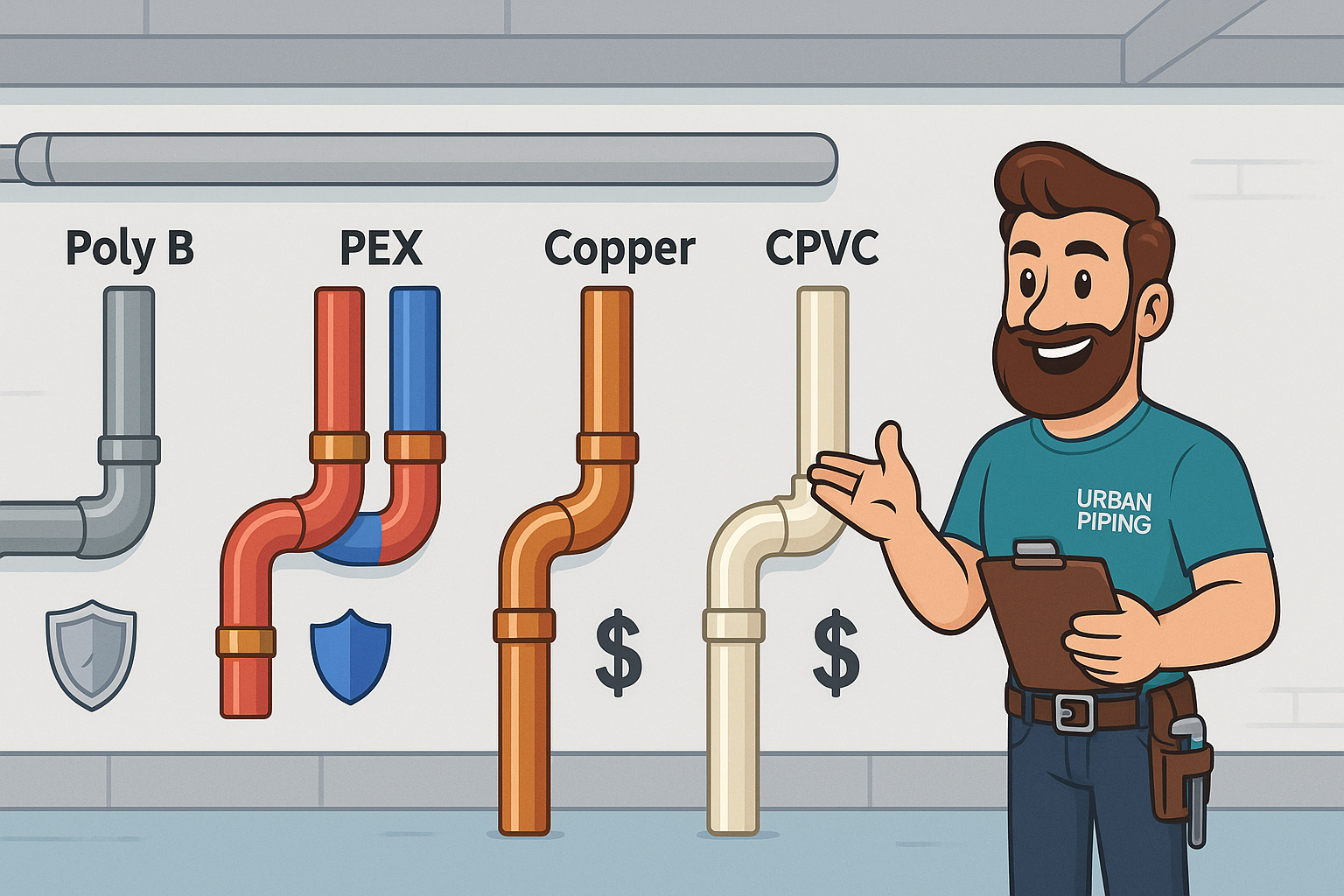
Compared to modern alternatives like PEX, copper, and CPVC, Poly B has significant drawbacks. While PEX offers flexibility with durability, and copper provides long-lasting performance, Poly B is generally regarded as outdated and prone to failure. It’s also incompatible with some chemicals and oxidants present in municipal water supplies, especially in Alberta and British Columbia.
- PEX: Durable and flexible; now the industry standard
- Copper: Long-lasting but more expensive to install
- CPVC: Reliable in high-temperature systems but brittle over time
What Does Poly B Look Like?
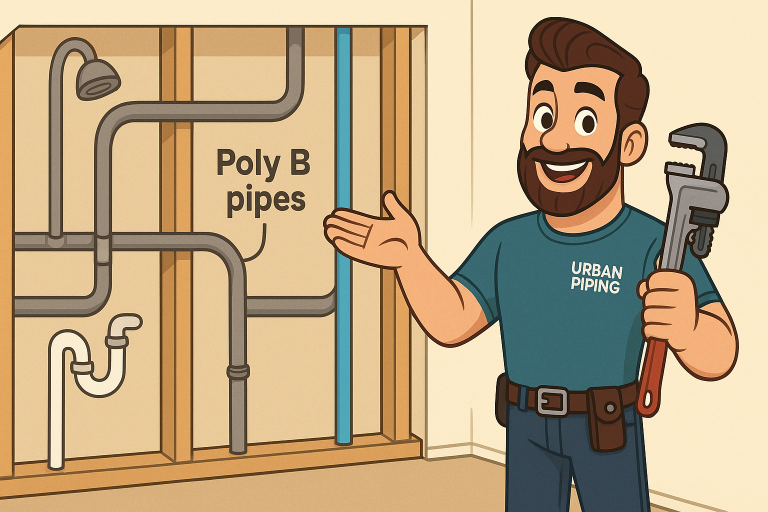
Poly B pipes are typically grey or light blue, semi-flexible, and often stamped with the code PB2110. You’ll usually find them running along ceilings in basements, connecting to the water heater, or behind drywall near fixtures. Unlike more rigid copper or white CPVC, Poly B has a distinctive plastic feel and dull surface.
Want to see how we have helped Calgary homeowners just like you? Browse our Calgary Poly B case studies and resources to see real projects, real results, and why thousands trust Urban Piping for their Poly B replacement.
Understanding whether your home has Poly B piping is the first step toward managing its risks—especially in Western Canadian regions like Calgary and Edmonton where temperature shifts and water chemistry play a role in pipe longevity.
Why Poly B Pipes Are a Concern
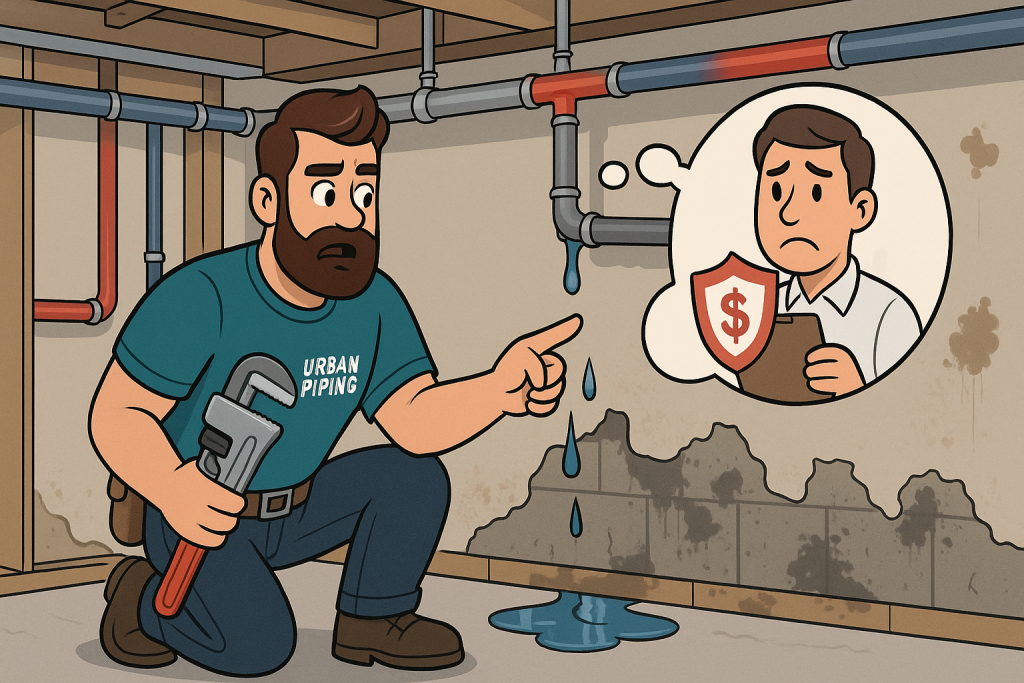
If your Calgary or Edmonton home still relies on Poly B piping, it’s not just an outdated system—it could be an active plumbing hazard. Over time, Poly B pipes have proven to be unreliable due to chemical instability, high failure rates, and growing rejection from home insurance providers.
Fragility and Chemical Reaction Risk
Poly B reacts poorly to oxidants like chlorine, which are common in municipal water supplies. This reaction causes the inner surface of the pipe to degrade, leading ultimately to flaking, cracking, and even rupture. These issues often escalate invisibly—behind walls or in attics—leading to expensive water damage if left unchecked.
Common Failure Points in Poly B Fittings
In most cases, failures occur not in the piping itself, but at the fittings—especially those made from plastic. These joints experience pressure changes, thermal expansion, and chemical interactions that cause them to deteriorate faster than modern brass fittings. Sharp turns or stress points are also common areas for leaks or bursts.
Why Insurance Companies Consider It High Risk
Due to the documented history of Poly B failures, many Alberta and British Columbia insurance companies now view these pipes as high risk. Policies may be voided or subject to increased premiums if Poly B remains in the system. Some insurers outright decline coverage until the piping is replaced with PEX or copper.
“According to Alberta insurers, Poly B piping may void coverage or raise premiums.”
Understanding the liability and failure points associated with Poly B is essential for Calgary-area homeowners. Early identification and proactive maintenance—or full replacement—can prevent insurance issues and water disasters before they happen.
How to Identify Poly B Pipes in Your Home
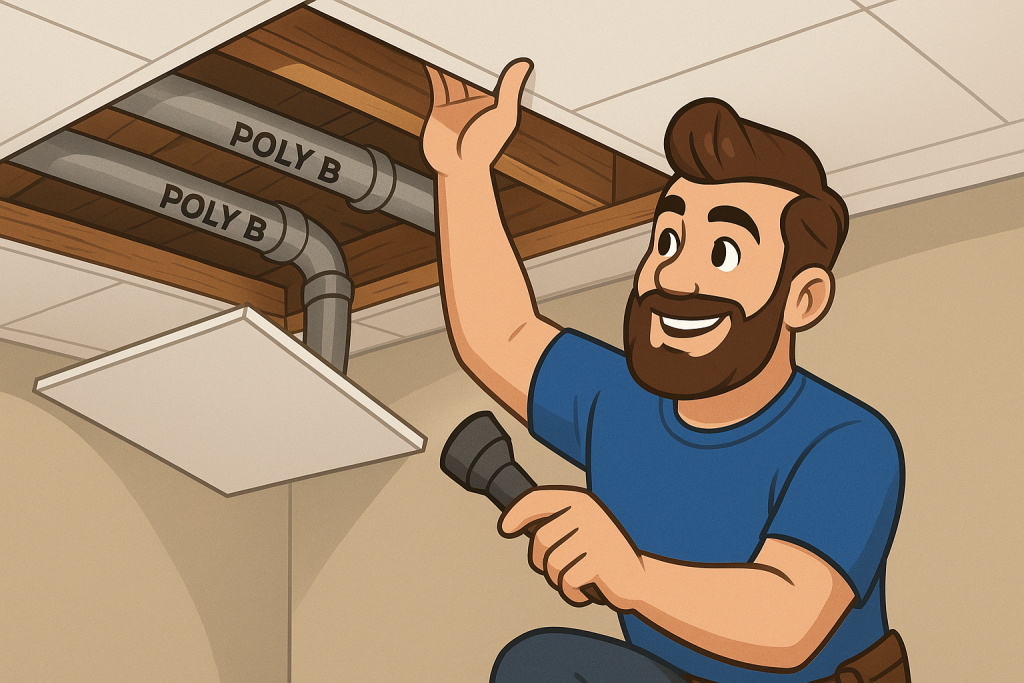
Not sure if Poly B pipes run through your home? Identifying these aging systems doesn’t have to be complicated. With a few key checkpoints and visual cues, Calgary homeowners can determine whether their plumbing system needs further inspection—or immediate intervention from professionals like Urban Piping.
Where to Look: Kitchen, Basement, Utility Rooms
Start your inspection in areas where water is commonly routed: under your kitchen sink, behind the water heater, near your furnace, or in the basement ceiling. Utility rooms and mechanical areas may have open access panels or drop ceilings that expose the pipe layout.
What Poly B Pipes Look and Feel Like
Poly B pipes typically appear grey or light blue, with a matte surface and some flexibility. They may seem slightly brittle if aged. Unlike copper (which is rigid and metallic) or PEX (which is glossier and more colourful), Poly B has a chalky, neutral tone. If pipes are visible, gently pressing on them can confirm whether they are soft plastic or metal-based.
“Poly B pipes are usually grey, flexible, and often labeled ‘PB2110’.”
What Labeling You Might See (PB2110, etc.)
Look closely at any exposed piping for printed text. The most common identifier is the code PB2110, stamped at intervals along the length of Poly B pipes. You might also see “CSA B137.8”, a Canadian plumbing standard that references Polybutylene piping. These codes are your clearest indication of material type.
If you spot any of these signs, or you’re still unsure, it’s wise to schedule a professional home plumbing inspection. Urban Piping’s team serves Calgary, Edmonton, Vancouver and surrounding areas with expertise in identifying, maintaining, or fully replacing Poly B systems for long-term peace of mind.
Maintenance Tips for Poly B Plumbing
If you’re living in Calgary, Edmonton, or Vancouver and your home still relies on Poly B plumbing, staying proactive with maintenance could help delay replacement and prevent costly water damage. While Poly B pipes have known durability issues, these expert tips can help you extend the life of your system safely and effectively.
Regular visual checks for wear or leaks
Homeowners should inspect exposed sections of Poly B piping monthly. Focus on joints, elbows, and pipe ends where stress is most common. Look for:
- Discoloration or scaling
- Moisture around connections
- Signs of splitting or bubbling in the pipe wall
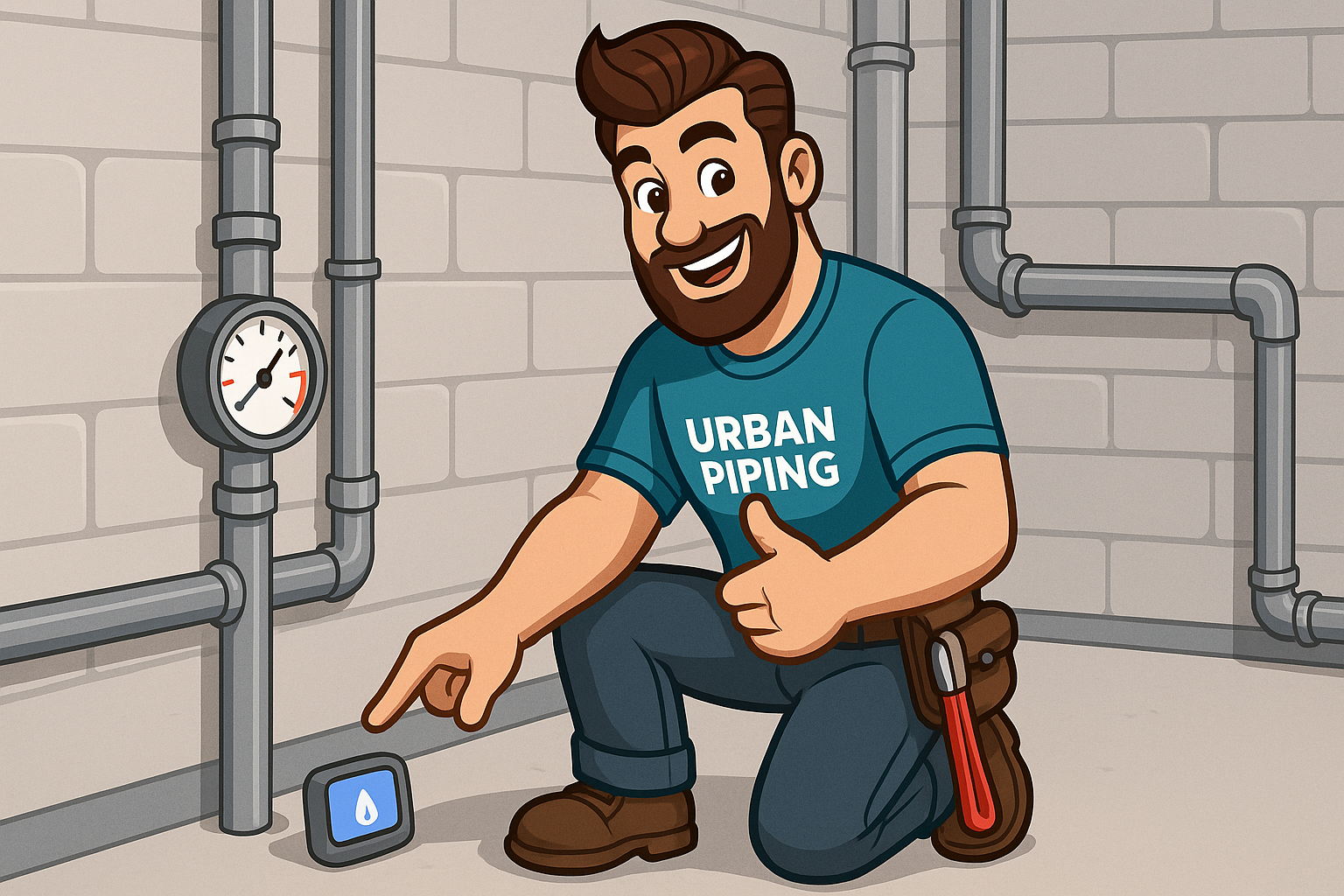
A flashlight inspection in basements and crawl spaces can reveal early indicators of pipe degradation.
Install leak detection sensors
Leak detectors placed near water heaters, appliances, and under sinks can catch minor drips before they lead to major damage. Smart sensors connected to mobile apps even alert homeowners remotely — ideal for those away from home or managing rental properties in Western Canada.
Avoid excessive water pressure
Homes with high water pressure accelerate the wear of Poly B systems. A pressure-reducing valve (PRV) should be installed if readings consistently exceed 80 psi.
“Homes with water pressures above 80 psi risk faster degradation of Poly B pipes.”
Soft water recommendations
Hard water minerals can react with pipe interiors, especially at joints. In areas like Calgary where hard water is common, consider a water softener to reduce internal corrosion. Balanced water chemistry helps slow the internal breakdown of Poly B materials.
Staying on top of these simple checks gives you time to prepare for eventual replacement and helps you avoid sudden plumbing emergencies.
When and Why You Should Replace Poly B Pipes
Maintenance can only go so far. Eventually, every homeowner reaches the point where replacing Poly B pipes is the safest and most cost-effective decision. If you’re unsure whether you’re there yet, here’s a clear guide.
Warning signs it’s time to replace
Watch for:
- Recurring leaks in different areas
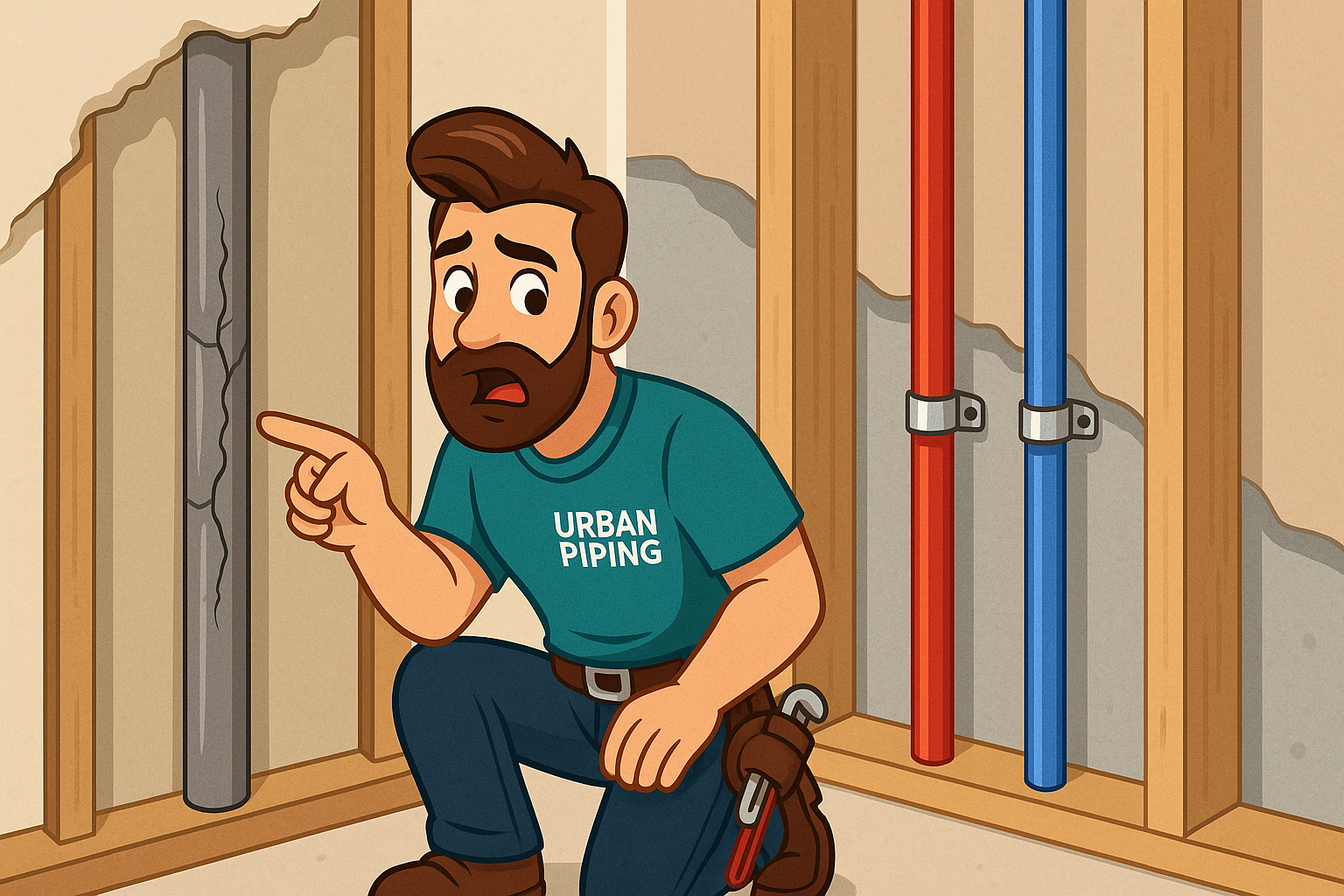
- Pipe discoloration turning bluish-gray or brittle
- Low water pressure with no clear cause
Each of these is a strong indicator the piping system is near the end of its reliable life cycle.
Risks of waiting too long
Delaying full replacement can result in catastrophic water damage. Poly B pipes degrade from the inside out, so damage is often hidden until a major failure occurs — especially dangerous in finished basements or multi-floor homes.
What Calgary building codes say
Poly B has been disallowed from new construction in Calgary since 2005. Current code-compliant alternatives like PEX or Type L copper are preferred for their reliability and performance.
“Calgary building code no longer approves Poly B for new construction as of 2005.”
Urban Piping advises homeowners to use early warning signs as a cue to schedule a professional evaluation — before the problem becomes urgent or insurance coverage is compromised.
Your Replacement Options: PEX vs Copper vs CPVC
Once you’ve chosen to replace Poly B, you’ll need to select the right material. Each option — PEX, copper, or CPVC — comes with advantages and trade-offs. Here’s how they stack up for Calgary and surrounding areas.
Material durability comparisons
- PEX: Highly flexible, resistant to freeze damage, and excellent for retrofit jobs
- Copper: Long-lasting (50+ years), bacteria-resistant, but prone to corrosion in some water conditions
- CPVC: Chemically resistant but more brittle in extreme cold — less ideal for unheated areas
Cost range for repiping options
PEX is typically the most affordable and easiest to install, followed by CPVC. Copper is the most expensive, largely due to material and labor costs. Average repiping for a 2-story home in Calgary ranges:
- PEX: $8,000–$12,000
- CPVC: $10,000–$14,000
- Copper: $14,000–$20,000
Exact pricing varies based on pipe access, home size, and existing wall finishes.
Compatibility with Calgary water chemistry
PEX Class A pipes are highly compatible with Calgary’s water profile — offering resistance to mineral buildup and thermal expansion. CPVC may become brittle over time, and copper needs to be properly grounded and protected from acidic water levels.
“PEX Class A offers the best balance of flexibility, durability, and cost for Calgary homes.”
A certified plumber from Urban Piping can help you determine which material best fits your home’s structure, water system, and budget.
Why Hire a Calgary Poly B Specialist Like Urban Piping
Replacing Poly B pipes isn’t just a plumbing job — it’s a complex renovation requiring specialized skills in piping layout, drywall repair, painting, and code compliance. That’s where a dedicated repiping expert like Urban Piping makes all the difference.
The risks of DIY repairs
DIY pipe replacements often violate local codes, leave hidden leaks, and may fail to address the root issue: systemic pipe degradation. Incorrect fittings or under-rated piping can void insurance claims or lead to future flooding.
Fully integrated repiping process (including drywall & paint)
Urban Piping offers a wall-to-wall solution — from demolition to repainting. Their crews don’t just swap pipes; they ensure your home is restored cleanly and safely. Homeowners appreciate how hassle-free the process becomes with a single contractor handling it all.
Urban Piping’s track record in Western Canada
With more completed Poly B replacements in Calgary, Edmonton, and Vancouver than any other contractor, Urban Piping is locally trusted for a reason. Their plumbers understand regional construction styles, permit requirements, and common pipe failures by neighborhood.
“Urban Piping has completed more Poly B jobs in Calgary than any other company.”
Get A Quote, Free Estimates, Call Now — let Urban Piping help you transition from Poly B to peace of mind.