What Is Poly B Plumbing?
If you’re considering buying a house in Vancouver, spotting Poly B piping is more than a casual observation — it can determine long-term costs, insurance eligibility, and peace of mind. Polybutylene (Poly-B) plumbing was once a go-to solution in residential construction, but its hidden risks make it a red flag for informed homebuyers navigating the competitive Vancouver real estate market. Understanding what Poly B is and why it matters will help you make smarter, safer property decisions.
History of Polybutylene (Poly-B) piping in Canada
Poly B piping was widely used in Canadian homes from approximately 1985 to 1997. This grey, flexible plastic piping was marketed as an affordable and easy-to-install alternative to copper. Its popularity surged due to low material cost and faster installation times — but unexpected long-term failures quickly changed opinions.
Vancouver homeowners know that moisture and aging plumbing don't mix. If your home still has Poly B pipes, it's time to consider replacement before small leaks become major problems. Learn more about our Poly B Replacement Vancouver services or call (778) 608-2401 to schedule your free assessment.
Installed in over 700,000 Canadian homes between 1985–1997.
In particular, homebuilders in Western Canada, including high-growth areas like Vancouver and surrounding municipalities, heavily adopted Poly B during this period. Unfortunately, shortcomings in durability became evident shortly after installation in many homes.
Lifespan and materials overview
Poly B is made from polybutylene resin and typically carries a lifespan of 10–25 years — significantly shorter than modern plumbing materials like PEX or copper. Its deterioration accelerates when exposed to heat, chlorine, or elevated pressure, which are all present in municipal water systems across BC.
See how Urban Piping has helped Vancouver and Lower Mainland homeowners protect their homes. Explore our Vancouver Poly B case studies and resources for real-world examples of our work.
In many Vancouver homes, aging Poly B systems are approaching their failure point. Cracking, pinhole leaks, and unexpected pipe bursts typically develop behind walls and floors, remaining invisible until costly water damage occurs.
Why it was popular — and why it’s now outdated
Originally praised for affordability, ease of installation, and flexibility during construction, Poly B was widely adopted in residential buildings throughout Greater Vancouver during the housing boom of the late 20th century.
However, as early failures occurred and lawsuits proliferated in the U.S. and Canada, Poly B fell out of favour entirely by the late 1990s. It’s no longer permitted under Canadian building codes and has since been replaced by more reliable options like PEX and copper piping.
Bottom line: If you’re house hunting in Vancouver or the surrounding areas, knowing how to recognize and plan for Poly B systems can save you tens of thousands in unexpected repairs or renovations.
Why Is Poly B a Concern in Vancouver Homes?

An Urban Piping specialist inspects Poly B plumbing, helping homeowners in Vancouver make informed decisions about property purchases.
Buying a house with Poly B in Vancouver isn’t just a plumbing concern — it’s a city-specific risk you need to factor into your real estate decision. From heavy rainfall to aging building stock, Vancouver presents a unique set of vulnerabilities that can amplify Poly B pipe failures. As a homebuyer, you need to understand these risks to assess future expenses, insurance complications, and potential resale impact.
High rainfall and Poly B failure risks
With Vancouver’s year-round moisture and heavy rainfall, any pipe failure can lead to substantial water damage — particularly in basements, crawlspaces, or walls where Poly B is often hidden. When a Poly B pipe leaks or bursts, it may go unnoticed for hours or even days before signs of water damage appear.
Accelerated deterioration due to chlorinated municipal water and humidity-based pipe stress can compromise pipe seals and joints in older homes.
Real estate trends: Prevalence of Poly B in older Vancouver areas
Many homes built during Vancouver’s 1980s and early ’90s development boom — particularly in East Vancouver, Burnaby, and North Vancouver — were outfitted with Poly B. Even high-end properties weren’t immune. If you’re buying into an older neighbourhood, Poly B may still be present and undisclosed unless specifically noted during inspection.
“Many homes built in Vancouver before 1998 may still be running outdated Poly B systems.” — Urban Piping Insight
This prevalence means buyers must proactively ask sellers or agents about piping materials, especially if the home’s construction date falls between 1985 and 1997.
Potential damage and insurance claim challenges
Repairing Poly B-related damage can climb into five-figure territory. Damage often spreads to drywall, flooring, and cabinetry before it’s caught. Larger problems—like mold growth or electrical damage—can follow.
Worse, many homeowners discover too late that insurers may deny water damage claims if Poly B was previously known and left unaddressed. Some insurers even refuse coverage outright if Poly B is present, while others require full replacement as a condition of insurability.
Pro tip: Before you buy, partner with experts like Urban Piping to assess risk and replacement costs upfront — your house’s plumbing could make or break your real estate investment.
How to Identify Poly B in Your Prospective Home
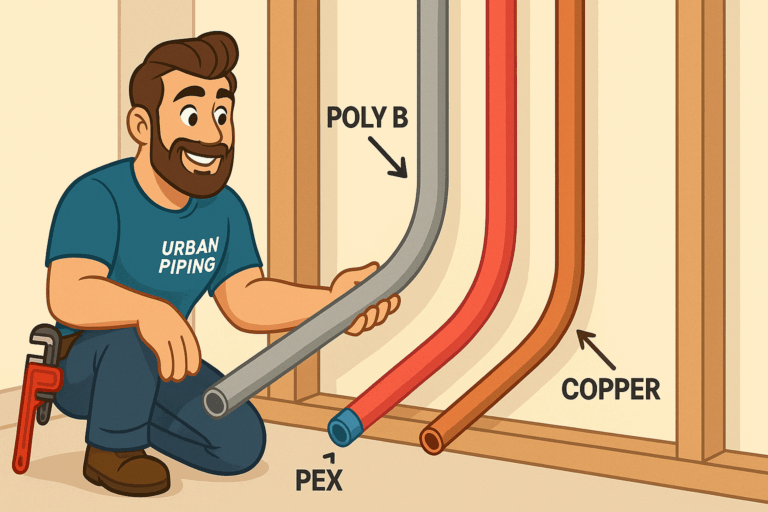
Urban Piping expert explains the differences between Poly B, PEX, and Copper pipes to help Vancouver-area home buyers make informed decisions.
Not sure if a prospective Vancouver home has Poly B plumbing? A smart buyer knows where to look, what to ask, and how to tell Poly B apart from safer modern alternatives like PEX or copper. This quick guide will help you recognize the signs before you sign.
Where to look: Under sinks, utility rooms, behind water heaters
Start by examining exposed plumbing under bathroom or kitchen sinks, around hot water tanks, and in basement utility rooms. Poly B is usually grey and flexible, often with metal or plastic crimp-style fittings. It may also run inside finished wall gaps, requiring drywall removal for full inspection if clues are present.
What Poly B looks like vs. modern piping (PEX, copper)
Identifying Poly B visually can be straightforward if you know what to look for:
- Poly B: Grey or silver plastic tubing, often labeled “PB2110.”
- PEX: Red, blue, or white flexible piping with smooth connections and modern plastic fittings.
- Copper: Rigid, metallic, bronze-coloured piping with soldered joints or compression fittings.
“Look for grey flexible pipes labeled ‘PB2110.’” — Certified Home Inspector
If you’re unsure, take clear photos and share them with a plumbing professional for confirmation — or arrange a pre-purchase inspection with a certified specialist familiar with local plumbing codes.
Inspection checklist: Visual and documentation clues
Along with physical inspection, review:
- Permit histories: Check for any plumbing upgrades or retrofit filings.
- Home inspection reports: Look for mentions of Polybutylene or PB piping.
- Seller disclosure forms: In BC, sellers are required to disclose known issues — including Poly B if known.
Some sellers offer a buyer’s credit toward replumbing, especially in Vancouver where code compliance is strictly enforced.
Takeaway: If Poly B is present, document it and calculate replacement costs into your offer — and always consult with a trusted plumbing expert like Urban Piping before finalizing any deal.
Replacing Poly B: Cost Estimates and Process

Wondering what it takes—and costs—to replace Polybutylene (Poly B) plumbing in your new Vancouver home? Whether you’re mid-purchase or considering a retrofit, understanding the process and expenses involved is critical to protect your investment. Urban Piping’s licensed experts break down the real-world costs of Poly B remediation and guide homeowners in Vancouver, Calgary, Edmonton, and surrounding areas through a smooth replacement journey.
Average replacement cost in Vancouver homes
Replacing Poly B plumbing depends on your home’s age, layout, number of fixtures, and whether drywall repair is included. In Vancouver, the average Poly B replacement cost typically ranges from $6,000 to $15,000. For larger homes or multi-level properties, costs can exceed $20,000. Homes with finished basements, tight crawlspaces, or extensive pipe runs can push the higher end of estimates.
“Replumbing your home with PEX typically ranges from $6,000–$15,000 depending on home size.” — Urban Piping
Steps involved in a full Poly B replacement
The removal and replacement process is precise and phased to minimize disruption:
- Inspection & Mapping: Your plumbing system is assessed, locating all Poly B zones.
- Wall & Ceiling Access: Drywall is selectively cut to access hidden plumbing.
- Pipe Removal: Poly B lines are carefully extracted to avoid collateral damage.
- Installation of New Pipes: Either PEX or copper pipes are installed with new fittings.
- Pressure Testing: System is tested for leaks and flow efficiency.
- Drywall Repair: Openings are professionally patched and primed.
Comparing PEX vs copper as replacement materials
Vancouver homeowners often choose between PEX (cross-linked polyethylene) and copper piping when replacing Poly B:
- PEX: More flexible, budget-friendly, and faster to install. Resistant to corrosion and freezing.
- Copper: Premium material with long lifespan, but more costly and sensitive to water acidity.
PEX is the most popular choice for Poly B replacement in urban homes due to its cost-effectiveness and modern performance.
Need a clear, fixed quote for Poly B replacement? Urban Piping offers free estimates by licensed specialists — Call now to protect your new home’s plumbing investment.
Should You Still Buy a Home With Poly B?

Facing a decision on a property with Poly B plumbing? Many homes in Vancouver still feature original Polybutylene systems. While not always an automatic dealbreaker, it’s crucial to evaluate risk, prepare for replacement costs, and verify what you’re inheriting. Urban Piping helps prospective buyers align plumbing concerns with real estate goals.
Questions to ask your realtor and inspector
- Has the seller disclosed the presence of Poly B?
- Are there visible signs of previous leaks or repairs?
- Does the inspector recommend immediate replacement?
- Are insurance premiums higher due to Poly B piping?
Request dated photos and service records to verify previous plumbing upgrades or partial conversions. An experienced inspector and a plumbing specialist may spot issues a general contractor cannot.
“It’s not a dealbreaker — but you’ll want to budget for remediation.”
Understanding when a price reduction offsets the risk
Negotiating a discounted price can effectively fund a future replumb. If the home is otherwise move-in ready and well-maintained, many buyers accept Poly B as a manageable issue — provided the cost of remediation is known and factored into the final price.
Smart buyers request written quotes from plumbing professionals like Urban Piping before finalizing their offer.
When to walk away from a deal
If sellers refuse to acknowledge Poly B plumbing or won’t permit a specialist inspection, these red flags suggest risk outweighs value. Walk away if:
- You can’t afford or plan for immediate replacement
- Poly B issues have been concealed or partially patched
- The home has ongoing water damage or mold concerns
Want peace of mind before you close? Request a professional Poly B inspection from Urban Piping — Contact us to book your pre-purchase consultation today.
Negotiating Purchase Price for Homes With Poly B

Buying a home with Poly B? You can—and should—negotiate. Buyers across Greater Vancouver and Western Canada are successfully reducing offer prices based on professional Poly B estimates. With expert assessments from Urban Piping, you can confidently approach negotiations backed by solid numbers and industry truth.
How to estimate replacement costs and subtract from asking price
Using quotes from licensed plumbers like Urban Piping, itemize the expected Poly B removal and replacement. Subtract actual costs ($6,000–$15,000+) from the asking price. Depending on market conditions, this figure can lead to major savings or buyer credits at closing.
“Clients regularly save $10,000–$15,000 off asking price once Poly B is identified.”
Leveraging inspection reports in negotiation
Always include the home inspection report in your negotiation packet. Most reports note Poly B plumbing as a ‘material defect’ or ‘aging system.’ Include a licensed plumber’s estimate as a supplemental evaluation. This reinforces your ask with third-party data, which can influence how sellers respond.
Urban Piping often provides written quotes within 24–48 hours, formatted to help realtors and buyers build persuasive offers.
When sellers may cover the re-pipe as condition of sale
If motivated, sellers may:
- Offer cash-back credits for Poly B replacement
- Lower the price pre-closing
- Agree to a professional re-pipe before possession
Be sure any agreement is included in the purchase contract, with clear terms and deadlines. Buyers commonly succeed when they present detailed, impartial quotes from specialists like Urban Piping.
Need expert support in your real estate negotiations? Urban Piping helps Vancouver-area buyers calculate Poly B replacement costs with clarity — get in touch today before you sign.