What Is Poly B Plumbing and Why It Matters in Calgary
If you’re a homeowner in Calgary, understanding whether your property contains Poly B plumbing is more than just a curiosity—it’s a vital part of safeguarding your home against leaks, unexpected repair costs, and insurance complications. Many homes built between 1985 and 1997 were outfitted with Polybutylene (Poly B) pipes, a once-popular option now known for its high failure risk over time. Identifying and addressing this grey plastic piping system could be key to protecting your home’s value and long-term integrity.
History of Poly B Pipes in Canadian Homes (1985–1997)
Poly B gained popularity across Canada—especially in cities like Calgary—during the residential construction boom in the late ’80s and early ’90s. Marketed as a quiet, affordable alternative to copper, this flexible grey pipe was installed in thousands of Alberta homes before it was discontinued due to widespread failure reports. Today, many Calgary residences still have Poly B quietly aging behind walls and ceilings.
If you are a Calgary homeowner dealing with Poly B pipes, you are not alone — thousands of homes in the city were built with this outdated plumbing. Urban Piping specializes in Poly B Replacement Calgary and has helped over 3,000 homeowners make the switch. Ready to get started? Call (403) 988-3801 for your free estimate.
Why Poly B Was Popular and Why It Failed
This material was cheap, easy to install, and resistant to corrosion at first glance. However, its downfall came from its chemical sensitivity—Poly B reacts with oxidants like chlorine in Calgary’s water supply, leading to internal degradation. With time, fittings crack, pipes become brittle, and the risk of sudden leaks grows exponentially.
Overview of Risks with Aging Poly B Pipes
The average Poly B pipe begins showing signs of failure after about 20 to 25 years. Homeowners report spontaneous leaks, particularly around joints and fittings. In extreme cases, water damage from undetected pipe failures has led to extensive renovation costs and denied insurance claims. Calgary’s harsh seasonal shifts can exacerbate weaknesses in aging Poly B systems.
“Statistics show that Poly B pipe failure risk increases drastically after 20–25 years.”
Want to see how we have helped Calgary homeowners just like you? Browse our Calgary Poly B case studies and resources to see real projects, real results, and why thousands trust Urban Piping for their Poly B replacement.
Being proactive about Poly B inspection in your Calgary home is essential—especially if your home was built before 1998.
How to Visually Identify Poly B Pipes in Your Home
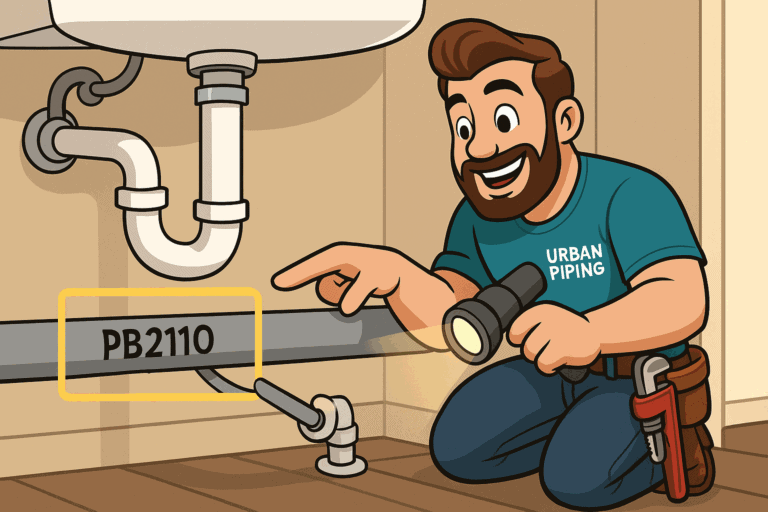
An Urban Piping expert shows how to identify poly b pipes by checking for PB2110 markings under a sink.
Worried your Calgary home may have outdated Poly B pipes? There’s a simple way to find out—even before calling in the pros. By checking common access points and looking for specific features, you can spot Poly B quickly and take action before issues arise. This guide shows you where Poly B might be hiding and what to look for. Knowing the signs of Poly B plumbing is essential for maintaining your home’s safety and integrity. If you do discover these pipes, it’s crucial to understand the Poly B replacement timeline in Calgary, which can help you prepare for necessary upgrades. By staying informed and proactive, you can mitigate potential plumbing problems and ensure the longevity of your home’s infrastructure. It’s also worth noting that many homeowners in your area, especially those in developments like the Scenic Acres Poly B project, have successfully navigated the replacement process. Engaging with local contractors experienced in Poly B replacements can make this transition smoother and more efficient. Don’t hesitate to reach out to your neighbors for insights and recommendations as you tackle this important home improvement task.
Look Under Sinks and in Utility Rooms
Start your home inspection in the easiest-to-access locations. Look beneath bathroom and kitchen sinks, around the water heater in your furnace room, or behind your washer and dryer connections. These are the most frequent spots where Poly B lines are exposed and visible without removing drywall.
The Grey Plastic Pipe Test: Colour, Texture, Labels
Poly B is typically light grey in colour and has a slightly rubbery, matte finish. Pipes may be labelled with “PB2110”—a surefire indicator you’re dealing with Polybutylene. Be aware: other pipes like PEX may look similar but are usually white, red, or blue and have different fittings.
“Look for grey plastic pipes marked ‘PB2110’—a telltale sign of Poly B.”
Where Poly B Is Hidden in Calgary Homes
Beyond what you can see, Poly B is often run through ceilings, behind drywall, or beneath basement floors—as is common in many Calgary homes built before 1998. If your visual inspection does yield suspicious results, having a licensed plumber perform a more thorough check can validate your findings and advise on next steps.
Found grey pipes in your basement or under your sink? It might be time to contact Urban Piping for a full inspection.
Poly B Risks: Leaks, Insurance, and Calgary Plumbing Code
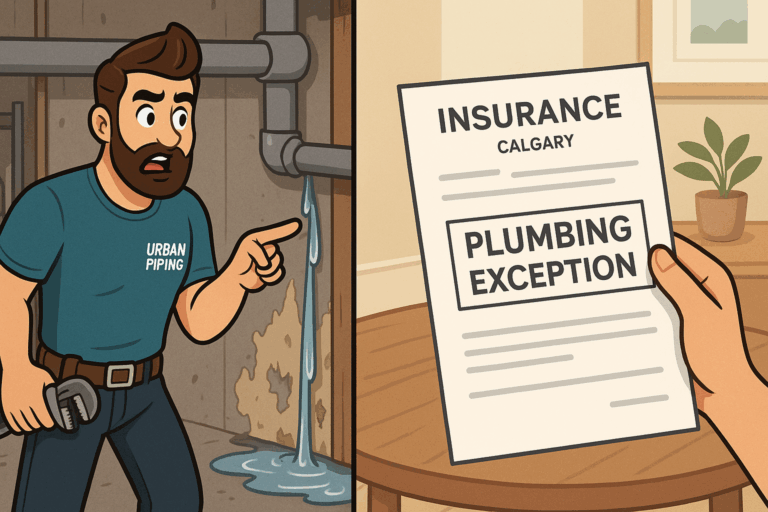
Identifying Poly B pipes in Calgary homes is crucial for plumbing insurance coverage and peace of mind.
Poly B pipes aren’t just a nuisance—they’re a legal and financial risk. Their track record of leaking, paired with the scrutiny of insurance companies and compliance with current Calgary plumbing codes, means homeowners can’t afford to ignore them. This section outlines what’s at stake if Poly B plumbing is still active in your home.
The Leak Factor: How Poly B Breaks Down
Poly B deteriorates from the inside out, often without visible signs until a leak occurs. Calgary’s chlorinated water accelerates this process, weakening the pipe walls and joints. Once leaks begin, they often occur behind walls or ceilings, causing systemic water damage that results in costly drywall, flooring, and mold remediation.
Insurance Concerns: Poly B and Claims Denials
Many Calgary insurance providers will either raise premiums for homes with Poly B or exclude water damage caused by these pipes in their policy coverage. Some homeowners have even reported claim denials after flooding, simply because Poly B was still in use—even if the leak source wasn’t initially obvious. Homeowners are increasingly concerned about the implications of these restrictions as they navigate the complexities of their insurance coverage. It’s crucial for residents to understand Poly B insurance risks in Calgary, as the presence of this piping material can severely limit their options in the event of water damage. Many are now seeking alternatives to Poly B to safeguard their homes and maintain comprehensive insurance protection. Homeowners looking for more information often turn to resources that explore the impact of Poly B on insurance claims. The ‘Riverbend case study and photos‘ highlight the challenges faced by local residents when dealing with insurance companies regarding Poly B-related issues. As the demand for clarity grows, many are advocating for more transparent insurance policies that address the risks associated with outdated piping systems.
“Many insurance providers charge higher premiums—or won’t offer coverage at all—if you have Poly B in your home.”
Understanding Calgary Plumbing Requirements for Poly B
While Alberta building code doesn’t mandate immediate replacement of Poly B systems, recent updates suggest strong discouragement of its reuse. During real estate transactions or home renovations, inspectors may flag Poly B and recommend updates. Many buyers request full plumbing replacement before closing deals in Calgary. As a result, homeowners are increasingly exploring poly b replacement options for condos to ensure long-term safety and compliance. Additionally, many contractors are now offering specialized services to upgrade or replace outdated plumbing systems, reflecting a growing trend towards modernizing older properties. This proactive approach not only enhances property value but also provides peace of mind for current and prospective homeowners.
The cost of ignoring Poly B can be far steeper than replacing it—especially when insurance and code compliance come into play. Neglecting to address issues with Poly B can lead to extensive water damage and costly repairs that far exceed mere replacement expenses. To understand the risks better, homeowners should review Cochrane Poly B photos that highlight the potential deterioration and leaks associated with this type of piping. Investing in proper evaluation and remediation not only ensures structural integrity but also protects against future liability from insurance claims.
What to Do If You Discover Poly B Plumbing in Calgary
Identifying Poly B pipes in Calgary homes is crucial for plumbing insurance coverage and peace of mind.
If you’ve just discovered Polybutylene (Poly B) plumbing in your Calgary home, you’re not alone—and more importantly, you’re not without options. While these notorious grey plastic pipes were once considered innovative, they’ve since become a liability for both homeowners and insurance providers. From insurance exceptions and increased leak risk to plummeting resale value, knowing how to act quickly and smartly is critical in protecting your property. Let’s explore your next steps.
When You Can Monitor vs. When You Must Replace
Poly B pipes can sometimes function without obvious issues—but that doesn’t mean they’re safe. Homeowners in Calgary, Edmonton, and Vancouver should inspect for signs of deterioration such as blistering, flaking, or black mold due to slow leaks. If the piping is already exposed and shows no current leaks, a short-term monitoring strategy may be acceptable—though it’s a gamble. However, in cases where leaks have occurred, or you see fittings that look worn or damaged, replacement is no longer optional—it’s urgent.
Insurance companies increasingly refuse to cover water damage caused by Poly B, even if you’ve never made a claim before. Full system replacement ensures long-term peace of mind by eliminating your exposure to constant failure points.
PEX Class A: Modern Alternative to Poly B
Homeowners seeking a safe, durable replacement should consider PEX Class A piping, the modern gold standard. It’s engineered to withstand Calgary’s temperature extremes, resists scale and chlorine, and won’t corrode or develop pinhole leaks like Poly B. PEX is also incredibly flexible, reducing the number of joints and fittings that can cause future leaks.
More importantly, homes repiped with PEX typically qualify for full insurance reinstatement and may see an increase in property value. Urban Piping ensures all repipes are done to code—with minimal disruption to walls and flooring. The result: a quick job that doesn’t sacrifice quality or safety.
Partnering With a Certified Calgary Plumber
Your choice of contractor matters. Replacing Poly B is not a basic plumbing task—it’s a specialty job requiring expert knowledge of where these systems fail, how municipal codes apply in Calgary and surrounding areas, and how to minimize impact on your home’s infrastructure. Choosing a qualified contractor can significantly affect the outcome of your project. Many skilled professionals in Calgary offer poly b replacement services Calgary, ensuring that the job is completed safely and effectively. With the right expertise, you can prevent further complications and maintain the integrity of your home’s plumbing system. Moreover, if you are considering selling a house with Poly B plumbing, potential buyers may be deterred by the risks associated with this type of piping. Addressing the Poly B issue before listing your home can enhance its marketability and potentially increase its value. Proactive management of your plumbing system not only protects your investment but also provides peace of mind for future homeowners.
Urban Piping has replaced more Poly B systems in Calgary than any other company—over 3,000 successful jobs.
Their licensed plumbers use thermal imaging, on-site assessments, and years of niche experience to deliver results that exceed expectations. Whether you’ve already experienced a leak or want a proactive assessment, working with Urban Piping ensures transparency, durability, and peace of mind.
Get A Quote, Free Estimates, Call Now.