What is Poly-B Plumbing and Why It’s a Concern in Vancouver
If you own a home in Vancouver—or plan to buy one—Poly-B plumbing may be quietly increasing your risk and slashing your property’s resale and insurance value. Commonly used between 1985 and 1997, this grey plastic piping (also known as polybutylene) was once praised for its flexibility and affordability. But fast-forward a few decades, and homeowners across British Columbia are now facing insurance complications, plumbing failures, and thousands in repair costs. Understanding what Poly-B is and how it affects your home will help you take precautions—before a small leak becomes a catastrophic problem.
Vancouver homeowners know that moisture and aging plumbing don't mix. If your home still has Poly B pipes, it's time to consider replacement before small leaks become major problems. Learn more about our Poly B Replacement Vancouver services or call (778) 608-2401 to schedule your free assessment.
History of Poly B Piping in Canadian Homes
Polybutylene piping, or Poly-B, was widely adopted in Canadian residential construction due to low installation costs and ease of use. From the mid-1980s to late 1990s, hundreds of thousands of homes across Canada—including a significant number in Vancouver—were outfitted with this grey or light blue tubing for hot and cold water lines. Its downfall, however, came when homeowners began reporting sudden pipe bursts, leading to class-action lawsuits and growing concerns about long-term durability.
“Poly B was extensively used in Canadian construction between 1985 and 1997.”—Urban Piping Plumbing Experts
Common Issues: Leaks, Degradation, and Lawsuits
With age, Poly-B pipes tend to degrade, especially when exposed to heat sources or UV light. The fittings—often made from acetal plastic—are particularly susceptible to cracking and failures, which can lead to leaks behind walls and inside ceilings. Leaks are often hard to detect until it’s too late, causing mold growth and structural water damage. Industry analyses show that Poly-B failure rates noticeably increase after 10–15 years of service. Legal actions across North America resulted in homeowners and builders questioning the product’s viability.
See how Urban Piping has helped Vancouver and Lower Mainland homeowners protect their homes. Explore our Vancouver Poly B case studies and resources for real-world examples of our work.
Urban Piping, with years of experience handling pipe replacement in Vancouver, has seen firsthand how aging Poly-B systems are often ticking time bombs, concealed behind drywall yet critical to your household safety.
Why Vancouver Homes Are Especially at Risk
Vancouver’s wet coastal climate and temperate conditions make Poly-B problems even more pronounced. Homes along the Lower Mainland face frequent freeze-thaw cycles in winter, which cause expansion-contraction stress on already weakened Poly-B joints. Add to that Vancouver’s increasing housing age and a spike in property turnover—buyers are now more cautious, and lenders often insist on Poly-B inspections or replacements before finalizing deals. This growing concern has prompted various case studies to highlight the risks associated with aging Poly-B plumbing. A notable example is the New Westminster poly b case study, which illustrates the long-term effects of neglecting these issues in residential properties. As awareness increases, homeowners are encouraged to proactively assess their plumbing systems to avoid costly repairs down the line.
Pro Tip: Urban Piping has replaced Poly B in hundreds of Vancouver homes and has documented how hidden issues with fittings often go unnoticed during standard inspections.
Knowing what’s tucked inside your walls can mean the difference between a manageable update and a major insurance headache later on.
Does Home Insurance Cover Poly-B Plumbing in Vancouver?
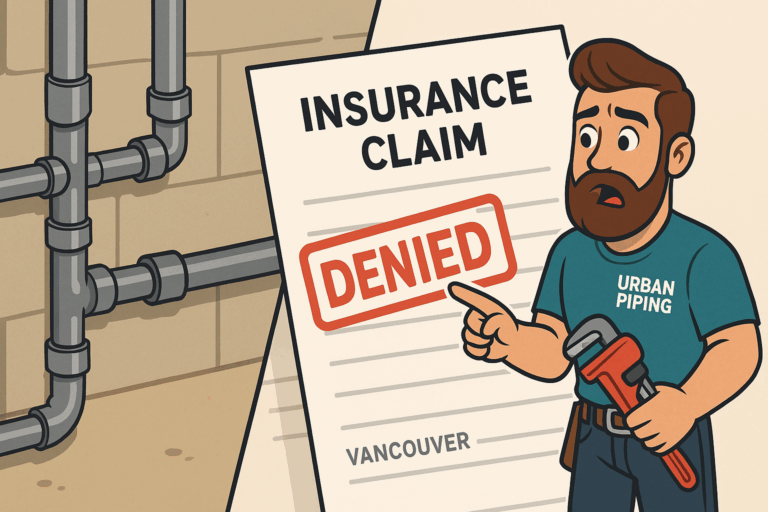
Homeowners in Vancouver may face insurance claim denials due to Poly B plumbing—Urban Piping can help guide you.
If you’re hoping your home insurance will cover your Poly-B pipes, think again. Polybutylene plumbing is now considered a major red flag by many Vancouver insurance providers. Whether you’re renewing your insurance, shopping for a better rate, or facing a water damage claim—having Poly-B could lead to outright denial or significantly inflated premiums. Here’s what you need to know to protect your home—and your wallet.
Why Some Vancouver Insurers Reject Homes with Poly B
Insurance companies across British Columbia have grown increasingly cautious about covering properties with Poly-B piping. In many cases, insurers will refuse coverage outright unless the homeowner replaces the entire Poly-B system ahead of policy renewal. This trend is especially prominent among Vancouver-based brokers handling older housing stock in areas like Burnaby, Richmond, and North Van.
Poly-B’s reputation for failure—especially near hot water tanks and joints—has prompted companies to limit potential liabilities by avoiding these homes entirely or requiring documented upgrades.
How Poly B Affects Insurance Premiums and Deductibles
Even when coverage is available, homeowners with Poly-B plumbing often face:
- Premium increases between 20% and 50%
- Higher deductibles on water damage claims
- Mandatory plumbing replacements within a short timeframe
“Many Vancouver homeowners see a 20-50% insurance premium increase due to Poly B.”
Failing to disclose Poly-B during the insurance quote process can also void claim payouts, especially if a leak can be traced to known degradation areas around elbows or manifolds.
Statements from BC Insurance Providers on Poly B
Several British Columbia insurance brokers have publicly declared a no-compromise stance on Poly-B. Agencies report increased scrutiny of plumbing system types, particularly during property sales or mortgage renewals. While no province-wide ban exists, it’s now customary for providers to require proof of copper or PEX repipes before issuing a full-coverage policy.
Urban Piping’s team regularly works with insurance adjusters to document Poly-B situations and guide homeowners through replacement options that restore eligibility for full coverage.
Ignoring this issue puts your home—and future payouts—at greater risk. Knowledge is protection.
How to Identify Poly-B Pipes in Your Vancouver Home
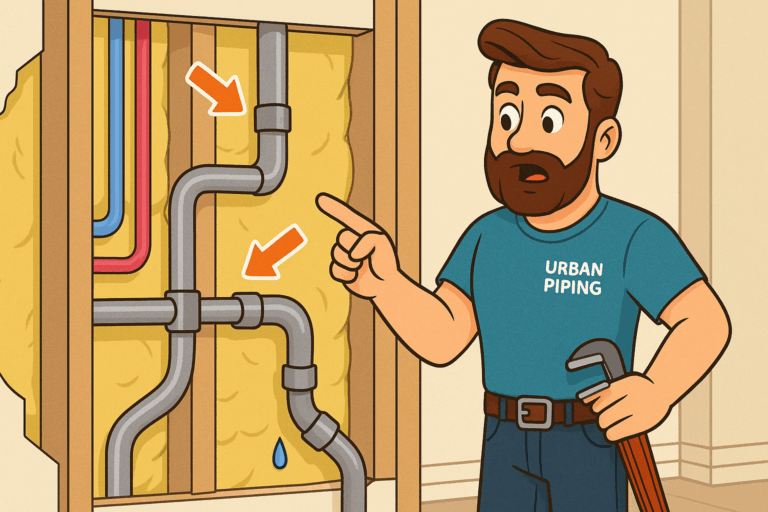
Urban Piping expert pointing out problematic Poly B piping during a home inspection, an important step for poly b insurance in Vancouver and surrounding areas.
Wondering if your home still uses Poly-B plumbing? Spotting it isn’t always straightforward—especially in finished homes. But catching it early can help you plan for timely pipe replacement and avoid insurance headaches or water damage. Use this step-by-step guide tailored to Vancouver homes to check your system and evaluate risks before problems surface. Start by locating your plumbing access points, such as under sinks or in basements, to identify any exposed piping. For those unfamiliar with plumbing materials, familiarize yourself with Vancouver Poly B pipe identification, which often includes a dark gray or black color with distinctive markings. Taking these proactive steps can safeguard your home and ensure you remain ahead of potential plumbing issues.
What Poly B Looks Like: Colour, Label, and Location
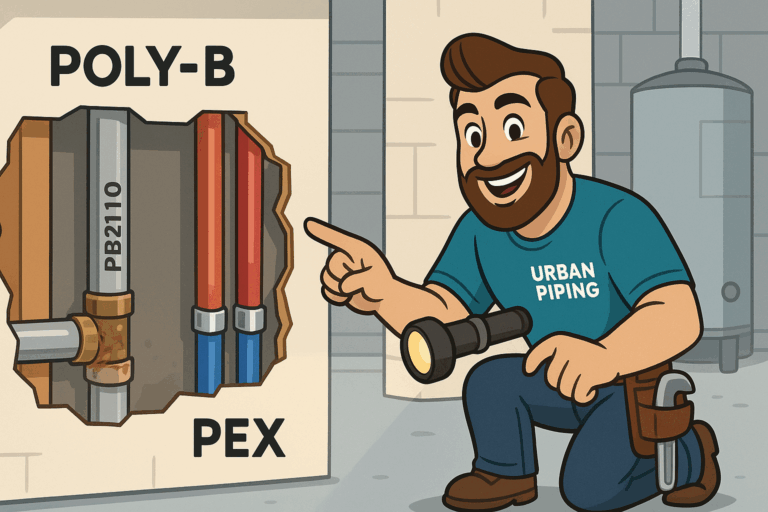
Poly-B piping is typically grey in color, though some variants may appear light blue or silver. The key identifier is the label PB2110 stamped along the pipe itself. If you see this marking on your exposed plumbing—often near water heaters or furnace units—it’s almost certainly Poly-B.
Unlike newer piping systems like PEX (which are usually red, blue, or white), Poly-B appears dull and can feel less rigid to the touch. The joints are also telling—plastic fittings and aluminum crimp rings often point to outdated configurations.
Where to Check Inside Your Home (Basement, Water Heater, Under Sinks)
Start your inspection in utility spaces. Common Poly-B detection areas in Vancouver homes include:
- Furnace or utility rooms
- Behind toilets or inside bathroom vanities
- Unfinished basements and crawlspaces
- Ceilings and walls beneath bathrooms
Urban homes and older townhouses in East Vancouver and Kitsilano often still have hidden Poly-B systems, especially behind non-renovated walls. A flashlight and small inspection mirror can help reveal pipe layout behind drywall access points.
Signs of Poly B Aging and Degradation
Time leaves clear signs on Poly-B. Look for these red flags:
- Discoloration or flaking around fittings and elbows
- Glistening or sweating pipes, indicating pinhole leaks
- White calcium buildup, a sign of slow drips or compromised integrity
“Discolouration around fittings is a warning sign that should be addressed immediately.”
Even if you haven’t experienced leaks yet, these symptoms suggest active material breakdown is occurring. A proactive plumbing retrofit can save tens of thousands in remediation and insurance penalties down the road.
Worried about what type of plumbing your home has? Urban Piping offers expert pipe diagnosis and Poly-B inspections across Vancouver to keep your property safe and covered.
How to Replace Poly-B Plumbing and Lower Risks for Your Insurance
Worried that Poly B plumbing may jeopardize your home insurance in Vancouver? You’re not alone. Many homeowners are learning that the most effective way to reduce risk, increase home safety, and satisfy insurance providers is through a professional Poly B replacement. Whether you’re planning to sell, refinance, or renew your coverage, replacing Polybutylene pipes with modern materials like PEX or copper can make a significant difference to your policy and peace of mind. Investing in expert Poly B replacement in Vancouver not only safeguards your property but also enhances its overall market value. Homebuyers and insurers alike are increasingly wary of Polybutylene plumbing, so addressing this issue proactively can help ensure a smoother transaction process. By opting for a professional replacement, you can enjoy the long-term benefits of reliable plumbing and a more secure home environment.
Overview of the Poly B replacement process in Vancouver homes
Poly B replacement in Vancouver homes typically follows a streamlined, minimally disruptive process when handled by expert crews. First, a comprehensive inspection is conducted to identify where grey polybutylene piping is installed throughout the plumbing system—usually behind walls, beneath flooring, and through ceiling spaces. Urban Piping then maps out a replacement strategy that minimizes drywall damage while replacing all outdated piping with CSA-approved PEX lines. Our Vancouver team’s approach to Poly B replacement emphasizes speed and efficiency, ensuring that homes are restored to their pre-repair state swiftly. We take care to protect your home by using advanced techniques and tools, which not only safeguard your property but also enhance the overall plumbing system. With a focus on customer satisfaction, we aim to minimize the inconvenience during the replacement process while delivering long-lasting results.
Urban Piping completes most full-home Poly B replacements in just 2–5 days. Each project includes pipe removal, high-quality re-piping, pressure testing, and full restoration, including drywall and paint touch-ups—delivering turnkey peace of mind to homeowners and their insurers alike.
Full re-pipe vs. partial fixes: what do insurers prefer?
Insurance companies operating in the Vancouver area are rarely satisfied with partial repairs or isolated fixes. In many cases, coverage may still be denied or severely limited if any existing Poly B remains in the home’s plumbing infrastructure. Adjusters and brokers now typically require proof of complete system replacement before binding or renewing a policy.
“Insurers strongly prefer full removal rather than patch work. A common condition for renewal is a certified declaration that all Poly B has been removed,” says one Vancouver-based insurance broker.
Cost considerations and financing options available
While full home Poly B replacement is an investment, it pays off in reduced risk, improved coverage eligibility, and stronger resale value. Costs vary based on home size and layout but average between $6,000 to $15,000 in the Vancouver area. Fortunately, there are multiple financing options available to homeowners: Homeowners should also consider the potential long-term savings on insurance premiums once the replacement is completed. Additionally, it’s important to take into account various cost factors for Poly B replacement in Vancouver, such as the age of the plumbing system and any necessary structural modifications. By evaluating these elements, homeowners can make a more informed decision that aligns with their budget and needs. Homeowners in multi-unit buildings should also be aware of the Vancouver condo plumbing process, which may differ from single-family homes. Ensuring that all tenants and residents are informed about the timing and scope of the work can help mitigate disruptions. By working collaboratively with the plumbing professionals, residents can ensure a smoother transition to a more reliable plumbing system.
- Home improvement loans and lines of credit through major banks
- Government-backed financing programs for property upgrades
- Deferred payment plans through certified plumbing specialists like Urban Piping
BC homeowners may qualify for home improvement loans to offset re-piping costs, making it an achievable upgrade with long-term benefits.
Get A Quote, Free Estimates, Call Now
How Poly-B Plumbing Affects Your Vancouver Home’s Resale Value
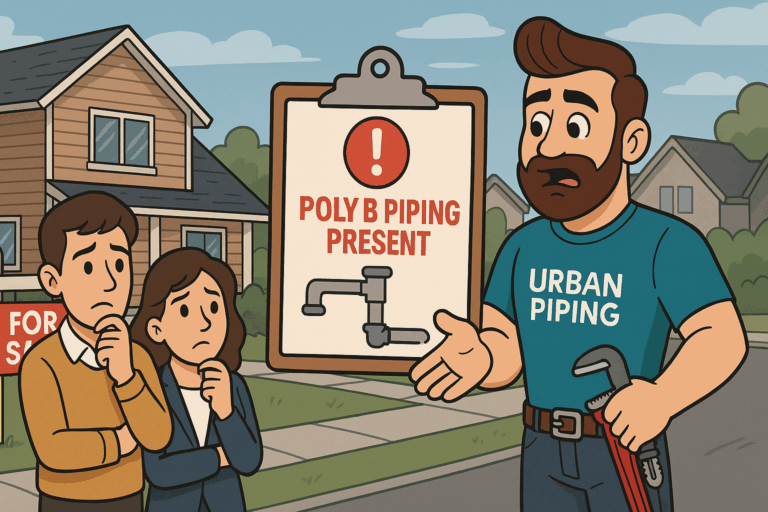
If you’re thinking about selling your Vancouver home, you need to consider how Poly B plumbing may affect the resale process. Properties with outdated or defective piping systems can face lowered appraisals, skeptical buyers, and drawn-out negotiations. Ensuring your home is free from Polybutylene may improve its marketability and unlock its full resale value.
What real estate agents say about Poly B in property listings
According to local realtors, Poly B flagged in a listing nearly always impacts buyer interest and offer amounts. In competitive Vancouver neighborhoods, this can lead to offers coming in significantly below asking price or deals falling through entirely due to plumbing issues disclosed in pre-sale inspections.
“Some Vancouver listings with Poly B see price drops of $15,000–$25,000,” says a long-time West End realtor. “Having a re-piped certificate often makes or breaks the final sale.”
Impact on home inspection reports and buyer negotiations
Home inspectors are trained to note the presence of Polybutylene piping in detailed condition reports, which are made available to the buyer’s agent. Once identified, you can expect buyers to request a full Poly B replacement or a significant price reduction to account for the repair burden.
Buyers are now insisting on replacements as a condition of sale, especially those using mortgage lenders whose underwriters ask for certified plumbing updates before funding the loan.
Case study: Before and after replacing Poly B
One Urban Piping client in East Vancouver had listed their home for $1.25M but received only one conditional offer after 6 weeks. The inspection noted Poly B throughout, and the buyer lowered their offer by $30K. After Urban Piping completed a full re-pipe and restoration in four days, the sellers re-listed the property and secured a clean offer within a week—closing $20K higher than the previous offer. The plumbing upgrade directly boosted buyer confidence and final sale price.
Get A Quote, Free Estimates, Call Now
Talk to Vancouver’s Poly-B Experts and Protect Your Investment
It’s time to resolve your Poly B concerns—and Urban Piping is here to help. With thousands of successful projects across British Columbia, our specialized team offers the knowledge, certification, and hands-on experience needed to safeguard your home, investment, and insurance coverage. Don’t leave your home’s future to chance with general contractors or inexperienced plumbers.
Why choose certified Poly B specialists over general plumbers
Replacing Poly B pipes isn’t just a plumbing job—it’s a technical, insurance-impacting upgrade that demands detailed knowledge of piping codes, insurance documentation, and wall restoration. Urban Piping is Western Canada’s leader in Poly B replacement and focuses exclusively on these projects, delivering precision, compliance, and confidence for every homeowner we serve.
Urban Piping’s reputation in the Vancouver area
Our customers consistently praise Urban Piping for efficiency, professionalism, and clean, timely execution. We handle everything including drywall and paint touch-ups in one visit, ensuring that your home looks just as good—or even better—after the upgrade.
- Licensed & insured Poly B specialists
- Serving all of Metro Vancouver and surrounding areas
- Backed by verified 5-star reviews from local homeowners
Our Vancouver reviews average 5 stars for speed, quality and professionalism.
How to get a free estimate and start your replacement today
Booking a free estimate with Urban Piping is easy and zero-pressure. Our project managers visit your home, inspect the plumbing system, and provide a written quote with timeline—often within 24 hours. Once approved, we schedule and complete your full Poly B replacement quickly and with minimal disruption.
Don’t wait for policy renewals or buyer negotiations to catch you off guard—take action now to secure your greatest asset.
Get A Quote, Free Estimates, Call Now