What is Poly B Plumbing?
If your Calgary, Edmonton, or Vancouver home was built between 1985 and the late 1990s, there’s a good chance it still contains Poly B plumbing. Also known as polybutylene piping, Poly B was once a common choice for residential water supply systems across Canada. But mounting evidence of its durability issues and compatibility problems has led homeowners to seek out safer, code-compliant alternatives. Understanding what Poly B is—and why it was used—can help explain the urgency to replace it.
If you are a Calgary homeowner dealing with Poly B pipes, you are not alone — thousands of homes in the city were built with this outdated plumbing. Urban Piping specializes in Poly B Replacement Calgary and has helped over 3,000 homeowners make the switch. Ready to get started? Call (403) 988-3801 for your free estimate.
History and Usage
Polybutylene (Poly B) piping was introduced as a low-cost, plastic plumbing solution that promised flexibility and quick installation. Between 1985 and 1997, it was extensively installed in new home builds throughout Alberta and British Columbia. Light gray in appearance and typically used for interior water supply lines, Poly B seemed ideal for streamlining home construction—a choice many builders embraced without fully understanding long-term flaws.
Thanks to its affordability and ease of installation, countless homes across Calgary, Edmonton, and Vancouver still rely on Poly B, often behind drywall and in basement ceilings where it remains out of sight and out of mind—until problems arise.
Risks and Problems with Poly B
Issues with Poly B stem from chemical and mechanical weaknesses that only became fully apparent after years of use. Studies have shown Poly B pipes are prone to cracking, especially near fittings under prolonged water pressure. Over time, normal household water chemistry can trigger internal pipe flaking or micro-fracturing, greatly increasing the risk of leaks.
Want to see how we have helped Calgary homeowners just like you? Browse our Calgary Poly B case studies and resources to see real projects, real results, and why thousands trust Urban Piping for their Poly B replacement.
Homeowners who wait until a visible leak appears often discover signs of prolonged water damage behind walls or under floors—damage that could have been prevented with a proactive repiping solution.
Tip: If you see gray plastic piping connected with copper or plastic fittings in your mechanical room—there’s a good chance it’s Poly B. Book an inspection even if no leaks are currently present.
Why Replace Poly B Piping?
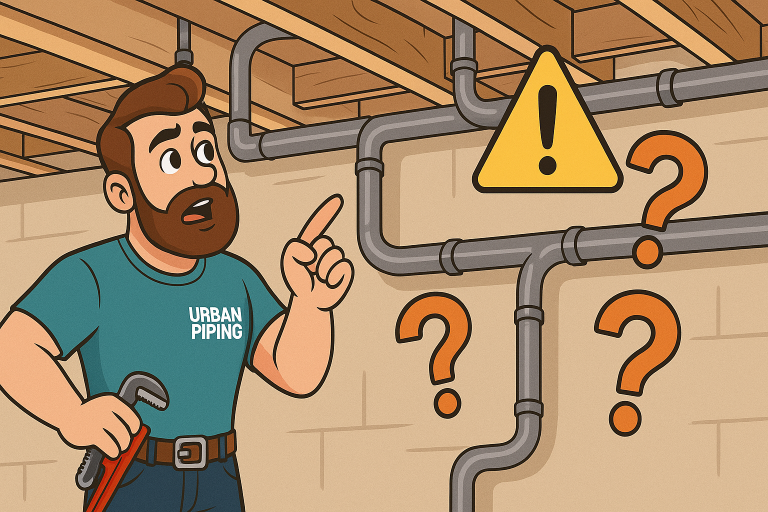
Even if your Poly B plumbing appears to be working fine today, waiting could cost you far more tomorrow. Across Calgary, Edmonton, and Vancouver, more homeowners are realizing that Poly B plumbing is not just an outdated system—it’s a serious liability. From insurance complications to health hazards and declining property values, Poly B is a ticking time bomb, raising red flags during home inspections and policy renewals alike.
Insurance Concerns
Many Alberta and BC insurance providers have adjusted their policies in response to the increasing frequency of Poly B failure claims.
“Some insurance providers may deny coverage or increase premiums if a home still uses Poly B piping.” – Urban Piping CEO
In fact, some insurers stipulate Poly B replacement as a condition for full homeowners coverage.
If you’ve recently faced premium hikes or coverage exclusions, your plumbing system may be to blame. This makes replacing Poly B not just a maintenance upgrade—but a strategic financial move.
Health and Safety Risks
Water that passes through degrading Poly B piping can carry plastic residues or contaminants—especially if microfractures allow mold growth around leaky areas. Slow hidden leaks are also notorious for creating the perfect storm for humid conditions, which spur mold and mildew growth. Left unchecked, these issues can contribute to poor indoor air quality and pose serious health risks for children, seniors, and allergy-prone residents.
Home Resale Value
Trying to sell a home with Poly B plumbing? Expect challenges. Real estate listings often devalue homes with visible Poly B plumbing by 5–15%, according to local agents. Buyers today are wary of expensive repairs and insurers unlikely to renew outdated policies. Poly B can even become a condition of sale, with the new buyer requiring replacement before closing deals—costs that will fall back on you if not addressed proactively.
Next Step: Don’t wait until an emergency leak ruins floors or walls. Reach out to a licensed plumber in Calgary or surrounding regions to evaluate the full extent of your Poly B plumbing system today.
Top Poly B Replacement Options
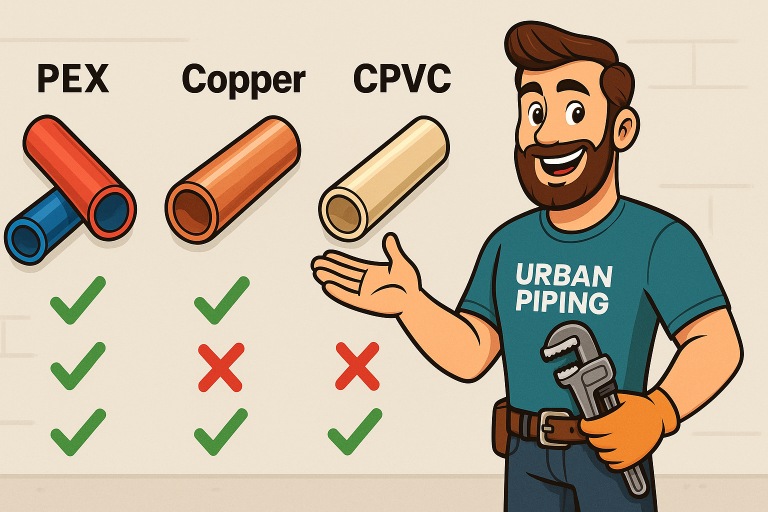
Choosing the right piping material to replace Poly B isn’t just about meeting code—it’s about maximizing performance, value, and peace of mind for your home in Calgary, Edmonton, or Vancouver. Whether you’re upgrading because of insurance requirements or proactively modernizing your plumbing, the three most common Poly B alternatives—PEX, copper, and CPVC—each offer unique pros and cons. Here’s what homeowners need to know.
PEX (Cross-linked Polyethylene)
PEX is the leading Poly B replacement option across Western Canada. Flexible, affordable, and easy to install around tight corners, PEX adapts to cold climates like Calgary’s with ease. It resists both scale buildup and corrosion, making it a great long-term investment.
PEX piping is considered the go-to replacement material due to its flexibility, cost-efficiency, and resistance to scale and corrosion. It’s also less prone to bursting in freezing temps, due to its ability to expand slightly under pressure.
- Rated for high pressure and temperature
- Quick installation minimizes labor costs
- Compatible with most modern faucets and fixtures
Copper Piping
While it comes at a premium cost, copper piping is hailed for its unmatched durability and long lifespan. Trusted by contractors and code officials alike, copper can last over 50 years and adds resale value to any home.
Copper remains a premium option with longevity and reliability but comes at higher cost due to material and installation. However, it may not be the best choice for homes with corrosive water or budget concerns.
- Excellent resistance to UV rays and fire
- Less flexibility for routing through old walls
- More labor-intensive to install compared to PEX
CPVC (Chlorinated Polyvinyl Chloride)
CPVC offers a middle-ground alternative. While CPVC is less common, it can be a viable alternative under the right conditions and budget constraints. It’s rigid, like copper, but installation is less difficult and the materials are less costly.
This material is often used selectively for short runs or partial replacements, especially in warmer parts of B.C., though it’s less desirable for complete retrofits in colder regions due to potential brittleness under freezing conditions.
- Inexpensive and chemically resistant
- Not ideal for climates with extreme temperature swings
- Requires proper gluing techniques to avoid joint failure
Pro Tip: Hire a Poly B replacement specialist who understands Calgary plumbing codes and will pull permits where required. The right material is only part of a quality retrofit.
How to Choose the Right Alternative for Your Home
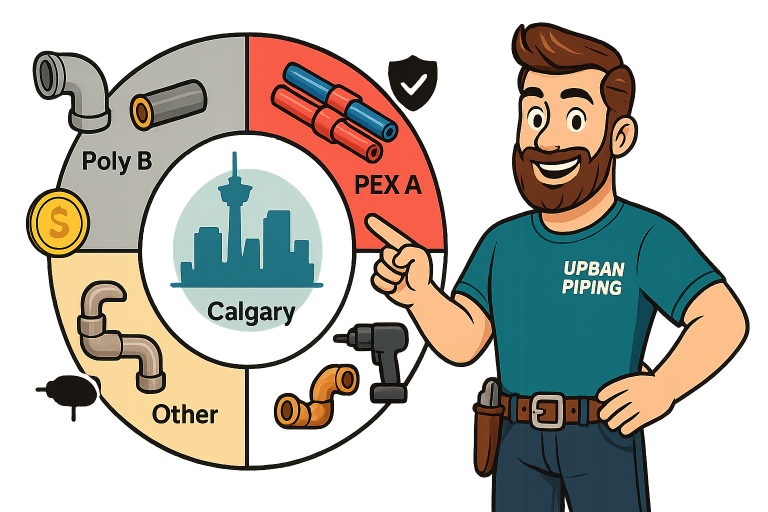
Not sure whether to choose PEX, copper, or CPVC to replace Poly B in your Calgary home? As a homeowner in Calgary, Edmonton, or Vancouver, choosing the right plumbing material for your Poly B replacement can significantly impact your budget, long-term maintenance, and resale value. With different options available, understanding how each alternative performs in terms of cost, installation, lifespan, and compliance with local building codes is essential.
Factors to Consider (Cost, Lifespan, Installation)
Each piping material has its trade-offs. Here’s how they compare:
- PEX: Highly flexible and cost-effective. Easy to install with minimal joints, which reduces potential leak points. Average lifespan exceeds 50+ years.
- Copper: Known for its durability and resistance to bacteria. Has the longest lifespan—often over 70+ years—but comes at a premium cost and requires skilled labor for installation.
- CPVC: Resists heat and corrosion but is more brittle and sensitive to installation errors. Lifespan can reach 40+ years but varies depending on climate conditions and water chemistry.
Longevity estimates: PEX (50+ years), Copper (70+ years), CPVC (40+ years depending on environmental factors)
Calgary-Specific Building Codes and Regulations
Understanding what’s allowed under local code is non-negotiable. Calgary’s residential plumbing codes dictate which materials pass inspection. While all three main alternatives may be permitted, not all perform equally or meet insurance preferences.
“PEX meets CSA B137.5 standard and is approved by Calgary building code for residential water distribution systems.” – Urban Piping plumber
In areas like Calgary where fluctuating temperatures and water hardness can affect pipes, PEX has become the most commonly approved and installed choice, aligning well with both municipal and insurance standards.
When selecting between PEX, copper, or CPVC, consult with a licensed plumber who understands regional requirements and can make product recommendations based on your home’s needs.
Professional Poly B Replacement in Calgary
If you’re ready to replace Poly B piping in your Calgary-area home, partnering with a professional makes all the difference. Hiring a local expert ensures the job is done to code, safely, and with minimal disruption. Homeowners from Calgary to Vancouver trust Urban Piping for comprehensive replacement solutions that include not only plumbing—but also drywall repair and painting.
Hiring a Licensed Plumber
Working with a licensed plumber is essential. Beyond having the right tools and knowledge, professionals follow municipal codes, obtain permits, and offer warranties. Urban Piping employs trained specialists who understand the challenges of retrofitting homes that once relied on Poly B piping systems.
Urban Piping offers a complete in-house solution—re-piping, drywall, and painting all handled by our trained team.
Average Cost Ranges
While each property is different, Calgary homeowners can expect full-home Poly B replacement to cost between $7,000–$12,000 depending on square footage, number of bathrooms, and finish accessibility. These costs include materials, labor, permits, and restoration of affected areas.
Timelines and Disruption
Urban Piping aims to minimize impact on your home life. Most projects are completed within 5–10 days. Our team works in scheduled phases—from plumbing to finishing—to ensure there’s no prolonged mess or loss of water access.
Most projects are completed in 5–10 days with minimal disruption to daily routines.
Choosing an established local team protects you from unexpected delays and ensures quality that stands the test of time.
Get A Quote, Free Estimates, Call Now
FAQs About Replacing Poly B Pipes
Still have questions about Poly B pipe replacement? You’re not alone. At Urban Piping, we field dozens of inquiries every week from homeowners across Calgary, Edmonton, and Vancouver who are assessing their next steps and seeking clear answers. Our team is dedicated to providing you with accurate information and guidance. To help you make informed decisions, we’ve compiled essential polybutylene plumbing replacement tips that address common concerns and outline the best practices for ensuring a successful replacement project. With our support, you can navigate the complexities of this process with confidence.
Do I need to replace all plumbing?
Technically, partial replacements are possible—but highly discouraged. Pipe compatibility issues can arise, and insurance providers may still penalize homes with any remaining Poly B. Full replacement ensures your home complies with current codes and minimizes future risks.
In most cases, replacing all Poly B piping is recommended to avoid future leaks and to meet insurance and building standards.
How long does a full replacement take?
On average, a complete home repipe involving 2–3 bathrooms and standard kitchen and laundry hookups takes 5 to 10 business days. The process includes plumbing, pressure testing, patching drywall, and paint touch-ups. With a turnkey team like Urban Piping, the entire job stays under one project manager.
Will my insurance cover this?
Most Canadian home insurers recognize Poly B as a high-risk material that can cause extensive water damage. While policies vary, many offer conditional coverage or recommend replacement. Some even require full Poly B removal before issuing or renewing a policy.
Yes—most home insurance policies in Canada recognize Poly B as a liability and may adjust rates accordingly.
Eliminating Poly B can increase your home’s resale value and reduce your insurance premiums over time.
Get A Quote, Free Estimates, Call Now
Final Thoughts on Replacing Poly B Pipes
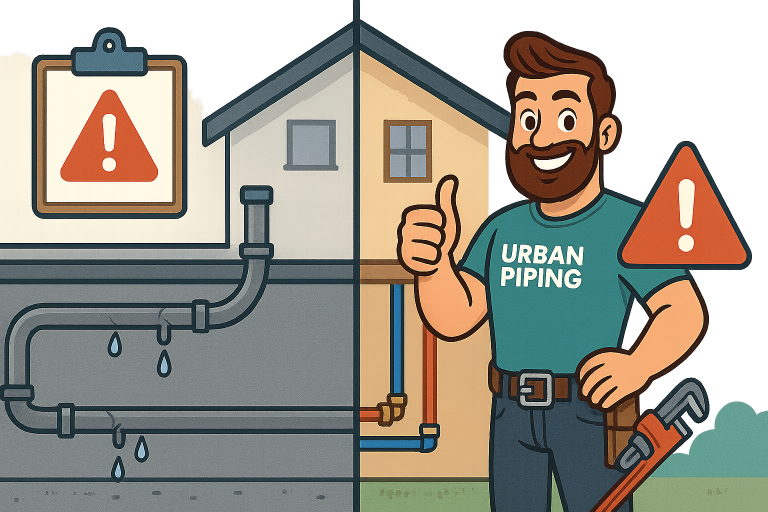
Don’t wait until the next leak causes costly damage. Replacing outdated Poly B piping is a proactive investment in your property’s safety, value, and long-term performance. At Urban Piping, we’ve completed thousands of repipe projects throughout Calgary, Edmonton, Vancouver, and surrounding areas, providing families with peace of mind and a plumbing system built to last.
“We’ve helped thousands of Calgary homeowners make the switch from Poly B to safe, modern piping—and we’re here to help you too.” – Graham Drew, CEO
Protect your home from unexpected failures and insurance issues—trust a licensed specialist to deliver expert craftsmanship and dependable materials that stand the test of time.
Get A Quote, Free Estimates, Call Now