What is Poly B Plumbing?
Poly B plumbing—short for polybutylene—was once touted as the cutting-edge alternative to copper piping in Canadian residential construction. As a homeowner in Calgary, Edmonton, or Vancouver, understanding what Poly B is and how it can affect your plumbing system is the first step toward safeguarding your home from costly water damage and code compliance violations. Whether you’re purchasing an older property or updating your current home, this guide will help you identify the presence and implications of Poly B piping.
Brief History of Poly B in Canada
Polybutylene piping emerged in the Canadian market in the mid-1980s as a revolutionary plumbing material. Its flexibility, ease of installation, and low material cost made it a go-to option for many builders, particularly in suburban developments across Western Canada. From 1985 to 1997, Poly B was installed in millions of homes before significant reliability issues began to surface. Once celebrated for its affordability, Poly B soon became a material of concern due to its susceptibility to degradation when exposed to oxygen, heat, and chemicals commonly found in municipal water supplies.
For everything you need to know about Poly B, check out our Guide to Poly B Plumbing. Or, if you are ready to replace your Poly B pipes, explore our Poly B Replacement Services — handled by the Canadian leaders in Poly B replacement.
Why It Was Used in Homes Between 1985–1997
During this period, copper prices were high, and builders found Poly B to be a cost-effective alternative. It was promoted for its flexibility, which reduced the need for elbow fittings and complex joints, promising fewer leak points. Installers needed less training, and the speed of installation made it attractive for residential plumbing on a budget. However, while initial savings seemed beneficial, the long-term risks were underestimated—leading to widespread pipe failures and eventual removal from plumbing codes.
Poly B was widely installed from the mid-1980s to late 1990s as a low-cost plumbing solution, especially in Canadian suburban developments.
Common Locations in Homes Where It’s Found
Poly B pipes are commonly found running behind walls, under flooring, and through ceilings in single-family homes, condos, and townhouses. Often used for both hot and cold water lines, Poly B is typically connected to faucets, toilets, water heaters, and laundry areas. Key locations where Poly B may be visible include:
Want to see our work across Canada? Browse our Poly B replacement case studies for real project examples, or visit our blog for expert guides and homeowner resources.
- Under kitchen and bathroom sinks
- Near water heaters and utility rooms
- Basement ceilings and unfinished walls
- Toilet shut-off valves
Pro tip: If your home was built or renovated between 1985 and 1997, there’s a good chance Poly B pipes were installed.
Learning about Poly B is the first step. Up next, we explore the urgent reasons for replacing this outdated material. Understanding the limitations of Poly B is crucial, as it can lead to significant plumbing issues over time. Homeowners should be aware of the potential risks, including leaks and water damage, which underscore the importance of proactive measures. Fortunately, there are various polybutylene pipe replacement options available that can provide safer and more reliable solutions for modern plumbing systems.
Why Replace Poly B Plumbing?
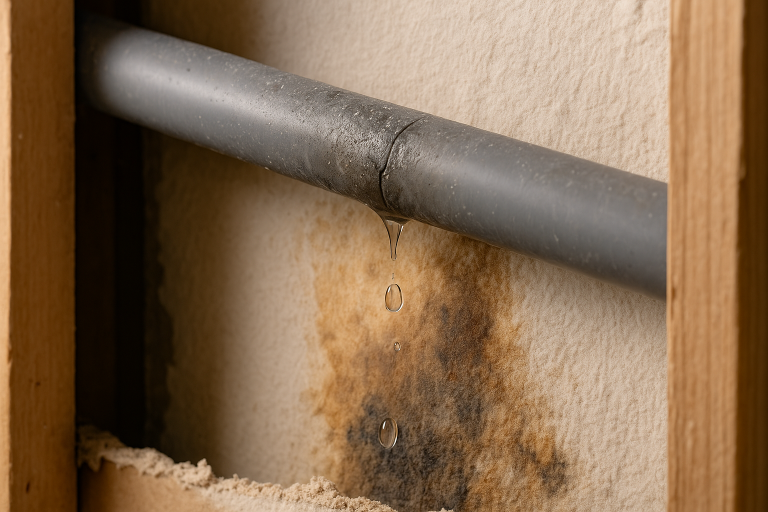
If your home still contains Poly B plumbing, you’re at risk for unexpected leaks, rising insurance premiums, and potential code violations. Replacing Poly B piping isn’t just a recommendation—it’s a necessary step toward future-proofing your investment. Whether you’re based in Calgary, Edmonton, or Vancouver, proactive repiping can prevent catastrophic water damage and ensure compliance with evolving building standards.
Health and Safety Risks
Poly B pipes degrade over time—especially where hot water flow accelerates wear. As the piping breaks down internally, it becomes brittle and susceptible to pinhole leaks and burst failures. These small issues can escalate into widespread water damage, leading to mold growth, structural deterioration, and serious health risks. Studies have shown that chlorine exposure in municipal water may accelerate the material’s breakdown, reducing its integrity much sooner than expected.
Common Failure Signs: Leaks and Corrosion
Homeowners often miss early warning signs of Poly B failure. Watch for damp spots on walls or ceilings, fluctuating water pressure, visible corrosion on fittings, and discoloured drywall. One tell-tale sign is a pinhole leak near the joints, often where Poly B connects to brass or copper fittings. This type of early-stage damage can remain hidden until it evolves into expensive structural repairs.
According to home inspectors, Poly B pipes are one of the most frequent causes of internal moisture damage.
Home Insurance Problems and Rising Premiums
Poly B plumbing can drastically impact your insurability. Many home insurers in Western Canada—including major providers in Calgary—will either deny coverage entirely or significantly increase premiums for homes with existing Poly B systems.
Some insurers even require written confirmation of repiping before renewing policies. This added financial risk makes replacement a cost-saving move in the long run.
Many insurers in Calgary now refuse to cover homes with Poly B piping or impose high premiums due to known failure rates.
Legal and Code Issues in Calgary and Beyond
In several jurisdictions throughout Alberta and British Columbia, the use of Poly B in new construction or major renovations is no longer permitted under current plumbing codes. Homes with Poly B may not pass plumbing inspections during property sales or renovations, causing delays and extra costs.
Additionally, some condo boards and strata councils now require unit owners to proactively replace Poly B piping to mitigate liability across shared plumbing networks.
Bottom line: Replacing Poly B is essential not just for your peace of mind, but for insuring, financing, and legally maintaining your home in compliance with Canadian standards.
How to Identify Poly B in Your Home
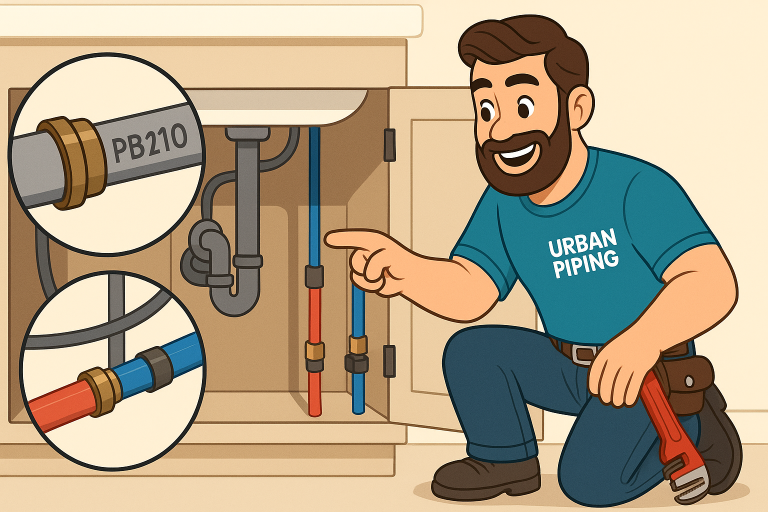
Not sure if your home has Poly B? Identifying this problematic piping early can save you from future water-damage nightmares and help you take swift action. Here’s how homeowners in Calgary, Edmonton, and Vancouver can detect Poly B piping in their homes—starting with a few simple tools and some visual cues.
Visual Identifiers: Colour, Markings, and Placement
Poly B is typically light gray, though variations in blue, black, or white exist. It feels softer and more flexible than PEX or copper. Look for prints stamped along the pipe’s surface—it will usually read “PB2110,” the standard code for polybutylene material. These pipes often connect to plastic or metal fittings with crimped metal bands.
Look for gray, flexible plastic pipes stamped with ‘PB2110’—a sure sign of Poly B.
Typical Installation Years and Builders
If your home was built or fully renovated between 1985 and 1997, there’s a high probability that Poly B piping was used for water distribution. Large suburban developments constructed during this time often used Poly B to keep costs down. Builders during this time may not have disclosed or anticipated the long-term concerns now associated with this piping material.
Condominiums, townhomes, and even high-rises built before Y2K are prime candidates for Poly B inspection.
How to Verify with a Licensed Plumber or Home Inspector
Even if you suspect Poly B, a licensed plumber or certified home inspector can confirm the material through non-invasive methods. Urban Piping technicians are certified Poly B removal contractors and trained to assess your plumbing system accurately. Most assessments include:
- Accessing visible plumbing points under sinks or in utility areas
- Inspecting crawlspaces and unfinished basements
- Providing detailed photos and documentation for insurance or strata requirements
Next step: If Poly B is found, schedule a free estimate with a certified repiping specialist.
Step-by-Step Poly B Removal Process
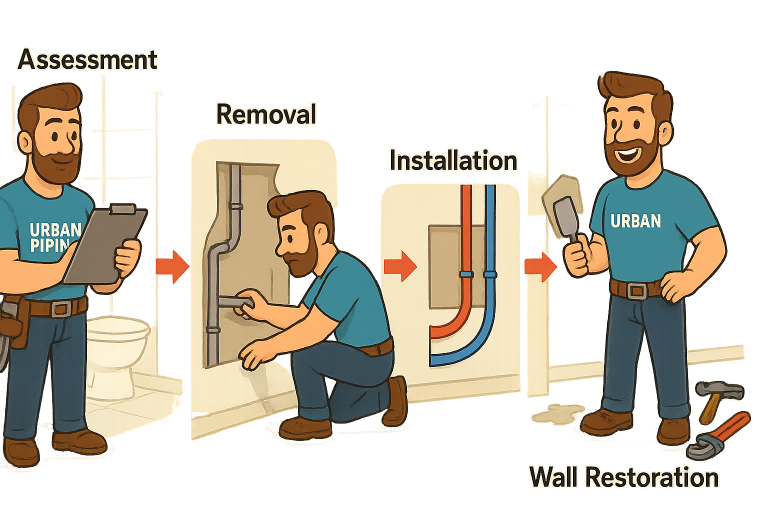
Urban Piping provides a trusted step-by-step Poly B removal service, from assessment to wall restoration across Calgary, Edmonton, and Vancouver.
If you’re considering Poly B replacement for your home in Calgary, Edmonton, or Vancouver, it’s vital to understand what the full process involves. Knowing what to expect—day-by-day—can help you plan better, minimize disruption, and stay within budget. Urban Piping’s certified and insured team follows a structured, proven workflow that ensures complete safety, compliance, and satisfaction from start to finish.
Initial assessment and estimate
The process begins with a thorough home inspection to evaluate the presence of Poly B piping, its condition, accessibility, and any existing water damage. Our expert technicians check plumbing code compliance and outline the scope of work. You’ll receive a free certified estimate tailored to your home’s layout and requirements.
Pipe removal and drywall access
To access the Poly B piping hidden behind walls or ceilings, Urban Piping technicians carefully cut drywall in strategic areas. The old polybutylene pipes are then systematically removed, section by section, to minimize dust and debris. We protect your space at every step using clean work practices and physical barriers.
Re-piping with PEX or copper
With the Poly B removed, new plumbing lines—either PEX Class A or copper—get installed based on your preference and home’s water system. PEX is often preferred for its flexibility and resistance to scale. Urban Piping routes new lines with precision to match or exceed modern plumbing standards.
Wall repair and finishing
Unlike other plumbing companies, Urban Piping completes in-house drywall and paint repairs as part of your project. Our finishing team patches all access panels, textures the walls to match, and repaints surfaces so your home looks untouched. No need to coordinate additional trades or worry about incomplete restorations.
Urban Piping provides in-house drywall and paint repair so you’re not left coordinating multiple trades after the repipe.
Ready to start the process? Get A Quote, Free Estimates, Call Now.
How Much Does Poly B Replacement Cost in Calgary?

Urban Piping expert explains the benefits of replacing Poly B pipes with PEX Class A solutions for Calgary, Edmonton, and Vancouver homes.
Understanding the cost of Poly B removal in Calgary and surrounding areas is essential before committing to a project. As a homeowner, you want to plan for both the financial and logistical aspects of removing outdated polybutylene piping. While costs vary, Urban Piping offers full transparency to help you make an informed decision without surprises.
Average cost for single-family homes
Most single-family homes require between $6,000 to $12,000 for full Poly B remediation. This includes pipe replacement, wall access, and final repair work. Factors like house size, number of bathrooms, and pipe accessibility play a key role in determining final pricing.
On average, single-family home Poly B replacement in Calgary costs between $6,000 to $12,000 depending on scope and accessibility.
Condo pricing for multi-unit repiping
Condos in Calgary, Vancouver, and Edmonton involve different logistical needs. Shared walls, multi-floor access, and condo board approvals influence pricing. Urban Piping coordinates with property management to ensure disruption is minimal. Pricing typically starts at $3,500 per unit for multi-unit buildings.
Cost variables: drywall access, piping type, project timeline
Additional cost considerations include:
- Wall material types (drywall, tile, concrete)
- Piping choice: PEX is more affordable, while copper costs more due to materials and labour
- Emergency scheduling or holiday/weekend work
Financing or insurance coverage options
Many homeowners explore insurance claims if leaks have occurred as a result of Poly B failure. Urban Piping assists with documentation for insurance submission. Additionally, we offer flexible financing options for larger jobs—making it easier to spread payments across months without compromise in workmanship.
Need a personalized estimate? Call Now to Get a Price Range Based on Your Home.
Why Trust Urban Piping for Poly B Removal?
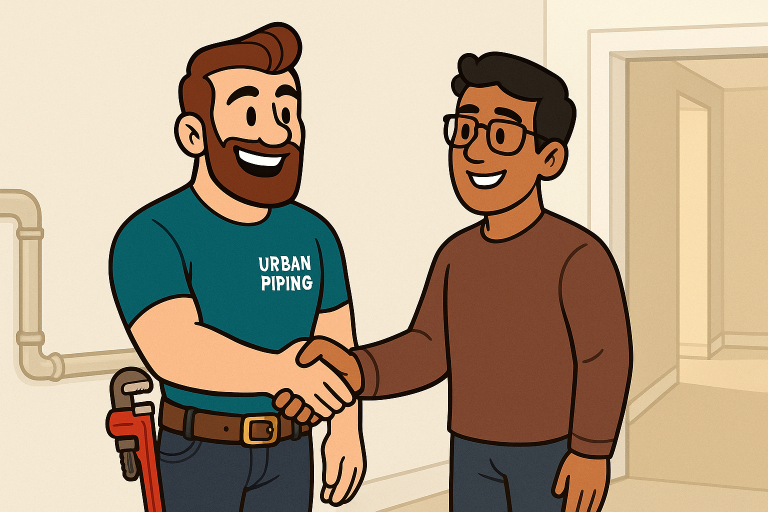
Urban Piping technician and homeowner shake hands after successful Poly B removal service in Western Canada.
When it’s time to replace failing Poly B plumbing, trust matters. Homeowners in Calgary, Edmonton, and Vancouver turn to Urban Piping because of our expertise, track record, and dedication to quality. We don’t just remove problematic pipes—we restore homes completely, the right way, every time.
Industry leader in Poly B removal in Western Canada
Urban Piping has completed more Poly B removals in Calgary than any other contractor. Our reputation as Western Canada’s foremost Poly B expert is built on years of precision work, code-compliant practices, and customer satisfaction. Your project is in the hands of seasoned specialists who understand the stakes.
Urban Piping has completed more Poly B removals in Calgary than any other company—we’re the name homeowners trust.
Certified & insured technicians
Every member of our team is licensed, certified, and fully insured, bringing technical know-how and professionalism to each site. Our work exceeds provincial plumbing code standards, providing lasting peace of mind from unexpected leaks or compliance issues down the road.
Seamless repairs (drywall + paint)
After a repiping project, many plumbers leave holes in walls—creating a frustrating and costly mess. Not us. Urban Piping completes the job from pipe to paint, so your home feels as clean and complete as when we arrived. Our in-house wall repair team handles taping, sanding, texturing, and painting without outsourcing.
Customer reviews & before-and-after case studies
We believe in showing—not just telling—how we help homeowners. Urban Piping proudly shares before-and-after galleries, detailed case studies, and authentic client reviews. Homeowners consistently highlight our punctuality, cleanliness, and unmatched professionalism.
See why thousands of homeowners turn to us. Book Your Free Estimate with a Certified Expert Today.