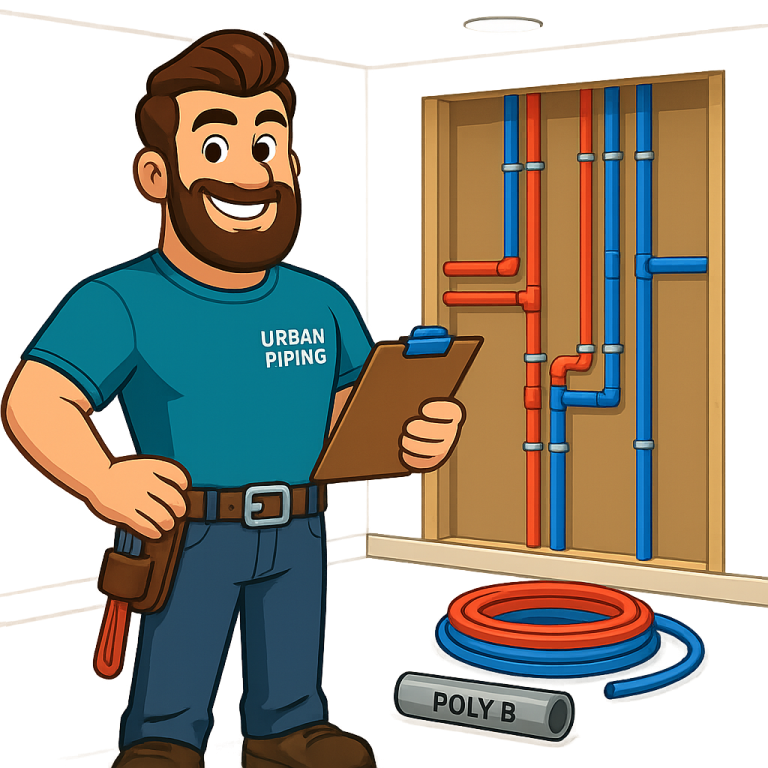
Introduction to Poly B Plumbing
As a homeowner in Calgary, Edmonton, Vancouver, or anywhere in Western Canada, understanding the legacy of Poly B plumbing is essential to protecting your property and pocketbook. Originally seen as an affordable alternative to copper, Poly B—short for polybutylene—was widely installed during residential construction booms from the mid-80s through the early 90s. While many homes still rely on these outdated systems, the risks of pipe failure, water damage, and insurance limitations are growing harder to ignore.
For everything you need to know about Poly B, check out our Guide to Poly B Plumbing. Or, if you are ready to replace your Poly B pipes, explore our Poly B Replacement Services — handled by the Canadian leaders in Poly B replacement.
What is Poly B (Polybutylene)?
Poly B, or polybutylene piping, is a flexible, grey plastic plumbing material introduced across North America in the 1970s. Lightweight and low-cost, it enabled quick installations, making it popular among developers looking to reduce labor time and construction expenses. In Canadian homes built between 1985 and 1997, Poly B was a go-to choice—especially for subdivision builds in areas like Calgary and Edmonton.
“Poly B was installed in over 700,000 Canadian homes between 1985 and 1997.”
Why this topic matters for Calgary and Western Canada
Cold weather climates like Alberta and British Columbia pose serious strain on Poly B systems. Freeze-thaw cycles, chlorine-heavy municipal water, and outdated fittings all contribute to the pipe’s early deterioration. In Calgary and surrounding areas, thousands of homeowners face a silent ticking time bomb hiding behind their drywall—one that could lead to extensive insurance battles and costly water repairs without warning.
Want to see our work across Canada? Browse our Poly B replacement case studies for real project examples, or visit our blog for expert guides and homeowner resources.
“Urban Piping has completed more Poly B replacements in Calgary than any other contractor.”
Key problems every homeowner should know
- Poly B pipes degrade from the inside out due to chemical breakdown from oxidants.
- Improper fittings and brittle joints often crack without symptoms in advance.
- Many insurance providers are now denying or limiting coverage for homes with Poly B systems.
Whether you’re planning a renovation or just seeking peace of mind, recognizing the history of Poly B plumbing is the first step toward a safer home.
The History of Poly B Plumbing in Canada
Urban Piping illustrates the evolution of Poly B and PEX plumbing materials in Canada from the 1970s to 2000s.
Curious how such a flawed system ever became the plumbing standard across Western Canadian homes? You’re not alone. The rise and fall of Poly B is a textbook case of short-term cost-savings overtaking long-term performance—one that still affects homeowners decades later. Below, we uncover how this grey plastic pipe became so prevalent, so quickly, and why correcting it today matters more than ever.
Timeline: Poly B Adoption (1970s–1997)
Polybutylene emerged in the early 1970s as a revolutionary plumbing material touted for its cost-efficiency and ease of use. It gained widespread traction in Canadian residential builds by the 1980s, particularly in fast-growing suburban sectors like Calgary and Vancouver. Poly B installation peaked in 1993 and came to a halt near 1997 following legal scrutiny and rising failure reports.
“By the late 1990s, lawsuits and insurance concerns ended its residential use.”
Manufacturing motivation and cost benefits
Builders were quick to embrace Poly B because it was easy to install and approximately 40% cheaper than copper piping. Its flexibility allowed it to snake through complex framing layouts, and fewer fittings reduced labor time significantly. In large housing developments across Alberta and British Columbia, this meant major savings—all while building code approvals required minimal oversight at the time.
“Poly B appealed to builders for being 40% cheaper than copper.”
What led to Poly B’s decline
The honeymoon period ended as reports of failures began pouring in. Industry experts linked issues to poor-quality fittings, sensitivity to water chemistry, and pipe degradation. Class-action lawsuits in both the U.S. and Canada exposed systemic flaws. By the mid-90s, the Canadian government and provincial building codes ceased approving Poly B for new construction. Insurance companies soon followed, refusing to cover homes with active Poly B systems due to liability exposure.
Today, Poly B represents a past era of plumbing shortcuts—one that current homeowners must now correct to meet safety and insurance standards.
The Hidden Risks and Failures of Poly B Pipes
A leaking Poly B pipe demonstrates the potential for water damage in basements—a common issue in Calgary, Edmonton, and Vancouver homes.
Still relying on Poly B plumbing behind your walls? You may be gambling with costly repairs, insurance challenges, and unexpected damage. These aging systems often operate fine—until they catastrophically fail. Below, we break down the top failure points and long-term hazards every homeowner in Calgary, Edmonton, and Vancouver should understand before disaster strikes.
Leaks, bursts, and pressure failures
Poly B systems are notoriously vulnerable to pressure fluctuations and pipe fatigue. The grey plastic material becomes brittle over time, especially at joints and elbows where stress is highest. Improper crimp rings or plastic fittings often create weak points prone to sudden rupture during temperature changes or high water pressure events.
“Poly B fittings often fail at joints due to poor crimping or high chlorine levels.”
Polymer degradation over time
Chlorine, found in most municipal water supplies (especially in Calgary and Vancouver), accelerates the oxidation process in polybutylene pipes. This causes the inner walls of the pipe to flake, pit, and eventually crack. Homes built in the 1980s and 1990s are now past the expected 20–25 year Poly B lifespan—meaning time is quickly running out for a proactive replacement plan.
Health and insurance implications
Leaky Poly B systems—especially in areas such as basements or behind kitchen cabinets—can lead to mold growth, structural damage, and degraded air quality. From an insurance standpoint, the presence of active Poly B can result in denial of new home coverage, policy surcharges, or exclusions for water-related claims. Some Alberta insurers outright refuse renewal unless evidence of pipe replacement is provided.
“Some insurance providers in Alberta refuse coverage for homes with Poly B plumbing.”
If your home still runs on Poly B, it’s not just outdated—it’s a liability. Repainting walls after a burst pipe won’t fix the root problem. Full replacement, with PEX or copper, is the only way to ensure long-term peace of mind.
How To Identify and Replace Poly B Pipes in Your Home
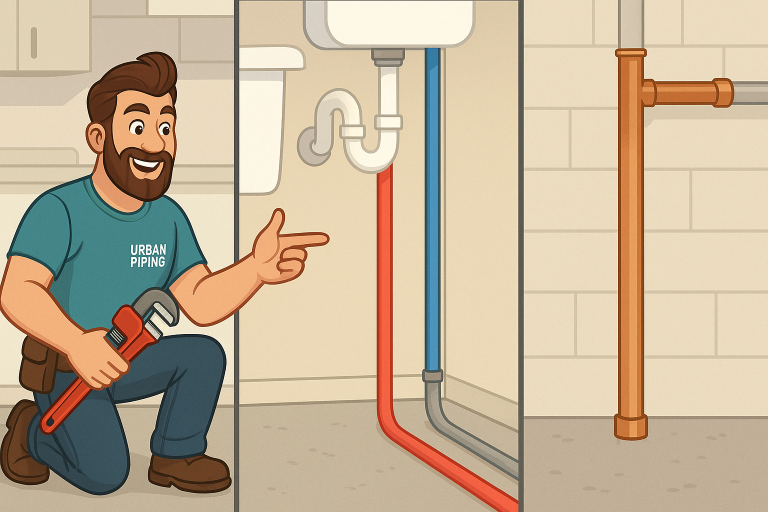
Urban Piping expert explains the history and differences between Poly B and copper pipes for homeowners in Calgary, Edmonton, and Vancouver.
If you’re a homeowner in Calgary or the surrounding area, identifying Poly B plumbing (also known as polybutylene) in your home is the first critical step toward preventing water damage and future insurance headaches. Poly B is a flexible gray pipe installed in over 300,000 Canadian homes between 1978 and 1997—many of which still remain. Knowing what to look for and how to proceed with safe, code-compliant replacement is vital, and Urban Piping is here to help walk you through that process.
How to spot Poly B plumbing: key identifiers
Homeowners can identify Poly B by examining any visible plumbing under sinks, near water heaters, or in basement mechanical rooms. Look for flexible gray pipes often stamped with “PB2110”—a dead giveaway that you’re dealing with Poly B.
- Gray, semi-flexible plastic tubing
- “PB” or “PB2110” printed along pipe length
- Often paired with metal or plastic fittings, sometimes with grey or copper crimp rings
- Commonly found in homes built between 1980 and 1997
“Look under sinks or in mechanical rooms for grey flexible piping stamped with ‘PB2110.’”
Replacement material comparison: PEX, copper, CPVC
When planning a Poly B replacement, material selection matters. Urban Piping focuses on using industry-grade materials that align with modern building code and performance expectations. The three most common alternatives are:
- PEX (Cross-linked Polyethylene): Flexible, resistant to corrosion, affordable, and ideal for retrofit applications
- Copper: Durable and long-lasting, though more expensive and time-consuming to install
- CPVC (Chlorinated Polyvinyl Chloride): Rigid plastic alternative, though less common in modern residential applications
Each material has pros and cons, but for most Calgary-area homes, PEX is the preferred solution due to its flexibility and resilience in cold climates.
Average costs and timeline for Calgary homes
The cost to replace Poly B pipes in Calgary varies depending on the size and design of the home, current plumbing layout, and whether drywall or paint restoration is included. Most Calgary homeowners can expect:
- Average cost: $8,000–$15,000+ depending on home size
- Timeframe: 3–5 business days with full restoration
- Warranty: Urban Piping offers a workmanship and parts warranty with every full-home repipe
“Urban Piping completes most full-home Poly B replacements in 3–5 days including drywall and paint repair.”
Tips to vet and hire a qualified Poly B pro
Choosing the right plumber ensures your Poly B replacement is done safely and legally. Key things to ask when hiring:
- Are they licensed and experienced with Poly B projects in Alberta?
- Do they handle permits and code compliance?
- Will they repair drywall and restore finishes?
- Do they offer a warranty on materials and workmanship?
Urban Piping specializes exclusively in Poly B removal and replacement, making us Western Canada’s most experienced team for the job.
Get A Quote, Free Estimates, Call Now
Poly B in Calgary: Local Impact, Case Studies & Solutions
Trusted Urban Piping expert celebrates a successful Poly B solution with a satisfied homeowner in Western Canada.
From older bungalows in downtown Calgary to newer builds in Airdrie and Okotoks, the impact of Poly B plumbing has been deeply felt by thousands of homeowners. Aging Poly B pipes have led to cracks, leaks, and extensive water damage—often before property owners even realize there’s a problem. At Urban Piping, we’ve replaced Poly B plumbing in over a thousand homes across Calgary, each one uncovering unique challenges and costly surprises. These stories—and our expertise—continue to shape smarter solutions for our community. As homeowners seek reliable plumbing solutions, the demand to replace Poly B plumbing in Calgary has surged. Our team is dedicated to providing tailored services that not only address current issues but also prevent future complications. By combining advanced technology with industry knowledge, we ensure that every replacement meets the highest standards of safety and durability.
Urban Piping’s Calgary Poly B projects
Urban Piping has led hundreds of comprehensive Poly B replacements across communities like Tuscany, Deer Ridge, Coventry Hills, and McKenzie Towne. Our projects include single-family homes, duplexes, and full condominiums. Our Calgary-based team adheres to a rigorous process:
- Detailed inspection and verification of Poly B presence
- Preparation and clear documentation for permits
- Professional replacement using PEX-A or copper depending on need
- Drywall, paint, and finish restoration post-repipe
We treat every home as if it were our own.
Real homeowner stories and water damage events
Many Calgary residents have faced hidden Poly B failures that weren’t visible until it was too late. One homeowner in Evergreen discovered a slow leak under their guest bathroom after a soggy ceiling appeared in the basement—over $12,000 in repairs and reconstruction followed.
“We’ve seen hidden leaks under bathroom floors that cost owners $12,000+ in water repairs.”
These stories are not rare. Poly B pipe failures are increasingly frequent as the materials reach the end of their lifecycle.
What the Alberta Building Code recommends
Although the Alberta Building Code doesn’t mandate removal of Poly B, it no longer permits installation of polybutylene pipes in new construction. Homes undergoing renovations or change-of-use improvements may be flagged for inspection if Poly B is present. It’s critical that any replacements:
- Meet current code regarding materials, layout, and pressure specifications
- Include appropriate permits and licenses
- Are handled by certified professionals, not general contractors unfamiliar with Poly B systems
“Urban Piping’s licensed team follows all UBC code requirements for safe, legal replacements.”
Book your Calgary Poly B inspection and get a no-obligation estimate today.
Final Thoughts: Why It’s Time To Replace Your Poly B Pipes
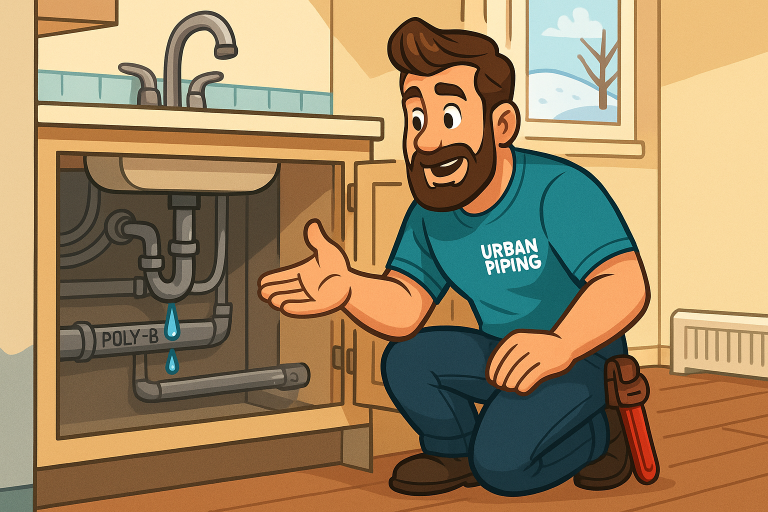
An Urban Piping specialist explains the risks of Poly B plumbing leaks in Western Canadian homes.
Still sitting on Poly B plumbing in your home? Every season that passes increases the likelihood of failure, denied insurance claims, and costly surprises hiding behind your walls. Polybutylene hasn’t stood the test of time, and today, homeowners in Calgary, Edmonton, and Vancouver are being urged by insurance providers and inspectors to replace it proactively.
Poly B pipes are aging and increasingly risky
More than 30 years after installation, most Poly B tubing is now brittle, prone to chemical breakdown from chlorine-treated water, and susceptible to microfractures. Cracks and pinhole leaks can go undetected until visible damage appears. Your home’s water safety and structure are both at risk.
“Every month you delay replacement increases risk of hidden leaks, corrosion, and denied claims.”
Upgrade before you’re forced by insurers or failure
Many insurance companies in Alberta are beginning to flag Poly B as a liability in home policies. Some require replacement before renewal, while others impose higher deductibles or even deny water claims outright if Poly B is to blame. Proactive replacement can:
- Improve home resale value
- Lower your insurance premiums
- Prevent emergency water damage events
It’s not just a smart move—it’s becoming a necessary one.
Trust Urban Piping—Canada’s Poly B Replacement Leader
We’ve replaced over 1,000 homes across Calgary, Edmonton, and Vancouver. Our approach is comprehensive—from pipe identification to licensed replacement, wall reconstruction, and final inspection. You’ll be working with Canada’s most seasoned team of Poly B experts. And we’ll do it once, do it right—and back it with a warranty.
“Urban Piping replaced over 1,000 homes in your area—we’ll do the job right.”
Schedule your free Poly B evaluation and estimate today. No obligation.