What is Radon Gas?
Radon is a silent hazard for many Calgary homeowners—and most don’t even know it’s there. This naturally occurring gas forms underground and can easily make its way into your home, especially in lower levels like basements. Understanding where radon comes from and why it’s dangerous is the first step toward protecting your family.
Definition of Radon
Radon is a radioactive gas that occurs naturally when uranium in soil, rock, or water breaks down. As a noble gas, it is chemically inert, invisible, odorless, and tasteless—meaning it cannot be detected by human senses. This makes it particularly insidious, as it can accumulate in a home without any telltale signs.
If you are a Calgary homeowner dealing with Poly B pipes, you are not alone — thousands of homes in the city were built with this outdated plumbing. Urban Piping specializes in Poly B Replacement Calgary and has helped over 3,000 homeowners make the switch. Ready to get started? Call (403) 988-3801 for your free estimate.
How Radon is Produced (Natural Uranium Decay)
Uranium is found in varying concentrations in the earth’s crust, including in Alberta’s soil. Over time, uranium decays radioactively, transforming into radium, which then produces radon gas. This gas moves through the pores in soil and escapes upward—often entering buildings through cracks in foundations, sump pits, or gaps around pipes.
Why It’s Dangerous Despite Being Invisible
Despite having no smell or taste, radon is far from harmless. Once radon gas leaks into a home, especially into poorly ventilated spaces like basements, it becomes a serious health concern. Long-term indoor exposure to radon can damage lung tissue and lead to cancer. Because it is inert and undetectable without testing equipment, radon can accumulate to dangerous levels before homeowners take notice.
“You can’t see, smell, or taste radon—but prolonged exposure increases lung cancer risk.”
Want to see how we have helped Calgary homeowners just like you? Browse our Calgary Poly B case studies and resources to see real projects, real results, and why thousands trust Urban Piping for their Poly B replacement.
Awareness is your best defense. Learn the risks now, so you can take action before it’s too late.
Why Radon is a Concern in Calgary
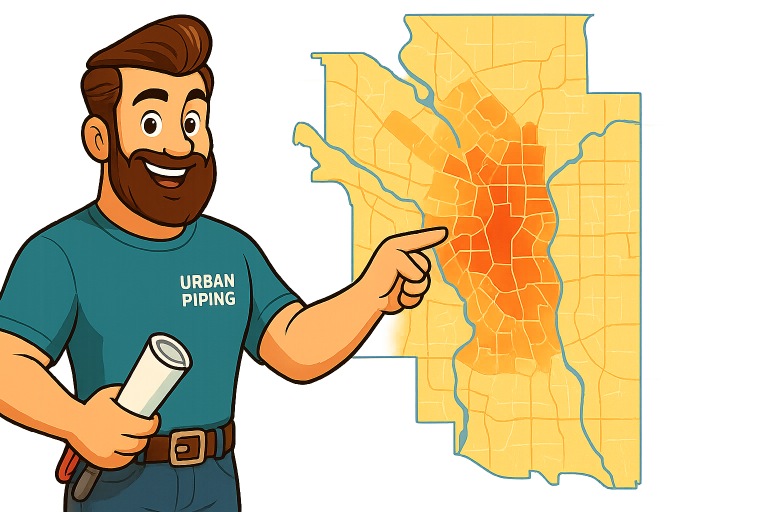
Urban Piping explains key radon gas risk areas in Calgary to help homeowners stay safe.
Did you know nearly 1 in 5 Calgary homes have radon levels above Health Canada’s safety threshold? Living in this part of Alberta comes with unique geological and climate-related risks that increase your home’s vulnerability to radon gas accumulation. Let’s break down what makes Calgary a high-risk area.
Historical Soil and Geological Data in Alberta
Calgary sits on sedimentary rock formations rich in natural uranium content. Over millions of years, decay of uranium in these underground layers has led to elevated radon potential in various regions across Southern Alberta. Studies conducted by the University of Calgary and Health Canada show that specific districts—including northwest and southeast Calgary—show higher levels of radon based on underlying geology.
How Calgary’s Colder Climate Affects Radon Retention
Cold winters in Calgary have a unique side effect: homeowners tightly seal their doors and windows to retain warmth, reducing natural ventilation. This traps radon inside houses, especially during the heating season. Negative air pressure in winter can actually draw more radon from the soil into your basement, increasing indoor levels undetected.
Percent of Homes Testing Above Health Canada Guideline
According to recent Health Canada surveys, approximately 17%–20% of tested homes in Calgary exceed the recommended radon threshold of 200 Bq/m³. That’s nearly 1 in 5 homes at unsafe exposure levels. In denser residential zones or newer developments with tighter building envelopes, this rate is often even higher. Radon testing is not just advisable—it’s essential.
“Calgary has among the highest radon levels in Canada, with nearly 1 in 5 homes exceeding national safety thresholds.”
Use this insight as a call to action—knowing your local radon risk is critical to keeping your home safe.
Health Risks of Radon Exposure
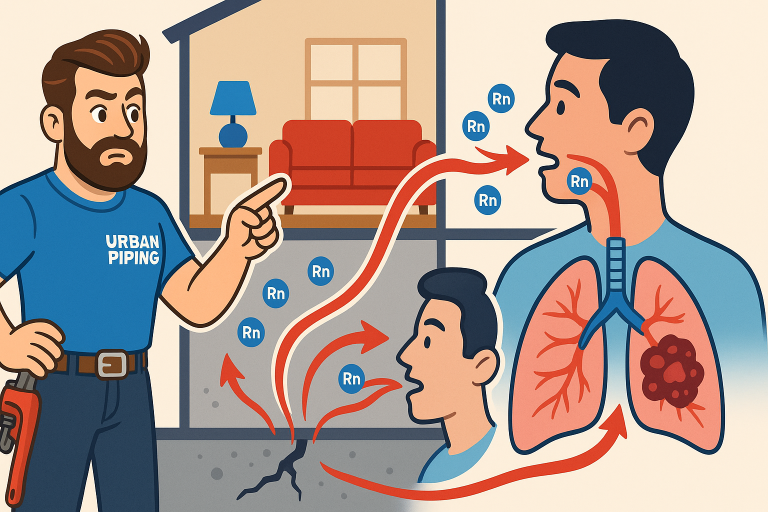
Urban Piping highlights how radon gas enters Calgary homes and poses serious health risks.
If you think radon is harmless because it’s invisible, think again. Prolonged radon exposure is a ticking time bomb, particularly in long-term residential settings like family homes. Understanding the severe health implications helped many Calgary families make informed decisions about testing and mitigation.
How Radon Damages Lung Tissue
When radon gas is inhaled, it decays into radioactive particles called “progeny” that attach to lung tissue. These particles emit alpha radiation, which can damage DNA and cellular structures deep within the lungs. Unlike external radiation sources, radon continues to affect tissues with every breath taken inside a contaminated home.
Correlation with Lung Cancer (Especially Non-Smokers)
Over time, this cellular damage leads to mutations that increase lung cancer risk. According to Health Canada, radon is the second-leading cause of lung cancer after smoking. Alarming data shows it accounts for up to 16% of all lung cancer deaths in the country. Non-smokers and children are especially vulnerable because they have no other associated risk factors, making radon their primary environmental risk.
Health Canada and WHO Guidelines
Both Health Canada and the World Health Organization set a concerning benchmark at 200 Bq/m³, the defined threshold beyond which mitigation is strongly recommended. While lower levels still carry some risk, exceeding this limit means immediate action should be taken to reduce exposure—especially in high-occupancy zones like bedrooms and basements.
“Radon is now the #2 cause of lung cancer after smoking—accounting for ~16% of cases in Canada.”
The best way to prevent radon-related illness in your household is with early-stage detection and, if needed, certified mitigation. Your family’s lungs depend on it.
Testing and Mitigating Radon in Calgary Homes
Concerned about radon gas in your Calgary home? You’re not alone. Radon levels in basements across Western Canada can easily exceed Health Canada’s threshold of 200 Bq/m³, especially during colder months. This section offers a detailed, step-by-step breakdown of radon testing methods and proven mitigation strategies that can help protect your family’s health and your property value. Contact Calgary Radon Detection to take care of this for you—from understanding when to test, which detectors work best, how to interpret results, and why professional mitigation systems are a wise long-term investment.
Best time of year to test for radon
Testing radon gas levels in your home is most accurate during the winter months—when indoor ventilation is reduced, and homes are sealed tightly against the cold. In Calgary and nearby areas, this typically spans from November to April. During this season, radon concentrations tend to peak, exposing hidden risks that would otherwise be diluted during warmer seasons. If you’re wondering when to prioritize testing in your home schedule, winter provides the most reliable baseline for comparison and decision-making.
Differences between short-term and long-term tests
Homeowners can choose between short-term (2–7 days) and long-term (90+ days) radon testing kits. Short-term tests offer a quick radon snapshot—useful for real estate transactions or initial assessments. However, long-term tests provide a more reliable average of the home’s radon exposure across varying conditions. Contact Calgary Radon Detection to take care of this for you, especially in radon-prone zones throughout Calgary. These tests are also more likely to detect fluctuations linked to lifestyle and seasonal patterns.
DIY vs professional testing: pros and cons
While DIY radon test kits are affordable and accessible, they carry risks if not used correctly. Factors like kit placement, timing, and environmental changes may skew results. Professional radon testing by Calgary Radon Detection includes equipment calibration, proper placement strategies, and certified interpretation—minimizing errors and helping determine whether mitigation is needed. For homeowners wanting rapid and reliable insight without ambiguity, professional testing is often the better investment.
Interpreting radon test results
Once radon levels are tested, results are reported in becquerels per cubic metre (Bq/m³). A level under 200 Bq/m³ is generally considered safe by Health Canada. Anything above that demands mitigation. If your results fall in the 150–200 Bq/m³ range, proactive homeowners may still wish to install a mitigation system as a precaution.
“Health Canada recommends action for any home with levels above 200 Bq/m³.”
Overview of mitigation systems (e.g., sub-slab depressurization)
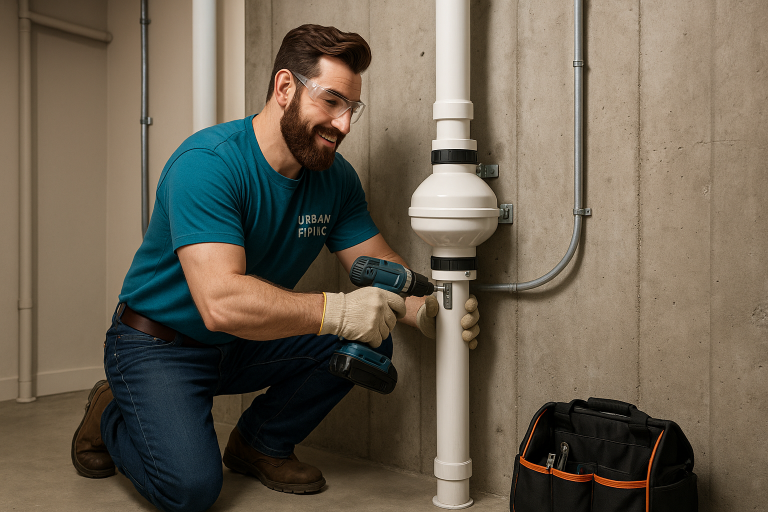
Sub-slab depressurization is the most effective radon mitigation method. The system pulls radon gas from below the foundation and vents it safely outside, preventing it from entering living spaces. A fan and PVC piping network is typically installed in a discreet location, such as a utility room or basement wall. Calgary Radon Detection ensures tight pipe seals and proper airflow balance to keep the radon mitigation system effective over time. Other methods may include basement sealing or increased home ventilation, but these tend to be less reliable.
Indoor radon levels are often highest in the winter months—ideal for testing accuracy.
Cost and value: mitigation vs long-term health or resale concerns
The cost of a complete radon mitigation system in most Calgary homes ranges from $2,000 to $3,000. While this may seem steep initially, it pales in comparison to the long-term risks of radon-induced lung cancer or lowered resale demand. A professionally installed system not only protects your family’s health but can also boost buyer confidence if you decide to sell your home. In radon-designated risk zones, documented mitigation installs are increasingly viewed as value-adding home improvements
“A mitigation system generally costs between $2,000–$3,000 but can add value and peace of mind to your home.”
Ready to protect your home and health? Don’t wait — Contact Calgary Radon Detection to take care of this for you. They offer free estimates for certified radon testing and mitigation across Calgary and the surrounding areas.